27 citations
,
May 2016 in “Integrative Cancer Therapies” In this study, in vitro and in vivo models showed that chrysin enhanced the efficacy of docetaxel and reduced its adverse effects in non–small cell lung cancer treatment.
 March 2026 in “Dermatopathology”
 In this case report, a rare instance of a primary cutaneous granular cell tumor with prominent overlying terminal hair growth in an adult is described, highlighting the importance of recognizing atypical presentations to accurately diagnose similar uncommon neoplasms.
 3 citations
,
October 1990 in “Journal of the American Academy of Dermatology”
3 citations
,
October 1990 in “Journal of the American Academy of Dermatology” This case report describes a patient with lichen nitidus whose lesions improved following treatment with oral astemizole and topical steroids, although spontaneous resolution remains a possibility.
28 citations
,
June 1998 in “Clinical Genetics” This report describes a case of Ambras syndrome with a chromosomal inversion on chromosome 8, similar to a previous case, but not associated with altered androgen levels.
January 2003 in “Linchuang pifuke zazhi” This case report describes a trichoblastoma in a 58-year-old man's leg, which was successfully excised without recurrence observed after 9 months.
 June 2017 in “Experimental and Therapeutic Medicine”
 In a depilated mouse model, this study found that blocking CXCL4 activity with an anti-CXCL4 monoclonal antibody promoted hair growth by inducing an earlier anagen phase, delaying hair follicle regression, and altering expression of genes and proteins related to hair growth and cell proliferation.
 February 2025 in “American Journal of Medical Case Reports”
 The case report highlights the diagnostic challenges of low-grade trichoblastic carcinoma, a rare malignant tumor often mistaken for benign lesions, in a 51-year-old female with immunocompromising conditions. Accurate diagnosis relied on histopathological examination, and achieving clear surgical margins was crucial to prevent recurrence.
April 2026 in “Actas Dermo-Sifiliográficas” This study reports that scalp cooling therapies and minoxidil may promote hair regrowth in patients experiencing persistent chemotherapy-induced alopecia, with trichoscopy aiding in treatment assessment.
 November 2009 in “International Journal of Dermatology”
 No abstract is available for this article, and it presents no new clinical results.
47 citations
,
February 2014 in “Journal of Cutaneous Pathology” This study found that nuclear beta-catenin, LEF1, and PHLDA1 expression was conserved in matrical tumors, suggesting a shared tumorigenesis process involving Wnt pathway activation.
 6 citations
,
March 2012 in “Journal of the European Academy of Dermatology and Venereology”
6 citations
,
March 2012 in “Journal of the European Academy of Dermatology and Venereology” This study found that 12 cycles of chlormadinone acetate in hormonal contraceptives significantly improved oily skin and hair quality, enhancing psychosocial well-being in healthy women.
January 2026 in “Annals of Pathology and Laboratory Medicine” In this case report, a 27-year-old woman with a swelling on her neck was initially misdiagnosed with squamous cell carcinoma, but was later identified as having pilomatrix carcinoma with lymph node metastasis, highlighting the importance of accurate diagnosis for effective treatment and prognosis improvement.
 15 citations
,
January 2014 in “Dermatology”
15 citations
,
January 2014 in “Dermatology” This case report describes alopecia universalis-like hair loss occurring in two patients with cutaneous T cell lymphoma, providing clinical, dermoscopic, and pathologic features to help differentiate it from alopecia areata universalis.
 November 2022 in “Journal of the Endocrine Society”
 This case study suggests that genetic susceptibility to PCOS and rare syndromes, such as Trichorhinophalangeal syndrome Type 1, should be considered in young men with unexplained hyperandrogenism.
 5 citations
,
September 1986 in “Pediatric Dermatology”
5 citations
,
September 1986 in “Pediatric Dermatology” This study reported a previously undescribed form of hereditary hypotrichosis in a family, characterized by childhood-onset hair loss, morphea, and probable autosomal dominant inheritance.
January 2019 in “Revista Dermatológica Centro Uraga” This review discusses congenital temporal triangular alopecia, focusing on its clinical presentation and dermatoscopic diagnosis, and highlights the limited understanding of its etiology and treatment options; it reports no new clinical results.
 February 2025 in “Prospects in Pharmaceutical Sciences”
 This source reports that clascoterone cream, a topical androgen receptor inhibitor, has shown effectiveness in treating facial acne vulgaris in patients 12 and older, with clinical trials indicating a favorable safety profile compared to systemic treatments, and potential for broader dermatological applications.
27 citations
,
May 2011 in “Journal of Investigative Dermatology” TCHHL1 is a protein important for hair growth, found in hair follicles.
January 2020 in “JAAD case reports” Systemic mastocytosis may cause a type of hair loss called cicatricial alopecia.
January 2026 in “Clinical Case Reports” This case report describes a 6-year-old girl diagnosed with the rare concurrence of monilethrix and trichorrhexis nodosa, characterized by sparse, brittle hair, who showed minimal clinical improvement with low-dose oral and topical minoxidil treatment.
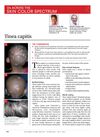 October 2022 in “The Journal of Family Practice”
 This article describes cases of tinea capitis in young Black and Latina children, highlighting the condition's diverse presentations such as erythema, scaling, and subtle signs like comma hairs, but reports no new clinical results.
 21 citations
,
June 2010 in “Anais Brasileiros De Dermatologia”
21 citations
,
June 2010 in “Anais Brasileiros De Dermatologia” This case report is the first in Brazilian literature to document Becker nevus syndrome, featuring Becker's nevus, ipsilateral breast hypoplasia, and scoliosis in a 14-year-old girl.
January 2016 in “UNESP Institutional Repository (São Paulo State University)” This study suggests that the phenotype of melasma in women is influenced by structural and cellular changes across the epidermal-melanin unit, not just melanocyte hypertrophy, highlighting potential roles for dermal damage repair and fibroblast senescence.
1 citations
,
May 2017 in “Journal of Clinical Oncology” This study found that applying BPM 31543 twice daily was safe, well-tolerated, and showed signs of reducing chemotherapy-induced alopecia in women receiving taxane-based chemotherapy.
January 2017 in “European Journal of Dermatology” This case report describes a 69-year-old woman with excessive facial hair growth over six months and provides details on her medical history and examination.
 6 citations
,
May 2014 in “Biomarkers and Genomic Medicine”
6 citations
,
May 2014 in “Biomarkers and Genomic Medicine” This review discusses Charnoly bodies as biomarkers of cell injury and potential therapeutic targets in neurodegenerative, cardiovascular, and cancer treatments but reports no new clinical results.
2 citations
,
June 2023 in “Clinical and Experimental Neuroimmunology” In this case study, the coexistence of thymoma-associated myasthenia gravis, alopecia areata, and twenty-nail dystrophy in a patient is reported, suggesting thymoma may increase the risk of developing these conditions.
12 citations
,
December 2021 in “Dermatology” This study found that trichoscopy can differentiate between dermatomyositis, systemic lupus erythematosus, and systemic sclerosis by identifying distinctive features and may help assess disease activity.
21 citations
,
December 1997 in “The Journal of Dermatology” In this case report, a 57-year-old Japanese woman with alopecia areata, associated with myasthenia gravis and thymoma, showed significant improvement after undergoing thymectomy and receiving high doses of glucocorticosteroids.
2 citations
,
January 2017 in “International Journal of Trichology” This case report describes the trichoscopic and histological features observed in a 7-year-old boy with morphea en coup de sabre and details the positive response to systemic immunosuppressive therapy.