1 citations
,
December 2021 in “Development & Reproduction” This study found that FPR2 knockout mice experienced excessive hair loss and abnormal hair follicle structures, suggesting FPR2's protective role in hair regeneration through stem cell activity regulation.
 January 2026 in “Theoretical and Natural Science”
 In this study, the authors explored the role of Lgr5+ hair follicle stem cells and their regulation through the Wnt/-catenin pathway, highlighting how precise modulation of this pathway is crucial for treating hair loss safely and effectively.
 June 2008 in “Experimental dermatology”
 This research found that melatonin plays a protective and modulatory role in skin biology, reducing UV damage and chemotherapy-induced hair follicle cell harm in human organ culture models.
40 citations
,
September 2024 in “Heliyon” This review discusses the role of bioceramics, highlighting their bactericidal activity, lack of side effects, and ability to release metallic ions for hard and soft tissue repair. The authors suggest that integrating bioceramics with other biomaterials could offer a cost-effective, efficient alternative for wound healing.
 12 citations
,
September 2014 in “Journal of Food Science and Nutrition”
12 citations
,
September 2014 in “Journal of Food Science and Nutrition” This study suggests that Platycarya strobilacea extract promotes hair growth in mice by enhancing stem cell factor expression, reducing mast cell numbers, and increasing cytokines associated with hair growth.
7 citations
,
January 2025 in “Current Issues in Molecular Biology” This study found that PDRN derived from Lactobacillus rhamnosus showed superior antioxidant and wound-healing properties compared to salmon-derived PDRN, while also offering potential benefits in immune modulation and bioavailability.
 June 2025 in “IntechOpen eBooks”
 This chapter highlights the potential of exosomes as innovative agents in cosmetic dermatology, noting their ability to promote skin rejuvenation and target issues like wrinkles, photoaging, and hair loss.
18 citations
,
December 2024 in “Journal of Drugs in Dermatology” In this literature review, exosomes show promise in cosmetic dermatology for skin rejuvenation and hair restoration; however, challenges like inconsistent isolation methods and lack of FDA approval necessitate further clinical trials to ensure long-term safety and efficacy.
2 citations
,
March 2020 in “Developmental cell” This study reported that stress can induce hair graying in mice through noradrenaline-mediated depletion of melanocyte stem cells in hair follicles, providing a mechanism that connects stress to hair color changes.
June 2024 in “Regenerative Therapy” This review highlights the potential of exosomes as a novel therapeutic approach for skin diseases and aging, due to their stability, transportability, and ability to carry various bioactive compounds to target cells.
 August 2020 in “Current psychopharmacology”
 In this study, neurotrophic factors, synaptic plasticity, and neurogenesis changed in the hippocampus of rats during pregnancy, lactation, and pup deprivation, potentially influencing maternal care.
 September 2023 in “Journal of Nutrition and Metabolism”
 This study found that the ashwagandha extracts ASH-Ext1 and ASH-Ext2 show different pharmacological activities in cell models due to their distinct withanolide proportions, highlighting the need for standardized extraction protocols to ensure consistent therapeutic efficacy.
 77 citations
,
July 2020 in “Cell”
77 citations
,
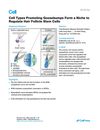
July 2020 in “Cell” This study found that sympathetic nerves and arrector pili muscles form a niche that modulates hair follicle stem cell activity, revealing their role in hair follicle regeneration.
109 citations
,
February 2018 in “CB/Current biology” This study concluded that the receptor-like kinase ERULUS, regulated by auxin, is crucial for modulating cell wall composition and pectin dynamics during root hair growth in Arabidopsis.
 April 2026 in “Microorganisms”
 This study suggests that Staphylococcus capitis ferment filtrate (SCFF) may promote hair growth and scalp health by modulating pathways related to hair loss, aging, and oxidative stress in vitro.
 August 2025 in “Current Issues in Molecular Biology”
 This study demonstrated that Periplaneta americana extract significantly promoted hair regeneration in depilated mice by enhancing superoxide dismutase activity, upregulating vascular endothelial growth factor, modulating the FOXO/PI3K/AKT pathway, and restoring skin microbiome balance, suggesting its potential as a novel therapeutic candidate for alopecia.
23 citations
,
January 2018 in “Biological and Pharmaceutical Bulletin” In this study, YK11 was found to promote osteoblast cell proliferation and differentiation through activation of non-genomic signaling pathways in mouse osteoblast cells.
July 2026 in “British Journal of Dermatology” This study found that patients with alopecia areata have lower levels of sCD83, a protein which, when supplemented in a mouse model, reversed disease symptoms and supported regulatory T cell proliferation, possibly by interacting with IDO activity.
 January 2023 in “Åbo Akademi University Research Portal”
 This study found that vimentin is essential for proper wound healing and cell growth by influencing EMT signaling and mTOR activity in mice.
In this study, PDLLA treatment in middle-aged mice was observed to enhance hair growth by increasing macrophage M2 polarization and hair follicle stem cell proliferation, potentially rejuvenating the skin's microenvironment and offering a novel approach for age-related hair loss.
16 citations
,
March 2017 in “Oncotarget” This study suggests that SOCS3 treatment may effectively inhibit alopecia areata by suppressing CD8+ T cell activity and IFN-γ production.
 2 citations
,
August 2023 in “Autophagy”
2 citations
,
August 2023 in “Autophagy” In this study, researchers found that keratinocyte-specific deletion of the autophagy mediator Atg16l1 in mice heightened skin inflammation and cancer responses, altered hair follicle stem cell activity, and sensitized keratinocytes to cell death.
April 2024 in “Molecules/Molecules online/Molecules annual” The researchers reported that sulfated chitosan-containing sponges can modulate macrophage activity in diabetic wounds, reducing inflammation and promoting angiogenesis and tissue regeneration, which may enhance wound healing outcomes.
 35 citations
,
July 2018 in “Cell Reports”
35 citations
,
July 2018 in “Cell Reports” This study found that the dermal papilla of the hair follicle regulates stem cell quiescence and regeneration by modulating Shh and Wnt signaling pathways, highlighting the importance of signaling cross talk in regeneration.
 21 citations
,
May 2018 in “Journal of Cosmetic Dermatology”
21 citations
,
May 2018 in “Journal of Cosmetic Dermatology” This study found that costunolide promotes hair growth in both lab-cultured human hair follicle cells and in live mice by modulating growth factor pathways.
 January 2023 in “Discovery medicine”
 This study found that Cepharanthine may mitigate doxorubicin-induced senescence by reducing SA-β-Gal activity and restoring autophagy in cell models, offering insights for antiaging drug development.
 January 2026 in “Scientific Reports”
 In this study, researchers found that sesamin, a component of sesamum, modulated the AR-MAPK-Wnt signaling pathway in DHT-stimulated HaCaT keratinocytes, demonstrating potential multi-target activity against molecular events in androgenetic alopecia.
September 2024 in “Journal of Ethnopharmacology” In this study, Terminalia bellirica extracts promoted hair regrowth in testosterone-induced AGA mice, possibly by inhibiting type II 5α-reductase activity and enhancing the MAPK signaling pathway.
 June 2026 in “Journal of Nanobiotechnology”
 This study reported that human umbilical cord mesenchymal stem cell-derived exosomes may promote hair regeneration and thickness in androgenic alopecia by modulating cellular pathways in hair growth, including increasing hair density and diameter, as observed in a mouse model and an exploratory clinical trial.
August 2024 in “Food Bioscience” This study reported that in laboratory conditions, a cell-free supernatant of Bifidobacterium longum BB536 promoted human dermal papilla cell proliferation and reduced damage and apoptosis caused by dihydrotestosterone, suggesting potential use as a preventative treatment for androgenic alopecia by modulating specific signaling pathways.