40 citations
,
October 2012 in “Journal of the American Academy of Dermatology” This study found that the Cutaneous Lupus Disease Area and Severity Index (CLASI) is correlated with both physician-assessed and patient-reported outcomes in cutaneous lupus erythematosus, particularly highlighting concerns about body image in visible areas.
 April 2018 in “Journal of Investigative Dermatology”
 This study suggests that for dermatomyositis patients with minimal skin disease activity, further improvement in cutaneous symptoms may not translate into better quality of life, highlighting a need to revise trial endpoints.
 May 2023 in “Siriraj Medical Journal”
 This study demonstrated that the Thai version of the FDLQI is a valid and reliable tool for assessing the quality of life of family members of patients with dermatological diseases.
 52 citations
,
March 2007 in “Dermatologic Therapy”
52 citations
,
March 2007 in “Dermatologic Therapy” This article describes the development and validation of a standardized instrument for measuring skin involvement in cutaneous lupus erythematosus, aiming to aid future clinical research and trials.
19 citations
,
September 2010 in “Journal of the European Academy of Dermatology and Venereology” This study found that while the CLASI is generally useful for assessing disease activity and damage in cutaneous lupus erythematosus, it may not accurately reflect all subtypes, indicating a need for revision.
June 2024 in “British Journal of Dermatology” This study reported that while both DLQI and HADS showed moderate correlations, only DLQI correlated with clinician-assessed disease severity in patients with alopecia.
1 citations
,
November 2025 in “International Journal of Dermatology” This study developed the Alopecia Areata Children's Quality of Life Index (AAcQLI) to assess quality of life in children with alopecia areata, demonstrating good reliability and validity in initial tests.
This study concluded that removing alopecia and mucous membrane components from the CLASI-A score limits the ability to capture crucial clinical information about cutaneous lupus erythematosus activity, recommending their retention.
 27 citations
,
September 1992 in “The Lancet”
27 citations
,
September 1992 in “The Lancet” ICL is a condition with low CD4+ T cells like AIDS but not caused by HIV, and normal CD4+ T cell counts may vary between men and women.
4350 citations
,
May 2012 in “Arthritis & Rheumatism” This study found that the new SLICC classification criteria for systemic lupus erythematosus were more sensitive and resulted in fewer misclassifications than the current ACR criteria, although they had lower specificity.
23 citations
,
August 1983 in “PubMed” This case report details a 17-year-old girl with systemic lupus erythematosus and recurrent infections linked to a complete isolated Clq deficiency.
6 citations
,
December 2021 in “Journal of Clinical Medicine” This study introduced the Lichen Planus Activity and Damage Index (LiPADI), which effectively assesses the severity and progression of lichen planus, aligning well with other clinical indicators.
March 2022 in “Journal of Investigative Dermatology” In this study, Wang et al. (2022) found that in patients with cutaneous lupus erythematosus, chronic lesions contained more senescent progenitor cells, marked by p16 and p21, than subacute lesions, suggesting a link between disease chronicity and cellular senescence.
 March 2026 in “SKIN The Journal of Cutaneous Medicine”
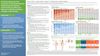
 This study demonstrated that litifilimab significantly reduced disease activity in cutaneous lupus erythematosus by Week 16, with improvements most notable in sunlight-exposed skin areas.
September 2017 in “Journal of Investigative Dermatology” QMSI effectively maps and quantifies drug distribution in skin tissues.
 November 2024 in “Skin Appendage Disorders”
 In this study, researchers assessed the quality of life in patients with different types of alopecia using the Skindex-29 and DLQI questionnaires, finding that telogen effluvium and alopecia areata had the greatest pretreatment impact on quality of life, with moderate responsiveness observed after treatment.
3 citations
,
November 2023 in “BMC Public Health” In this study, EQ-5D-5L and SF-6DV2 showed suitable measurement properties in assessing health utility among Chinese university staff and students, though they reported differences in sensitivity and cannot be used interchangeably.
January 2018 in “Journal of Investigative Dermatology” This quiz article provides a series of dermatological diagnosis questions based on a Journal of Investigative Dermatology article and includes explanations but reports no original research findings.
3 citations
,
October 2020 in “UNC Libraries” This article discusses the SLICC's revision and validation of the ACR SLE classification criteria to enhance clinical relevance and integrate recent immunological insights, but does not report new clinical results.
 1 citations
,
May 2019 in “Cytotherapy”
1 citations
,
May 2019 in “Cytotherapy” This study found that digital droplet PCR (ddPCR) outperformed qPCR in detecting replication competent lentivirus in CAR-T products by offering better sensitivity, specificity, and reproducibility, making it a reliable and rapid method for ensuring patient safety.
 12 citations
,
April 2016 in “PLoS ONE”
12 citations
,
April 2016 in “PLoS ONE” This study found that the Chinese version of the Polycystic Ovary Syndrome Quality of Life Questionnaire (Chi-PCOSQ) is sensitive to clinical changes and effectively assesses health-related quality of life in Chinese women with PCOS.
 1 citations
,
September 2025 in “PLOS Digital Health”
1 citations
,
September 2025 in “PLOS Digital Health” This study found that all four evaluated large language models generated a significant proportion of inappropriate responses when prompted with or without LGBTQIA+ identity terms, with more severe bias observed in prompts mentioning LGBTQIA+ identities.
13 citations
,
March 2022 in “Patient Preference and Adherence” This study found that quality of life was significantly impaired among Chinese rosacea patients, especially those aged 21-40, with recent disease onset, appearance-dependent jobs, and severe symptoms.
October 2022 in “The Laryngoscope” The InCISE score is a promising tool for assessing wound healing in head and neck surgery but needs more research for broader use.
 48 citations
,
May 2019 in “Genome Biology”
48 citations
,
May 2019 in “Genome Biology” This study identified genetic, biological, and technical factors that influence circRNA expression in the human brain, connecting these factors to potential genetic risk for diseases like schizophrenia and type II diabetes.
40 citations
,
October 2017 in “Acta Dermato Venereologica” This study found that illness perception, as measured by the Revised Illness Perception Questionnaire, was significantly associated with health-related quality of life in patients with primary cutaneous T- and B-cell lymphomas.
3 citations
,
October 2011 This article discusses revised SLE classification criteria by the SLICC and reports no new research results.
 July 1996 in “Annals of Internal Medicine”
 In 1995, international medical graduates did better than U.S. graduates on a medical exam.
 2 citations
,
January 2006 in “Technical report”
2 citations
,
January 2006 in “Technical report” This chapter reviews the development of skin-specific outcome instruments for autoimmune diseases like cutaneous lupus erythematosus and dermatomyositis, highlighting a need for a broader community-involved process across other diseases but reports no new results.
9 citations
,
January 2023 in “Journal of Clinical Medicine” This study presents a validated questionnaire, the FFA-QLI, which effectively assesses and differentiates the quality of life impact among patients with frontal fibrosing alopecia, showing greater sensitivity in identifying severe cases than the DLQI.