 21 citations
,
October 1980 in “Gastroenterology”
21 citations
,
October 1980 in “Gastroenterology” This report is the first to associate Cronkhite-Canada syndrome with multiple myeloma, describing regenerative pseudopolyps in a 58-year-old woman rather than true adenomatous polyps.
 January 2022 in “Gastro Hep advances”
 This case report describes a woman diagnosed with Cronkhite-Canada syndrome whose gastrointestinal symptoms and alopecia improved significantly after systemic prednisone treatment, with no recurrence four years after a second treatment course.
 1 citations
,
April 2022 in “The Journal of Family Practice”
1 citations
,
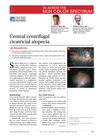
April 2022 in “The Journal of Family Practice” This report describes early and late stages of central centrifugal cicatricial alopecia in two Black women, highlighting progression from a small to a large central patch of hair loss.
9 citations
,
February 2023 in “Medicine” This review discusses the potential of traditional Chinese medicine to relieve clinical symptoms in cases of CCS and emphasizes the need for further large-scale, long-term studies to verify these effects.
2 citations
,
May 2020 in “Journal of the American Academy of Dermatology” Hair shaft changes may be linked to CCCA, but their role is unclear.
 19 citations
,
August 2020 in “Gastroenterology report”
19 citations
,
August 2020 in “Gastroenterology report” This review discusses the characteristics and challenges in treating Cronkhite–Canada syndrome but reports no new clinical findings, emphasizing the need for better understanding and uniform treatment approaches.
March 2026 in “Journal of Investigative Dermatology” This study identified CCCA in 10 children of African descent, highlighting the occurrence of this scarring alopecia in patients under 18 and the importance of early diagnosis for better outcomes.
2 citations
,
January 2014 in “Case Reports in Clinical Medicine” This case study presents an 81-year-old woman diagnosed with Cronkhite-Canada syndrome and discusses the importance of recognizing its clinical and histopathological features for timely and accurate diagnosis.
March 2026 in “Journal of Investigative Dermatology” Genetic factors, especially PADI3 gene variants, contribute to CCCA in women of African descent.
This study introduced the C-CAT, a new assessment tool for central centrifugal cicatricial alopecia, and found that established treatments improved symptoms in most patients over six months.
5 citations
,
April 2023 in “Life” This review discusses central centrifugal cicatricial alopecia in adolescents, noting varied presentation and highlighting genetic and environmental factors, but reports no new clinical findings.
 11 citations
,
January 2013 in “Indian Dermatology Online Journal”
11 citations
,
January 2013 in “Indian Dermatology Online Journal” This article reviews central centrifugal cicatricial alopecia, including its various forms and potential multifactorial causes, but provides no new clinical findings.
 16 citations
,
September 2018 in “Journal of Molecular Liquids”
16 citations
,
September 2018 in “Journal of Molecular Liquids” This study investigated a nanostructured system using PS-b-PAA diblock copolymer for incorporating the hydrophobic photosensitizer ClAlPc, finding it effective in causing cellular damage in Caco-2 cells under light while demonstrating no cytotoxicity without light, suggesting its potential use in photodynamic therapy.
September 2023 in “Journal of the American Academy of Dermatology” Recognizing IPPP is crucial to prevent misdiagnosis and unnecessary treatments.
19 citations
,
January 2015 in “Skin appendage disorders” This study identified a new variety of central centrifugal cicatricial alopecia that includes patchy hair loss on the lateral and posterior scalp in African-American women, which could be misdiagnosed as traction alopecia without dermatoscopy and pathology.
 21 citations
,
January 2013 in “Clinical Endoscopy”
21 citations
,
January 2013 in “Clinical Endoscopy” This study reports the first case in South Korea of Cronkhite-Canada syndrome associated with malignant colon polyp and serrated adenoma.
September 2017 in “The journal of investigative dermatology. Symposium proceedings/The Journal of investigative dermatology symposium proceedings” This study emphasizes the genetic component of central centrifugal cicatricial alopecia, highlighting an atypical case involving an adolescent male within an African-American family.
April 2024 in “Journal of the American Academy of Dermatology” Diagnosing and treating CCCA requires understanding multiple causes and using various diagnostic tools.
September 2019 in “Journal of Investigative Dermatology” This study observed that PCE-DP may improve skin pigmentation by increasing epidermal turnover and inhibiting melanin uptake and inflammation in human epidermal keratinocytes.
 April 2019 in “The journal of investigative dermatology/Journal of investigative dermatology”
 In this study, the researchers observed significant metabolic dysregulation in central centrifugal cicatricial alopecia, particularly involving lipid metabolism and the downregulation of AMPK-related genes.
 19 citations
,
May 1984 in “Digestive diseases and sciences”
19 citations
,
May 1984 in “Digestive diseases and sciences” A young woman's Cronkhite-Canada syndrome improved on its own after she gave birth.
February 2025 in “Gastroenterology” Corticosteroids improved symptoms in a man with Cronkhite-Canada Syndrome.
35 citations
,
June 1997 in “Annals of the New York Academy of Sciences” Early diagnosis and multidisciplinary care are crucial for managing PCOS in adolescents.
 April 2017 in “Journal of Investigative Dermatology”
 This study found that 10% carbamide peroxide significantly reduced acne lesions compared to a vehicle solution, suggesting it as an effective and safe alternative to benzoyl peroxide for treating mild to moderate acne.
 12 citations
,
August 2021 in “International Journal of Biological Macromolecules”
12 citations
,
August 2021 in “International Journal of Biological Macromolecules” This study observed that Poria cocos polysaccharides and finasteride both reduced inflammation in chronic nonbacterial prostatitis in rats, but only Poria cocos polysaccharides reversed related changes in the gut microbiota.
 37 citations
,
August 2016 in “Clinical, Cosmetic and Investigational Dermatology”
37 citations
,
August 2016 in “Clinical, Cosmetic and Investigational Dermatology” This article discusses central centrifugal cicatricial alopecia, highlighting its prevalence, potential genetic factors, and management challenges, but reports no new clinical conclusions and calls for further research.
 75 citations
,
March 2009 in “Journal of The American Academy of Dermatology”
75 citations
,
March 2009 in “Journal of The American Academy of Dermatology” This review discusses the evolution and ongoing debate about the causes of central centrifugal cicatricial alopecia in African American women, without presenting new clinical findings.
December 2019 in “The American Journal of Gastroenterology” In this study, three cases of Cronkhite-Canada syndrome revealed small bowel mucosal lesions, but these findings did not correlate with clinical symptoms or steroid treatment outcomes.
This study found that mutations in the PADI3 gene, which is important for hair shaft formation, may contribute to central centrifugal cicatricial alopecia among patients.
 32 citations
,
November 2011 in “International Journal of Dermatology”
32 citations
,
November 2011 in “International Journal of Dermatology” This article reviews central centrifugal cicatricial alopecia, focusing on its multifactorial etiology and challenges in clinical diagnosis, and calls for more research and better treatment options.