 1 citations
,
September 2023 in “Journal of Fatwa Management and Research”
1 citations
,
September 2023 in “Journal of Fatwa Management and Research” This study identified three main ethical concerns regarding stem cell use from an Islamic perspective in Malaysia, focusing on embryonic stem cells, aesthetic applications, and therapeutic medicine.
 1 citations
,
August 2023 in “Frontiers in immunology”
1 citations
,
August 2023 in “Frontiers in immunology” This review highlights the potential of TCM medicinal foods for managing post-COVID disorders and suggests they could provide a safe and efficient long-term therapy due to their milder nature.
 1 citations
,
November 2021 in “Advances in Dermatology and Allergology”
1 citations
,
November 2021 in “Advances in Dermatology and Allergology” This study described the clinical and pathologic characteristics of patients with cutaneous lupus erythematosus, noting that chronic cutaneous lupus was most common, with photosensitivity as a prevalent symptom.
 April 2016 in “Journal of Investigative Dermatology”
 The researchers reported that SOX4 expression is significantly upregulated in melanoma and its knockdown in cell lines resulted in reduced tumor progression, suggesting potential for targeted therapies.
 March 2026 in “Frontiers in Cell and Developmental Biology”
 This review discusses the potential role of vascular endothelial cells as signaling niches influencing epithelial stem cell states in the skin, emphasizing the need for further exploration in this area.
 January 2026 in “Revista Eletrônica Acervo Saúde”
 This study reported that among individuals with long COVID, hematologic disturbances such as inflammation-related anemia, characterized by high hepcidin levels and restricted iron use, were prevalent, contributing to reduced capacity, fatigue, and slow recovery, especially in men and those with severe acute COVID-19.
 January 2026 in “International Journal of Veterinary Sciences and Animal Husbandry”
 This study reports that ivermectin-based therapy, combined with antibiotics, anti-inflammatory drugs, and supportive treatments, effectively led to clinical recovery within 10-21 days in six dogs with varying severity of demodicosis.

This study discusses the potential of phytochemicals, such as isoflavones and polyphenols, to manage PCOS symptoms by improving insulin resistance, regulating hormones, and reducing cyst size, highlighting their promise as alternative treatments given the limitations of current pharmacological options.
 October 2025 in “Brazilian Journal of Hair Health”
 This narrative review identifies telogen effluvium as a growing concern linked to weight-loss interventions, such as GLP-1 receptor agonists and bariatric surgery, attributing hair loss to systemic and metabolic stress rather than permanent hair follicle damage.
This study found that PRP injections may safely improve penile curvature and PDQ scores in men with stable-phase Peyronie's Disease, although the curvature reduction observed was not enough to determine long-term clinical significance.

This study found that treating male rats with human hair follicle stem cells improved memory function impaired by streptozotocin and increased both neurotrophic and inflammatory markers, suggesting potential neuroprotective effects in this model.
 May 2025 in “The Journal of Rheumatology”
 This case report suggests that a proactive physical therapy model can be effective for improving physical function and meeting exercise guidelines in patients newly diagnosed with systemic lupus erythematosus.
 March 2025 in “Pakistan Journal of Health Sciences”
 In this study, patients with Alopecia Areata showed significant clinical improvement after intralesional steroid treatment, as trichoscopic features like black dots and exclamation mark hairs decreased, while short vellus and circle hairs increased, highlighting Trichoscopy's utility in monitoring treatment response.
 July 2024 in “Biological and Clinical Sciences Research Journal”
 This review reports that transgender individuals undergoing hormonal therapy for gender transition face increased risks of cardiovascular disorders, brain tumors, changes in bone density, metabolic disorders, and other health issues, while highlighting the necessity of this therapy for gender transformation.
 May 2024 in “Pakistan Journal of Health Sciences”
 This study found that people with chronic telogen effluvium had lower hair and serum iron levels and higher serum copper levels compared to healthy controls.
 December 2023 in “Asian Journal of Pharmaceutical Research and Development”
 This research suggests that phytoestrogen-rich herbal extracts may help reduce hyperandrogenism, insulin resistance, and ovarian weight while promoting ovulation in polycystic ovarian syndrome, indicating potential for discovering new bioactive compounds.
 July 2023 in “Revista Ibero-Americana de Humanidades, Ciências e Educação”
 This study found that combining ultrasound with vacuum therapy showed promise in reducing cellulite and improving skin texture more effectively than individual treatments, albeit with mild, temporary side effects; ongoing research is needed to standardize protocols and understand the mechanisms involved.

This comparative clinical study found no statistically significant difference in the remission and recurrence rates between intralesional triamcinolone acetonide and methotrexate for treating localized alopecia areata, suggesting similar efficacy between the two treatments.
 January 2023 in “Surgical & Cosmetic Dermatology”
 This study examined the effectiveness of using intradermotherapy, with or without microneedling and topical solutions, in reducing hair loss among men with androgenetic alopecia, though results are not reported in the abstract.
 November 2021 in “Chattagram Maa-O-Shishu Hospital Medical College Journal”
 This descriptive study reported that Chronic Cutaneous Lupus Erythematosus was the most prevalent subtype, highlighting distinct clinical and pathological features among Cutaneous Lupus Erythematosus subtypes.
 September 2020 in “Nature, Environment and Pollution Technology/Nature, environment and pollution technology”
 This study found that Wistar rats fed with grass extracts from mining areas accumulated trace metals, particularly in the spleen, leading to organ pathology and signs of toxicity.
 January 2019 in “Advances in Environmental Biology”
 This article discusses the structure and function of sebaceous glands and their role in skin moisture but reports no new research findings.
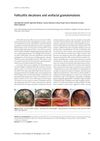 January 2018 in “Advances in Dermatology and Allergology”
 Treatment with dapsone, topical corticosteroids, and antibiotics improved the man's skin conditions.
 July 2019 in “International journal of contemporary medical research”
 This study found that dyslipidemia was more common in male patients with androgenetic alopecia than in controls, particularly among those with severe AGA, suggesting a higher risk of altered serum lipids.

In this case report, a patient on low-dose sorafenib for hepatocellular carcinoma developed a rare and severe facial acneiform eruption without other skin side effects, which improved only minimally with topical treatment.
 115 citations
,
March 2019 in “Nature Communications”
115 citations
,
March 2019 in “Nature Communications” This study identified significant genetic associations with frontal fibrosing alopecia at four genomic loci, suggesting it is a genetically predisposed immuno-inflammatory disorder influenced by the HLA-B*07: 02 allele.
 223 citations
,
January 2014 in “International Journal of Molecular Sciences”
223 citations
,
January 2014 in “International Journal of Molecular Sciences” This article reviews the complex signaling pathways between epithelial and mesenchymal cells crucial for hair follicle morphogenesis, highlighting the Wnt pathway's role as a master regulator without reporting new experimental findings.
 194 citations
,
March 2003 in “American Journal of Pathology”
194 citations
,
March 2003 in “American Journal of Pathology” This study found that psychoemotional stress disrupts hair growth in mice by terminating anagen and suggests a potential pathway for pharmacological management of stress-related hair loss in humans.
 160 citations
,
January 2014 in “Seminars in cell & developmental biology”
160 citations
,
January 2014 in “Seminars in cell & developmental biology” This review discusses the shared molecular and cellular processes in the early development stages of skin appendages like hair follicles, teeth, and mammary glands, reporting no new results.
 143 citations
,
September 2008 in “Experimental gerontology”
143 citations
,
September 2008 in “Experimental gerontology” This review discusses the diverse roles and characteristics of epidermal and dermal stem cells in skin regeneration and aging, highlighting their potential applications in regenerative medicine and reports no new clinical results.