 January 2024 in “Open access journal of pharmaceutical research”
 This study aimed to develop a herbal hair oil formulation using ingredients like hibiscus, amla, and coconut oil to address hair loss and related issues without causing the adverse effects associated with synthetic medications.
 January 2024 in “Más dermatología”
 This study discusses how hair characteristics, such as color, thickness, and volume, change with age and hormonal factors, affecting perceived age, and introduces concepts of hair aging and the nuanced diagnosis between androgenic and senile alopecia.
 January 2024 in “Lecture notes in networks and systems”
 In this study, a system was developed utilizing advanced image processing to analyze hair and scalp conditions, aiding professionals in diagnosing diseases like alopecia and monitoring treatment by extracting and comparing key parameters from microscopic images.
 November 2023 in “The journal of investigative dermatology/Journal of investigative dermatology”
 In this case series, researchers reported on the clinical characteristics and treatment approaches for Frontal Fibrosing Alopecia in four cases, emphasizing the importance of early identification and intervention to manage this scarring hair loss disorder that primarily affects the frontal hairline and eyebrows.
 April 2023 in “JOJ dermatology & cosmetics”
 In this study, researchers highlighted the complexity of managing psychocutaneous disorders, emphasizing the need for a multidisciplinary approach involving dermatologists, psychiatrists, family physicians, and social support to address associated psychiatric diagnoses, risk factors like suicide, and ensure effective treatment.
January 2023 in “Zenodo (CERN European Organization for Nuclear Research)” This study evaluated a herbal hair oil formulation, including ingredients like Curry leaves and Coconut oil, for its potential to enhance hair growth compared to purified Coconut Oil alone.
This chapter provides dermatology trainees with insights on managing lichen planopilaris, emphasizing treating active disease to prevent further hair loss and recommending a tapered course of oral steroids for disease stabilization.
This review discusses the potential risks of formaldehyde in hair keratin treatments like Brazilian blow-dry, and reports no new clinical results; it emphasizes the need for greater safety assessments including occupational exposure.
 January 2023 in “Indian Dermatology Online Journal”
 This article reviews the indications for micropigmentation in dermatological conditions like stable vitiligo and alopecia, but presents no new clinical results.
 January 2023 in “Journal of surgery and research”
 This article discusses various treatments for androgenetic alopecia and reports no new clinical results, noting the condition's aesthetic and psychological impact.
In this study, researchers found that patients recovering from COVID-19 in the metropolitan area of Goiânia-GO commonly experienced musculoskeletal issues, behavior changes, and other health complications, with obesity and certain lifestyle factors associated with these post-COVID symptoms.
October 2022 in “Zenodo (CERN European Organization for Nuclear Research)” This article describes the promoted benefits of Ignite Amazonian Sunrise Drops for weight management and metabolism, but it reports no new scientific results.
November 2021 in “CRC Press eBooks” This review discusses the genetic and metabolic factors influencing hair pigmentation, as well as conditions leading to hypo- or depigmented hair, and reports no new experimental findings.
 October 2021 in “The Egyptian Journal of Hospital Medicine”
 In this study, intralesional platelet-rich plasma was found to be a beneficial and safe treatment option for oral lichen planus, an inflammatory disease affecting the oral mucosa.
 September 2021 in “CRC Press eBooks”
 This article discusses features, genetics, and diagnostic challenges of central centrifugal cicatricial alopecia in African American women but reports no new clinical results.
 July 2021 in “Journal of emerging technologies and innovative research”
 This article discusses Ayurvedic perspectives on acne vulgaris and outlines potential natural remedies, but it presents no new clinical findings.
September 2020 in “Journal of Mind and Medical Sciences” This study reported that using a Cutera Xeo laser with specific probes may help treat rosacea symptoms like diffuse facial erythema and telangiectasias, with some risks like bruises and hypopigmentation.
 October 2019 in “International journal of research in dermatology”
 This case report describes two instances of hyper-pigmentation induced by prolonged misuse of Betnovate cream, where cessation and appropriate treatment led to significant improvement within 15 days.
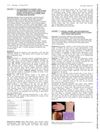
This case report details a child with a specific TNFAIP3 mutation manifesting as a severe SLE/SS phenotype, expanding the known phenotype for this genetic variant.
 January 2019 in “Chulalongkorn Medical Journal”
 This study found that combining a 1,927 nm fractional Thulium-doped fiber laser with platelet-rich plasma significantly increased hair density and mass in men with androgenetic alopecia, suggesting it is an effective treatment.
 October 2018 in “Springer eBooks”
 The document concludes that various topical medications are effective for skin conditions but often cause skin irritation as a side effect.
 February 2018 in “InTech eBooks”
 This review discusses the role of platelet-rich plasma therapy in various cosmetic procedures, finding potential benefits in improving tissue homeostasis if harvesting standards are maintained, but reports no new clinical results.
 July 2014 in “Disease-a-Month”
 The document gives treatment advice for various skin conditions, like using metronidazole for perioral dermatitis and minoxidil for hair loss.
 September 2013 in “Metal Powder Report”
 This study found that dihydrotestosterone induces hair loss in male C57BL/6 mice, and this effect can be partially reversed by the androgen receptor antagonist bicalutamide.
July 2013 in “Indian Journal of Dentistry” This report describes a rare case of Graham-Little–Piccardi–Lassueur syndrome in a 46-year-old male, highlighting its typical features such as scarring alopecia and lichenoid follicular eruptions.
This study determined that the incidence of Discoid Lupus Erythematosus at the Government General Hospital, Chennai, from 2006 to 2008 was 1.7 per 1000, with localized and disseminated forms manifesting distinctive demographic and clinical patterns.
This article lists the clinically important interactions and skin reactions of several drugs and substances, including THA, FK506, tamoxifen, tamsulosin, tartrazine, tea tree oil, temazepam, and temozolomide, but provides no new clinical results.
 January 2022 in “Clinical Cases in Dermatology”
 This review describes lichen planopilaris diffuse pattern and recommends topical corticosteroids as a first-line treatment, but reports no new clinical results.
April 2019 in “kufa Journal for Nursing sciences” This study observed that follicular unit extraction hair transplant initiated noticeable hair growth in androgenetic alopecia patients by three months and increased hair density after six months, with some experiencing mild side effects such as postural hypotension and donor site discomfort.
 January 2023 in “Our Dermatology Online”
 An old recipe called "Champigny Saumure" might help treat a rare scalp condition.