79 citations
,
January 2002 in “Nucleic Acids Research” This study found that BMP-2 activates Dlx3 gene transcription in murine keratinocytes by binding with Smad1/Smad4, suggesting a mechanism for BMP signaling's role in skin and hair follicle regulation.
2 citations
,
October 2024 in “Journal of Cosmetic Dermatology” This study highlights that chemicals used in brow lamination, like ammonium thioglycolate and thioglycolic acid, may cause skin irritation and other systemic issues, suggesting a need for further investigation and regulatory measures.

This study found that direct co-culture of human bone marrow-derived mesenchymal stromal cells with regulatory T cells enhanced osteogenic gene expression, alkaline phosphatase activity, and matrix mineralization, suggesting Treg's potential in promoting bone regeneration by modulating BMSC mechanobiology through the ROCK-myosin signaling pathway.
 March 2014 in “Hair transplant forum international”
 This article discusses the various titles given to individuals assisting in hair transplant surgeries and provides no clinical research findings.
 4 citations
,
January 2020 in “BioMed Research International”
4 citations
,
January 2020 in “BioMed Research International” In this study, 0.5% timosaponin BII from Anemarrhena asphodeloides promoted hair growth in C57BL/6 male mice, showing effects comparable to 2% minoxidil.
 October 2018 in “Annals of oncology”
 This study reported that topical BPM31543 was safe and well-tolerated for patients on taxane-based chemotherapy, with some efficacy indicated in reducing hair loss at all dosages tested.
 October 2025 in “Cermin Dunia Kedokteran”
 This review outlines the strategies for managing TB-IRIS in HIV patients, emphasizing early detection, prevention, and appropriate treatment to reduce morbidity and mortality.
May 2015 in “UC Merced Undergraduate Research Journal” This review suggests that while both pharmaceuticals and behavioral therapies can reduce symptoms of trichotillomania, behavioral therapies often prove more effective, though long-term effectiveness remains uncertain.
 April 2017 in “Journal of Investigative Dermatology”
 In this study, researchers demonstrated that the Id2 gene acts as a direct target and effector of BMP signaling, playing a key role in maintaining quiescence in hair follicle stem cells in vivo.
 November 2022 in “Journal of Investigative Dermatology”
 This study suggests that human dermal papilla cells respond to hypoxia by increasing the expression of HIFs, TGF-β2, and BMP4, which may influence hair cycle regulation.
 November 2025 in “BMC Urology”
 This study reports that prostate volume, operation time, resected tissue weight, and smoking increase risks of blood loss and fluid absorption during PK-TURP, while finasteride treatment and surgeon experience may reduce these risks.
This review explores the mechanisms and clinical applications of thymosin β4, highlighting its potential in various medical fields, but it presents no new research findings.
2 citations
,
August 2020 in “CRC Press eBooks” This article discusses the impact of the tabby mutation on secondary vibrissae and hair follicle patterns in mice and reports no new clinical results.
January 2000 in “Cambio 16” This study observed that overexpression of Bcl-2 in certain transgenic mice accelerates catagen progression and increases hair follicle apoptosis and alopecia, while Bcl-2 deficient mice show delayed hair growth and pigmentation changes.
This observational study reviewed thyroid eye disease patients treated with teprotumumab at one center, reporting common side effects like fatigue and dry eye symptoms, with serious adverse events including two cases of blood clots and one pulmonary embolism.
 April 2018 in “Journal of Investigative Dermatology”
 This paper presents a new methodology combining magnetic tweezers and traction force microscopy to study keratinocyte mechanobiology, but reports no experimental results yet.
2 citations
,
January 2014 in “Journal of Cytology & Histology” In a mouse model, this study found that LAM/TSC cells invaded the uterus and increased angiogenesis, while anti-EGFR antibody and rapamycin effectively reduced cell presence and blood vessel proliferation.
 October 2024 in “Journal of the Endocrine Society”
 In this case report, a 40-year-old woman with systemic lupus erythematosus developed Type B Insulin Resistance Syndrome, characterized by severe hyperglycemia despite high insulin doses, requiring immunosuppressive therapy to manage refractory symptoms.
1 citations
,
June 2007 in “Journal of Clinical Oncology” This study found that weekly low-dose bicalutamide was safe and appeared to be associated with high-grade PIN remission and favorable PSA modulation in subjects with persistently elevated PSA but negative biopsy.

This study found that men with benign prostate hyperplasia showed increased meibomian gland dysfunction and tear film instability compared to age-matched controls, and were also more likely to have androgenic alopecia.
 1 citations
,
April 2020 in “medRxiv (Cold Spring Harbor Laboratory)”
1 citations
,
April 2020 in “medRxiv (Cold Spring Harbor Laboratory)” This study identified gene sets associated with Tourette Syndrome, implicating Ligand-gated Ion Channel Signaling, Lymphocytic, and Cell Adhesion and Trans-synaptic Signaling processes in the disorder's neurobiology.
 6 citations
,
November 2008 in “Journal of Dermatological Science”
6 citations
,
November 2008 in “Journal of Dermatological Science” Certain proteins involved in DNA modification may affect the genetic changes in systemic lupus erythematosus and could indicate the disease's activity.
3 citations
,
August 2022 in “International Journal of Molecular Sciences” This study demonstrated that 5-azacytidine treatment may reduce TSC lesion-related hair follicles in mice, suggesting chromatin remodeling agents could be effective for tuberous sclerosis cutaneous lesions lacking tuberin.
 8 citations
,
June 2016 in “Journal of Pediatric Orthopaedics B”
8 citations
,
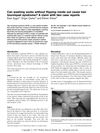
June 2016 in “Journal of Pediatric Orthopaedics B” This paper presents two cases of hair tourniquet syndrome and suggests washing baby socks inside out as a potential preventative measure.

This study suggests that Tenebrio molitor larvae extract may promote hair growth and prevent hair loss by enhancing cell proliferation and protecting against cytotoxicity in laboratory settings.
 September 2019 in “Journal of Investigative Dermatology”
 This study found that BMPs can counteract the inhibitory effects of androgens on hair follicle stem cell differentiation, highlighting their critical role in the pathway dysregulation seen in androgenetic alopecia.
 3 citations
,
May 2025 in “Cell Death and Disease”
3 citations
,
May 2025 in “Cell Death and Disease” This study found that METTL1 is upregulated in papillary thyroid cancer tissues and promotes cancer cell proliferation and metastasis through its tRNA methyltransferase activity.
92 citations
,
September 2013 in “Journal of Investigative Dermatology” This study found that peripheral clock genes, particularly BMAL1 and Period1, modulate human hair follicle cycling, suggesting their potential as therapeutic targets for affecting hair growth.
 November 2018 in “Atlas of genetics and cytogenetics in oncology and haematology”
 The review discusses the diverse roles of WNT10B in mammary gland development, immune function, and its potential implications in cancer and regenerative processes, with no new experimental results.
 December 2020 in “TURKDERM”
 This case report describes a 3-year-old boy diagnosed with temporal triangular alopecia, emphasizing the importance of clinical and dermoscopic examination for correct diagnosis due to the condition's rarity and risk of misdiagnosis.