This chapter summarizes the efficacy of NB-UVB monotherapy for vitiligo and notes that patients treated with tacrolimus showed significantly better repigmentation.
May 1966 in “Zhurnal Tekhnicheskoi Fiziki (U.S.S.R.) For English translation see Sov. Phys. - Tech. Phys. (Engl. Transl.)” In this study, researchers found that progesterone promotes breast tumor growth in mice through its metabolite 5αP, which can be blocked by the 5α-reductase inhibitor finasteride.
 16 citations
,
February 2018 in “BMC Genomics”
16 citations
,
February 2018 in “BMC Genomics” This paper reviews genome-based personalized medicine developments using Web services for analyzing SNPs in reproductive potential but reports no new clinical findings.
250 citations
,
November 2003 in “The Journal of Cell Biology” This study found that BMP receptor IA is crucial for hair progenitor cell differentiation in mice, and its sequential inhibition and activation are necessary to generate a functioning hair shaft.
33 citations
,
December 2005 in “British Journal of Clinical Pharmacology” This study found that the Transdermal Delivery System efficiently delivers testosterone systemically and showed bioequivalent hormone concentrations to a known topical gel in healthy males.
February 2017 in “Cancer Research” In this study involving women undergoing taxane-based chemotherapy, a twice-daily topical application of BPM31543 was well-tolerated and showed potential in reducing severe hair loss, prompting further investigation at higher doses.
January 2026 in “Dermatologic Therapy” In this study, photobiomodulation therapy applied twice weekly for 12 weeks significantly improved hair regrowth and quality of life in alopecia areata patients, with no noted side effects.
 35 citations
,
February 2012 in “The New England Journal of Medicine”
35 citations
,
February 2012 in “The New England Journal of Medicine” Early diagnosis and treatment of TPP can prevent complications.
 35 citations
,
February 2019 in “Cell Communication and Signaling”
35 citations
,
February 2019 in “Cell Communication and Signaling” This study found that BMP6 and Wnt10b competitively regulate the transition between hair follicle growth phases, offering new insights into hair follicle cycling and potential hair loss treatments.
 3 citations
,
March 2020 in “International Journal of Molecular Sciences”
3 citations
,
March 2020 in “International Journal of Molecular Sciences” This study found that overexpressing the gene Thymosin β4 (Tβ4) can promote the growth and development of secondary hair follicle dermal papilla cells in cashmere goats, suggesting its potential as a target for increasing cashmere production.

In this case study, researchers reported the first documented instance of malignant transformation of congenital triangular alopecia into basal cell carcinoma in a 48-year-old woman, underscoring the importance of assessing long-standing alopecic areas for malignancy.
December 2025 in “Pediatric Dermatology” In this study, a 14-year-old girl developed Malassezia folliculitis and seborrheic dermatitis after starting trametinib, which improved with itraconazole treatment. The research underscores the importance of recognizing trametinib-related skin reactions and suggests managing them with antifungal therapy without necessarily discontinuing the medication.
 September 2022 in “Medical Mycology”
 This study found that three protocols for generating Titan cells in vitro from Candida neoformans vary in their kinetics and transcriptomic profiles, pointing to differences which could impact further research.
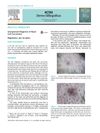 May 2015 in “Actas Dermo-Sifiliográficas”
 A young man was unexpectedly diagnosed with basal cell carcinoma after a scalp examination and confocal microscopy.
 16 citations
,
December 2019 in “Animals”
16 citations
,
December 2019 in “Animals” In this study, cashmere goats engineered to overexpress the Tβ4 gene in hair follicles produced more cashmere, indicating that Tβ4 promotes secondary hair follicle development and enhances yield.
 2 citations
,
February 2021 in “The Journal of clinical and aesthetic dermatology”
2 citations
,
February 2021 in “The Journal of clinical and aesthetic dermatology” This review examines the various potential causes of bitemporal hair loss, emphasizing the importance of prompt diagnosis to prevent further hair loss in scarring conditions; it reports no new clinical results.
1 citations
,
April 2012 in “Urology” Self-management can help improve symptoms of benign prostatic hyperplasia.
 April 2025 in “Revista de Ciências da Saúde Nova Esperança”
 This review discusses the various therapeutic uses of Botulinum Toxin Type A and reports high levels of patient satisfaction with minimal adverse effects across several conditions, emphasizing its potential therapeutic importance.
 November 2025 in “International Journal Of Ayurvedic And Herbal Medicine”
 In this case study, a 22-year-old female with trichotillomania showed significant improvement through an integrated approach combining Growth Factor Concentrate therapy, Ayurvedic medications, counseling, and yogic practices, highlighting the importance of addressing both dermatological and psychological aspects for long-term recovery.
 2 citations
,
October 2018 in “Archives of Dermatological Research”
2 citations
,
October 2018 in “Archives of Dermatological Research” The researchers reported that topical tofacitinib in mice increased hair follicles in the growth phase and boosted noggin and BMP4 mRNA expressions, compared to a vehicle and minoxidil.
1 citations
,
January 1981 in “Elsevier eBooks” Melatonin stops melanin production after tyrosinase action, with cyclic GMP mimicking this effect.
26 citations
,
November 2019 in “Medical Science Monitor” This study found that photobiomodulation via LED light at 630 nm and 810 nm increased proliferation and mineralization in osteoblast-like cells, with comparable effects between the two wavelengths.
December 2023 in “Journal of clinical medicine” This study reports the case of an elderly patient with a keratosis pilaris-like skin eruption after beginning treatment with imatinib for chronic myeloid leukemia, discussing similar skin reactions to BCR-ABL inhibitors and exploring potential mechanisms behind these adverse cutaneous reactions.
 16 citations
,
January 2010 in “American Journal of Neuroradiology”
16 citations
,
January 2010 in “American Journal of Neuroradiology” This case report describes a 3-year-old boy with trichothiodystrophy, highlighting specific MRI findings of diffuse dysmyelination and osteosclerosis that may be unique to the disorder.
 December 2019 in “Journal of pediatrics & neonatology”
 This case report discusses the diagnosis and management of temporal triangular alopecia in a pediatric patient experiencing asymptomatic hair loss, emphasizing its nonprogressive nature and poor prognosis for regrowth.
 May 2025 in “Research Square (Research Square)”
 This study found that conditioned medium from photobiomodulation-irradiated adipose-derived stromal cells enhanced hair growth in a mouse model of hair loss more effectively than non-irradiated medium, suggesting potential for treating alopecia by boosting growth factor secretion.
 October 2022 in “Journal of Pharmaceutical Negative Results”
 This review examines the therapeutic effects of photobiomodulation on severe medical illnesses but reports no new clinical results; it emphasizes its potential in neurology, pulmonology, inflammation, dermatology, wound healing, and oncology.
 January 2025 in “Journal of the European Academy of Dermatology and Venereology”
 This study highlights that Trichophyton mentagrophytes genotype VII, primarily transmitted sexually among men who have sex with men, has established itself in Europe, necessitating awareness and surveillance to prevent its spread.
15 citations
,
September 2018 in “Applied Biological Chemistry” This review discusses the development of Matrigel and its role in identifying thymosin beta 4 as a regenerative protein, without reporting new experimental findings.
 4 citations
,
February 1988 in “Journal of the American Academy of Dermatology”
4 citations
,
February 1988 in “Journal of the American Academy of Dermatology” Congenital triangular alopecia is more common than thought and some treatments can be beneficial for appearance concerns.