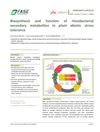
 November 2025 in “Frontiers of Agricultural Science and Engineering”
 This study observed that rhizobacterial strain RT3 significantly improved drought tolerance in lettuce by increasing survival rates and fresh biomass after rewatering, with metabolites such as proline and glycine enhancing stress resilience.
 April 2012 in “CORD. Coconut research & development/CORD”
 This study observed that vermiwash application can enhance soil microbial activity and sustain crop yields, matching or slightly trailing traditional fertilizers, while offering additional plant health benefits.
August 2021 in “Journal of the American Academy of Dermatology” This review discusses the use of rice bran extracts from Oryza sativa in cosmetic hair products and notes a lack of scientific evidence supporting their effectiveness in enhancing hair growth.
3 citations
,
January 2022 in “Journal of drugs in dermatology” This review of literature and market analysis found that rice bran extracts may promote hair growth through molecular mechanisms while being safe for cosmetic use, though further research is warranted.
 7 citations
,
January 2015 in “Biological & Pharmaceutical Bulletin”
7 citations
,
January 2015 in “Biological & Pharmaceutical Bulletin” This study found that a 16-week dermal application of rice bran extract significantly increased hair density and diameter in male androgenic alopecia patients without causing adverse reactions.

This study found that vinegar-processed black soybean and its extract accelerated hair growth and prevented alopecia in mice, with potential mechanisms involving modulation of the Wnt/β-catenin signaling pathway, suggesting they may be promising functional foods for hair regeneration.
This study observed that Cornus officinalis fermented with Lactobacillus rhamnosus promoted hair regrowth in mice more effectively than the positive control, minoxidil.
 2 citations
,
April 2018 in “Majalah Obat Tradisional”
2 citations
,
April 2018 in “Majalah Obat Tradisional” In this study, the FIII micro emulsion formulation of virgin coconut oil and rice bran oil showed the best results for hair growth, increasing rabbit hair length by 1.26 cm in 18 days.
 December 2025 in “Zenodo (CERN European Organization for Nuclear Research)”
 This abstract describes SwaLife Hair Bloom Onion Oil as a treatment designed to enhance hair health by nurturing the scalp, strengthening hair, and reducing breakage, using a blend of onion extract and herbs to offer both therapeutic and sensory benefits.
June 2017 in “Yakakoeji/Yaghag hoeji” This study found that Wheat Sprout MeOH extract increased cell proliferation in human hair dermal papilla cells through the activation of ERK and Akt signaling pathways.

This paper discusses the potential benefits and preparation process of tofu made from almonds and sunflower seeds, but reports no new clinical results, and suggests further research is needed.
 5 citations
,
January 2021 in “Journal of Saudi Chemical Society”
5 citations
,
January 2021 in “Journal of Saudi Chemical Society” This study analyzed watercress oil and confirmed its phytochemical profile, UV absorption properties, and potential efficacy for hair growth, supporting traditional hot oil applications.

This review summarizes the composition, bioactive functions, and potential industrial applications of rice bran polysaccharides, focusing on how extraction methods and modifications impact their biological activities.

This study found that supercritical fluid extraction of germinated perilla seed significantly promoted hair follicle cell proliferation and gene expression related to hair growth, suggesting its potential as a natural treatment for hair loss.
July 2026 in “International Journal of Innovative Science and Research Technology (IJISRT)” This study developed and tested a Brahmi-based herbal shampoo, finding it effective for cleaning hair, maintaining suitable pH and foaming properties, and being stable and safe for regular use without irritation or damage.
5 citations
,
October 2020 in “Agronomy” This study provides evidence that root hairs significantly enhance phosphorus uptake in barley when phosphorus availability is limited in the root zone.
August 2020 in “Prosiding Farmasi” This review explores the potential of Arabian Bidara leaves as a hair growth enhancer based on its shared chemical compounds with other known hair-fertility-promoting plants, but it reports no new experimental results.
 6 citations
,
June 2024 in “Scientific Reports”
6 citations
,
June 2024 in “Scientific Reports” This study introduced RoPod, a customizable tool for low-stress live imaging of Arabidopsis roots, which improves data reproducibility and provides new insights into plant autophagy by revealing detailed, cell type-specific responses to chemical modulators.
December 2025 in “American journal of microbiological research” This study found that Marantochloa species leaves have antimicrobial and anti-inflammatory properties and help preserve the quality of corn-based foods, suggesting their potential nutritional benefits and encouraging their use in Greater Lomé.
November 2025 in “Frontiers in Pharmacology” This study observed that both in vitro and in vivo research demonstrated rice bran extract can significantly enhance collagen and elastin synthesis, reduce water loss, and improve skin quality and elasticity, highlighting its potential as a sustainable cosmetic ingredient.
 August 2024 in “Plant Signaling & Behavior”
 This study found that overexpressing the gene OsPRX83 in rice plants enhanced osmotic and oxidative stress tolerance compared to wild-type and mutant rice, showing potential for engineering drought-resistant rice varieties through ABA-dependent pathways and ROS scavenging.
 36 citations
,
December 2002 in “Experimental dermatology”
36 citations
,
December 2002 in “Experimental dermatology” This study found that procyanidin B-3, a compound isolated from barley extract, may promote hair growth by enhancing hair epithelial cell growth and counteracting TGF-β1's growth-inhibiting effects in vitro and in vivo.
4 citations
,
August 2025 in “Plant Cell & Environment” This study found that the plant-growth-promoting bacteria Azospirillum brasilense enhances root hair development by increasing auxin levels and activating specific transcription factors, highlighting key signaling pathways involved in this process.
 December 2025 in “Zenodo (CERN European Organization for Nuclear Research)”
 This source describes SwaLife Hair Bloom Onion Oil as a treatment that uses onion extract and herbs to strengthen hair, prevent breakage, and promote growth, while offering a relaxing, traditional head massage experience.
189 citations
,
July 2000 in “American Journal of Botany” In this study, wild-type Arabidopsis thaliana with responsive root hairs efficiently acquired phosphorus under low-phosphorus conditions compared to mutants, suggesting an adaptive advantage in nutrient-limited environments.
3 citations
,
January 2023 in “Agronomy” This research reported that KDML105 bran extract demonstrated antioxidant activities, reduced nitric oxide production, and influenced gene expression related to the hair cycle in cultured dermal papilla cells, suggesting potential as an anti-hair loss agent by supporting the anagen phase and angiogenesis.
 10 citations
,
July 2019 in “Journal of Asia-Pacific Entomology”
10 citations
,
July 2019 in “Journal of Asia-Pacific Entomology” This study suggests that ultra-fine powders of steamed and lyophilized mature silkworms may have enhanced pharmacological effects compared to fine powders, possibly due to their smaller particle size.
12 citations
,
April 2015 in “BMC research notes” This study found that root hairs in maize, wheat, and finger millet continued to grow beyond the typical root hair zone when grown with the Turface® fertigation system, highlighting potential for understanding root hair dynamics and crop improvement.
 July 2021 in “Asia-Pacific journal of convergent research interchange”
 This research on dermal papilla cells found that Sparasis crispa increased mRNA expression related to hair production and may help in hair generation cycles, but its impact on male hair loss treatment remains uncertain.
6 citations
,
January 2013 in “Journal of Ayurveda and integrative medicine” This study found that detoxifying Abrus precatorius seeds through an Ayurvedic process removed toxicity while retaining hair growth efficacy, suggesting the process is effective in reducing toxins.