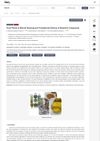
This review highlights the potential of plant-derived natural compounds as biocompatible and biodegradable materials in dermal and transdermal delivery systems, emphasizing their unexplored benefits and detailing recent advances in isolation techniques and drug delivery technologies.
This review evaluates the literature on the ethnopharmacology, phytochemistry, and therapeutic potential of Darmana Turki (Artemisia maritima L.) and reports no new clinical findings.
This study investigated the potential mechanisms of Curcuma aeruginosa in treating androgenetic alopecia and identified 66 bioactive compounds interacting with proteins involved in the disorder, suggesting its involvement in hormone response and specific signaling pathways.
 August 2025 in “Tropical Journal of Natural Product Research”
 In this study, LEON gel—an innovative nanoliposome-based delivery system for lavender essential oil—showed significant hair growth acceleration in male white rats without causing irritation, suggesting enhanced effectiveness compared to traditional essential oil use.
 July 2018 in “International journal of research - granthaalayah”
 In this clinical trial, the authors observed that Dravanti beeja lepa may be safe and effective for promoting hair regrowth in patients with Indralupta (Alopecia Areata).
 December 2020 in “Rev. Amazon.”
 This study identified that 80% of a rural population in Ecuador uses medicinal plants like Aloe vera for treating hair conditions, highlighting the prevalence of ancestral plant knowledge.
26 citations
,
October 2018 in “International journal of osteoarchaeology” This study found evidence of fern consumption in the medieval population of the Balearic Islands by identifying fern sporangium annuli in dental calculus, suggesting potential medicinal usage.
6 citations
,
June 2022 in “Journal of Orthopaedic Surgery and Research” In this animal study, oral administration of wedelolactone significantly improved bone mineral density and reduced osteoclast numbers in a model of particle-induced osteolysis, suggesting potential as a treatment option.
 61 citations
,
September 2010 in “Fitoterapia”
61 citations
,
September 2010 in “Fitoterapia” This study found that the EtOAc extract of Tridax procumbens aerial parts significantly inhibited rat paw edema and COX enzyme activity, suggesting its potential anti-inflammatory properties.
 January 2023 in “Han'gug mi'saengmul saengmyeong gong haghoeji/Han-guk misaengmul saengmyeong gonghak hoeji”
 This study found that a mixed extract of N. jatamansi, O. basilicum, and C. sativus, particularly when extracted via steaming and ultrasonic methods, increased antioxidant content, stimulated melanin production for black hair, and promoted hair growth in mouse models, while maintaining high cell viability.
 January 2025 in “International Journal of Mosquito Research”
 In this study, the combination of petroleum ether extracts from Jacquinia ruscifolia flowers and Thuja orientalis strobili demonstrated synergistic larvicidal effects against third-instar Culex quinquefasciatus larvae, achieving 100% mortality at 250 ppm with noted synergism particularly in a 1:2 ratio.
This study suggests that Myrtus communis shows promising effects for various conditions like GERD, menstrual bleeding, and wound healing in clinical trials, though some adverse effects may occur with systemic administration of myrtle essential oil.
2 citations
,
October 2025 in “Antimicrobial Agents and Chemotherapy” This study found that cepharanthine may be a promising treatment for enterovirus infections, as it offered full protection to mice against lethal EV71 challenges and reduced viral titers and pathology.
15 citations
,
March 2023 in “Heliyon” This study found that water-soluble beehive extract exhibited anxiolytic, antidepressant, and anti-inflammatory effects in animal models.
 November 2021 in “Veterinary world/Veterinary World”
 In this study, dogs with localized demodicosis showed notable improvement in dermatological lesions when treated with Dipterocarpus alatus oil combined with Rhinacanthus nasutus leaf extract, particularly by day 28 of post-treatment, with no observed allergic reactions or clinical signs.
 January 2026 in “Frontiers in Pharmacology”
 This review highlights the potential of wedelolactone from the plant Wedelia Chinensis, summarizing its reported pharmacological effects, including anti-inflammatory, antiviral, antibacterial, antitumor, anti-osteoporosis activities, and organ protection based on existing in vitro and in vivo research findings.
2 citations
,
April 2019 in “DOAJ (DOAJ: Directory of Open Access Journals)” This study found that lotion containing ethanolic extract of Phyllanthus niruri and 1% menthol enhanced hair growth in white Wistar rats more than a formula without menthol, although not significantly.
61 citations
,
September 2011 in “Pain” This study observed that N-palmitoylethanolamine (PEA) may relieve pain by enhancing de novo neurosteroid synthesis, evidenced by increased allopregnanolone levels and protein expression in pain models, dependent on PPAR-α.
October 2025 in “Influenza and Other Respiratory Viruses” This study found that bis-benzylisoquinoline and Amaryllidaceae alkaloids, especially aromoline, show potential as antiviral agents, suggesting they could serve as foundations for developing new treatments against coronaviruses by enhancing the understanding of their structure-activity relationships.
 118 citations
,
July 2005 in “Journal of Ethnopharmacology”
118 citations
,
July 2005 in “Journal of Ethnopharmacology” In this study, the aqueous extract of Eclipta alba and its hydrolyzed fraction showed nootropic activity and reduced stress-induced alterations in rats.
 October 2015 in “Elsevier eBooks”
 Chewing betel nut may increase the risk of type 2 diabetes, and saw palmetto can improve urinary symptoms in BPH with fewer side effects but may cause bleeding and allergic reactions.
 November 2022 in “PLANT ARCHIVES”
 This study reported on 23 medicinal plant species used in Ben M'hidi, El-Tarf, Algeria, providing ethnobotanical insights into their traditional therapeutic applications.
3 citations
,
January 2023 in “Biodiversitas Journal of Biological Diversity” This study found that endophytic bacteria isolated from Leea indica leaves showed high antioxidant activity, suggesting they could be a novel source of natural antioxidants.
 January 2000 in “Time to knit”
 This article describes the extraction and characterization method for wedelolactone from Eclipta alba but presents no new clinical results.
This overview discusses the medicinal uses and pharmacological activities of Eclipta alba, yet reports no new experimental findings; it emphasizes the plant's significant role in traditional medicine.
9 citations
,
February 2024 in “mBio” This study found that biliverdin beta and delta, metabolites of heme, play a critical role in Pseudomonas aeruginosa iron acquisition and cooperative behaviors, which are crucial for the bacterium's long-term infection in cystic fibrosis patients, suggesting potential targets for new therapies.

This study found that the ethanolic extract of Guazuma ulmifolia, or mutamba, showed only intermediate levels of phenolic compounds and low antioxidant activity in laboratory tests, suggesting limited potential in alleviating oxidative stress conditions like cancer or cardiovascular diseases.
This review discusses drug repositioning for cardiometabolic disorders and reports no new clinical findings; the authors emphasize its potential benefits, such as known safety profiles and reduced development costs compared to new drug development.
 5 citations
,
March 2019 in “Journal of lipid research”
5 citations
,
March 2019 in “Journal of lipid research” This study reports new fluorogenic ceramidase substrates and highlights RBM14C24:1 as an efficient substrate for neutral ceramidase, while RBM15C18:1 is the best probe for measuring ACER1 and ACER2 activities, potentially aiding high-throughput screening for ceramidase inhibitors.
This review provides an overview of the ethno-medical uses, chemical components, and pharmaceutical profile of the plant Myrtus, but reports no new research findings.