5 citations
,
April 2019 in “DOAJ (DOAJ: Directory of Open Access Journals)” This article discusses the characteristics and pathogenesis of pseudofolliculitis barbae, particularly its prevalence in men of African and Asian descent, but presents no new research findings.
1 citations
,
January 2024 in “Journal of personalized medicine” This narrative review suggests a strong association between abrupt hormonal imbalances and frontal fibrosing alopecia in women, especially related to reduced fertile years and certain hormonal therapies.
 April 2023 in “JAAD international”
 This study observed that among a Moroccan population with frontal fibrosing alopecia, common comorbidities included lichen planus pigmentosus (36.8%), rosacea (28.9%), thyroid disorders (23.7%), and dyslipidemia (21.1%), highlighting potential relationships mediated by shared inflammatory or metabolic pathways.
 September 2024 in “Journal of the American Academy of Dermatology”
 This study found that phenoxyethanol is the most common contact allergen in over-the-counter hair loss products, but its role in the development or exacerbation of frontal fibrosing alopecia remains unclear.

This study found that pediatric alopecia areata patients had significantly lower serum BDNF levels compared to healthy controls, which were associated with greater alopecia severity, higher depressive symptoms, and poorer quality of life.
 May 2024 in “JAMA Dermatology”
 In this study, researchers identified genetic factors associated with frontal fibrosing alopecia, noting a protective effect of a specific CYP1B1 gene variant, which may offer insights into the disease's pathogenesis and future risk mitigation strategies.
 18 citations
,
June 2017 in “Journal of The American Academy of Dermatology”
18 citations
,
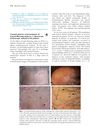
June 2017 in “Journal of The American Academy of Dermatology” In this study, trichoscopy consistently identified typical findings of frontal fibrosing alopecia, revealing three unusual clinical patterns in 18.4% of patients, which may aid in the differential diagnosis when clinical presentations are atypical.
31 citations
,
January 2016 in “Skin Appendage Disorders” This study observed two cases of frontal fibrosing alopecia developing on preexisting vitiligo, suggesting a potential causal link between the two conditions.
 3 citations
,
January 2022 in “Journal of The American Academy of Dermatology”
3 citations
,
January 2022 in “Journal of The American Academy of Dermatology” This study found that sunscreen and moisturizer use was associated with a higher likelihood of developing frontal fibrosing alopecia in the reviewed studies.
7 citations
,
August 2019 in “American Journal of Dermatopathology” This study found that limb hair loss in frontal fibrosing alopecia is inflammatory and permanent, but lacks the classic scarring features seen in scalp alopecia, prompting potential misdiagnosis as alopecia areata.
 15 citations
,
January 2015 in “Analytical Methods”
15 citations
,
January 2015 in “Analytical Methods” Method accurately measures finasteride in tablets using finasteride-BSA interaction.
 October 2024 in “Frontiers in Veterinary Science”
 This study identified key proteins, FKBP10 and FBN2, that promote the growth cycle of secondary hair follicles in cashmere goats, with higher expression in the anagen phase, offering insights into mechanisms potentially enhancing cashmere yield and quality.
 September 2017 in “Journal of Investigative Dermatology”
 This study found that certain circulating miRNAs in skin and plasma may serve as potential biomarkers for distinguishing frontal fibrosing alopecia from control cases, highlighting the need for further validation in larger cohorts.
 10 citations
,
March 2016 in “Journal of The American Academy of Dermatology”
10 citations
,
March 2016 in “Journal of The American Academy of Dermatology” This review discusses the potential usefulness and safety profile of oral antiandrogens for treating frontal fibrosing alopecia, noting possible benefits but acknowledges that finasteride's efficacy remains uncertain.
July 2024 in “Journal of Investigative Dermatology” Linalool in fragrances may harm hair follicles and contribute to hair loss.
 14 citations
,
April 2019 in “International Journal of Women's Health”
14 citations
,
April 2019 in “International Journal of Women's Health” This review highlights current treatment options for frontal fibrosing alopecia, noting that 5-α-reductase inhibitors, intralesional steroids, and hydroxychloroquine have the highest evidence of effectiveness, while other therapies show variable results and need further research.
 September 2024 in “Cutis”
 Sunscreen use may increase the risk of frontal fibrosing alopecia.
 7 citations
,
August 2018 in “The American Journal of Dermatopathology”
7 citations
,
August 2018 in “The American Journal of Dermatopathology” This study describes a newly observed "inflammatory vellus involvement" pattern in early frontal fibrosing alopecia, which may lead to misdiagnosis due to the absence of typical histological features.
 June 2023 in “Brazilian Journal of Case Reports”
 In this case report, a patient with early-stage Frontal Fibrosing Alopecia showed substantial improvement in follicular density and inflammation control after three monthly sessions of Botulinum Toxin Type A administered via microinfusion.

EFBL offers hidden incisions, faster recovery, and fewer risks, but may raise hairline and cost more.
 26 citations
,
September 2018 in “Colloids and Surfaces B: Biointerfaces”
26 citations
,
September 2018 in “Colloids and Surfaces B: Biointerfaces” This study reported that a novel liposomal formulation, SP-bFGF-SF-LIP, enhanced bFGF stability and skin permeability, significantly improving hair follicle recovery and wound healing in a mouse model.
51 citations
,
August 2010 in “British journal of dermatology/British journal of dermatology, Supplement” In this study, intralesional triamcinolone acetonide was associated with eyebrow regrowth in some patients with frontal fibrosing alopecia.
April 2025 in “Australasian Journal of Dermatology” This report presents the first Australian case of familial frontal fibrosing alopecia involving a mother and daughter and seeks to differentiate clinical features between familial and sporadic cases.
 2 citations
,
November 2007 in “Hair transplant forum international”
2 citations
,
November 2007 in “Hair transplant forum international” This abstract introduces the concept of follicular units (FUs) in the human scalp but presents no new research findings.
 12 citations
,
October 2016 in “Anais Brasileiros de Dermatologia”
12 citations
,
October 2016 in “Anais Brasileiros de Dermatologia” This review discusses the increasing reports of frontal fibrosing alopecia, a form of scarring alopecia, and its potential link to autoimmune disorders, but reports no new clinical results.
50 citations
,
March 2004 in “Trends in Plant Science” This paper discusses how NADPH oxidase and phospholipase D are important for root hair growth, with reactive oxygen species from NADPH oxidase activating calcium ion channels in root hairs.
31 citations
,
January 2021 in “Plants” This study found that light and sucrose have opposing effects on root length but collectively enhance root hair emergence and elongation in plant roots.
13 citations
,
August 2024 in “iScience” This study found that 3D spheroid culture reprogrammed mesenchymal stem cells into a uniform immunosuppressive phenotype, suggesting potential therapeutic applications for inflammatory diseases like psoriasis.
12 citations
,
November 2022 in “Toxics” This review describes how liver and kidney diseases and diabetes may affect ethyl glucuronide levels in hair, impacting forensic and clinical interpretations, but reports no new experimental results.
8 citations
,
October 2010 in “Advances in plant biology”