8 citations
,
March 2015 in “Molecular Medicine Reports” This study found that para-phenylenediamine induces cytotoxic effects in normal human hair dermal papilla cells by altering microRNA expression and causing cell death, cell cycle arrest, and oxidative stress.
This study found that iron availability influences root hair growth under phosphate starvation by affecting auxin distribution, phosphate starvation-responsive genes, and vesicle trafficking.
4 citations
,
January 2023 in “Skin Pharmacology and Physiology” This study observed that an ointment containing pine turpentine oil, larch turpentine, and eucalyptus oil showed significant improvement over placebo in lesion evolution, responder rates, and patient assessments for treating acute folliculitis, while being well-tolerated across treatments.
3 citations
,
March 2024 in “Viruses” This study found that γδ T cells in the skin contribute to wound healing after vaccinia virus infection by promoting cytokine and growth factor induction, without affecting virus replication control.
3 citations
,
July 2023 in “Biomolecules” This study reports that some human cell surface HLA-I molecules (including HLA-B27) can appear without their usual peptide component, potentially altering immune interactions, influencing arthritis development in specific mice models, and exhibiting upregulation in certain cancer cells.
 3 citations
,
July 2022 in “BJOG: An International Journal of Obstetrics and Gynaecology”
3 citations
,
July 2022 in “BJOG: An International Journal of Obstetrics and Gynaecology” This study reports that among young women, combined oral contraceptives containing chlormadinone, among others, are associated with an increased risk of venous thromboembolism compared to those containing levonorgestrel with low ethinylestradiol.
2 citations
,
May 2025 in “BMJ Open” This study identified significant patient frustration with limited access to treatments for alopecia areata in Germany, exacerbated by the absence of health insurance reimbursement for necessary medications.
This study identified the Arabidopsis cation chloride cotransporter CCC1 as essential for regulating pH and function in the trans-Golgi network/early endosome, with its absence causing significant growth and stress response defects.
This study found that the Arabidopsis cation chloride cotransporter (CCC1) is crucial for regulating pH and processes in the trans-Golgi-network/early endosome, impacting plant growth and stress responses.
This study found that the Arabidopsis cation chloride cotransporter CCC1 is critical for regulating pH in the trans-Golgi network/early endosome, impacting plant growth and stress response.
January 2013 in “Victoria University Research Repository (Victoria University)” This article proposes a strategy for identifying bioactive, small molecule, metallo-species in Traditional Chinese Medicine to explore their potential for drug development, but reports no new results.
 March 2023 in “Cellular Molecular and Biomedical Reports”
 The researchers reported that lifestyle changes and medications significantly impact managing PCOS, highlighting the high prevalence of cardiovascular comorbidities and the common risk factor of high BMI in these patients.
 6 citations
,
January 2018 in “International Journal of Trichology”
6 citations
,
January 2018 in “International Journal of Trichology” This report describes the first known case of frontal fibrosing alopecia in a genetically unrelated couple, suggesting the potential role of environmental factors in its development.
 September 2019 in “Actas dermo-sifiliográficas/Actas dermo-sifiliográficas”
 Isotretinoin at low doses effectively treats facial papules in frontal fibrosing alopecia.
 24 citations
,
July 1994 in “Molecular Endocrinology”
24 citations
,
July 1994 in “Molecular Endocrinology” Researchers found an RNA transcript that might help control a growth factor linked to tumor development.
 18 citations
,
November 2012 in “Australasian Journal of Dermatology”
18 citations
,
November 2012 in “Australasian Journal of Dermatology” This case report describes a 66-year-old man with frontal fibrosing alopecia, a rare lichen planopilaris variant, presenting with scarring alopecia at the hairline and extensive body hair loss.
 August 2022 in “Italian Journal of Animal Science/Italian journal of animal science”
 This study found that supplementing Angora goats with whole field bean seeds postpartum did not prevent weight and body condition losses but was associated with improved mohair growth and kid weight gain, likely due to better nutrient partitioning towards lactation and hair growth.
1 citations
,
September 2025 in “Frontiers in Immunology” This study found that FRβ knockout mice exhibited autoimmune symptoms and slower tumor growth compared to wild type mice, suggesting that the FRβ receptor may play a role in regulating immune responses in tumors and autoimmune conditions.

This case study documented a 36-year-old woman with postpartum-onset frontal fibrosing alopecia who showed significant improvement in hair regrowth after early combination therapy with dutasteride, tofacitinib, and intralesional triamcinolone acetonide, suggesting potential benefits of multimodal treatment in this typically irreversible condition.
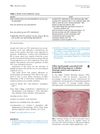 32 citations
,
September 2017 in “Journal of the American Academy of Dermatology”
32 citations
,
September 2017 in “Journal of the American Academy of Dermatology” In this study, researchers reported that oral isotretinoin effectively treated facial papules in frontal fibrosing alopecia, with histopathologic findings suggesting the involvement of elastic fibers and sebaceous glands in papule formation beyond perifollicular inflammation.
8 citations
,
July 2017 in “The journal of investigative dermatology/Journal of investigative dermatology” This study identified four circulating microRNAs as highly predictive of frontal fibrosing alopecia status, suggesting potential roles in diagnostics and disease understanding.
 15 citations
,
December 2017 in “Journal of The European Academy of Dermatology and Venereology”
15 citations
,
December 2017 in “Journal of The European Academy of Dermatology and Venereology” This letter discusses potential pathogenetic links among frontal fibrosing alopecia, androgenetic alopecia, and fibrosing alopecia in a pattern distribution and reports no new clinical findings.
 13 citations
,
March 2020 in “Genes”
13 citations
,
March 2020 in “Genes” This study found that FGF5-/- rabbits exhibited a significant long hair phenotype by prolonging the anagen phase, suggesting FGF5 acts as a negative regulator of hair growth.
 57 citations
,
January 2003 in “Clinical and experimental dermatology”
57 citations
,
January 2003 in “Clinical and experimental dermatology” This study identified postmenopausal frontal fibrosing alopecia as a distinct form of scarring alopecia in postmenopausal women, noting a potential link with a history of bilateral oophorectomy.
 December 2015 in “Actas Dermo-Sifiliográficas”
 This review addresses the challenges in treating frontal fibrosing alopecia, highlighting the limited effectiveness of medical treatments and the demand for hair transplantation despite its risks, but it reports no new clinical results.
 September 2025 in “Dermatology Online Journal”
 In this case study, a 24-year-old woman with frontal alopecia resembling frontal fibrosing alopecia was ultimately diagnosed with primary cutaneous follicle center lymphoma, highlighting the critical role of biopsy in identifying atypical alopecia presentations.
 22 citations
,
July 2003 in “Military medicine”
22 citations
,
July 2003 in “Military medicine” This article reviews the causes, classification, and new treatments for pseudofolliculitis barbae but provides no new research findings.
This study found that home use of low-level light therapy reduced inflammation and symptoms like itching and burning in women with frontal fibrosing alopecia over six months.
 17 citations
,
November 2018 in “Dermatology”
17 citations
,
November 2018 in “Dermatology” The authors concluded that Hispanic/Latino ethnicity, facial papules, and premenopausal status in patients with frontal fibrosing alopecia may indicate a susceptibility to more severe disease, potentially necessitating early treatment.
 5 citations
,
February 2015 in “Dermatologica Sinica”
5 citations
,
February 2015 in “Dermatologica Sinica” In this study, a computer-aided imaging system accurately measured the width of balding areas in female pattern hair loss, correlating strongly with clinical staging severity.