11 citations
,
January 1992 in “PubMed” In this study, the researchers found distinct patterns of TGF-beta 1 and IGF-II expression in pig fetal subcutaneous tissue, suggesting specific regulatory roles in developing adipocytes and muscle tissue.
1 citations
,
March 2023 in “Anais Brasileiros de Dermatologia” 47 citations
,
April 1978 in “Journal of Cutaneous Pathology” This study found that basal cell epithelioma resembles fetal primary epithelial germ based on specific cellular characteristics.
10 citations
,
April 2020 in “PloS one” This study found that mitochondrial dysfunction due to Crif1 deficiency in hair follicle stem cells significantly slows the hair growth cycle in adult mice but does not impact the maintenance of HFSC populations.
 23 citations
,
December 2021 in “Frontiers in Immunology”
23 citations
,
December 2021 in “Frontiers in Immunology” This review discusses the significance of IL-1 family cytokines in skin inflammation and pathology, emphasizing their interactions with microbes and potential therapeutic applications, but reports no new clinical results.
 28 citations
,
November 2013 in “The FASEB journal”
28 citations
,
November 2013 in “The FASEB journal” In this study, a low-methionine diet significantly improved the health and physical traits of cystathionine β-synthase-deficient mice, contrasting with negative effects on mice with partial deficiency.
This study found that deleting the Mad2l1 gene in mice leads to rapid onset of acute lymphoblastic leukemia and liver cancer due to induced chromosomal instability.
2 citations
,
May 2006 in “Archives of Pathology & Laboratory Medicine” This case report describes a 40-year-old woman with Birt-Hogg-Dubé syndrome diagnosed with multiple chromophobe renal cell carcinomas, highlighting the importance of recognizing associated dermatologic lesions for early intervention.
 30 citations
,
November 2018 in “EMBO Reports”
30 citations
,
November 2018 in “EMBO Reports” This study found that the Ovol2-Zeb1 regulatory circuit is crucial for controlling directional migration and proliferation in epithelial cells, facilitating skin regeneration and repair in mice.
195 citations
,
November 2001 in “The Journal of Cell Biology” This study found that desmocollin 1 is crucial for strong adhesion and barrier maintenance in the mouse epidermis, with its absence leading to skin and hair issues resembling chronic dermatitis.
December 2023 in “bioRxiv (Cold Spring Harbor Laboratory)” This study observed that in live rodents, actin filaments adjust their structure to facilitate membrane transfer between cellular compartments; linear filaments stabilize fused membranes, while branched filaments, connected by the protein Ezrin, drive integration, demonstrating actin's role in adapting to membrane biophysical changes.
 1 citations
,
January 2020 in “Benha Journal of Applied Sciences”
1 citations
,
January 2020 in “Benha Journal of Applied Sciences” This study found that DEFB1 polymorphisms, specifically the rs1800972 CG and GG genotypes, may predict susceptibility to and severity of alopecia areata.
34 citations
,
July 1958 in “Biochimica et Biophysica Acta” This study found that GPC1 plays a crucial role in regulating angiogenesis in human dermal microvascular endothelial cells, which may make it a potential target in alopecia treatment research.
74 citations
,
September 2003 in “The Journal of Immunology” This study found that PKCα activation in transgenic mice induces keratinocyte apoptosis and mediates neutrophilic skin inflammation via different pathways, suggesting potential mechanisms for cutaneous inflammatory diseases.
 3 citations
,
September 2022 in “Journal of the American Academy of Dermatology”
3 citations
,
September 2022 in “Journal of the American Academy of Dermatology” In this study, baricitinib treatment for severe alopecia areata showed similar safety and led to hair regrowth improvements independent of atopic background, with 40.8% of patients with atopy achieving a significant response compared to 30.2% without atopy when using a 4 mg dose.
92 citations
,
April 2009 in “Journal of Investigative Dermatology” The Celsr1 gene is crucial for normal hair patterning in mice.
 March 2026 in “Dermatology Online Journal”
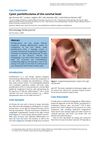
 In this case report, the authors describe a rare cystic panfolliculoma in an 84-year-old man's right conchal bowl, noting its potential to mimic other tumors like basal cell carcinoma, which complicates diagnosis.
 8 citations
,
January 2023 in “Journal of Clinical and Translational Hepatology”
8 citations
,
January 2023 in “Journal of Clinical and Translational Hepatology” This study examines the development and application of cultured models for gallbladder carcinoma and highlights innovations and challenges in constructing effective in vitro growth models for cancer research.
 51 citations
,
February 2009 in “Journal of dermatological science”
51 citations
,
February 2009 in “Journal of dermatological science” In this study, β-catenin overexpression in human hair outer root sheath cells increased the expression of Pitx2, which activated the follicular differentiation pathway, suggesting Pitx2's potential role as a modulator in hair growth control.
 54 citations
,
January 2016 in “Cell reports”
54 citations
,
January 2016 in “Cell reports” This study found that different epidermal stem cell populations contribute to the formation of various skin tumors and new hair follicles following β-catenin activation in the adult epidermis.
In this study, researchers observed that IRES/Cap translation initiation increased during caloric stress across cell differentiation states and also unexpectedly rose during normal differentiation processes in mice, with lower IRES/Cap being linked to higher stem cell potential, mediated by PTBP1, a RNA processing protein.
65 citations
,
September 2014 in “Orphanet Journal of Rare Diseases” This study identified mutations in the STUB1 gene linked to hereditary cerebellar ataxia with cognitive impairment, revealing potential effects on protein function and patient symptoms, including accelerated aging.
 April 2024 in “Canadian Journal of Ophthalmology”
 The authors report that a 62-year-old woman with invasive conjunctival squamous cell carcinoma experienced complete remission two years after combining cemiplimab, retinoic acid, and IFNα-2b treatments, highlighting potential utility despite limited availability of IFNα-2b.
1 citations
,
May 2025 in “Cytotechnology” This study observed that Icariside II, an extract from Epimedium brevicornu Maxim, can inhibit the growth of gastric cancer in cell lines and mouse models by promoting apoptosis and suppressing the Wnt/β-catenin signaling pathway, with minimal toxicity to normal gastric cells.
 50 citations
,
September 2014 in “Stem cell reports”
50 citations
,
September 2014 in “Stem cell reports” In this study, BLIMP1 was found to function in terminally differentiated epidermal cells to maintain homeostasis, rather than defining a sebocyte progenitor population.
 19 citations
,
August 2023 in “Experimental & Molecular Medicine”
19 citations
,
August 2023 in “Experimental & Molecular Medicine” This study found that the CXXC5 protein is overexpressed in diabetic foot ulcer tissues, suppressing wound healing, and that the small molecule KY19334 accelerated healing in diabetic mice by activating the Wnt/β-catenin pathway.
45 citations
,
March 2001 in “Journal of Investigative Dermatology” This study identified a new cytokeratin, mK6irs, specifically expressed in the inner root sheath of mouse hair follicles, distinguishing it as a member of the type II cytokeratin family.
October 2025 in “Journal of Neurophysiology” In this study, researchers identified two types of potassium channels, BK and Kv4.2, in rat Merkel cells and reported that these channels play important roles in repolarizing action potentials and maintaining resting membrane potentials, potentially influencing tactile encoding in these cells.

This study investigated the molecular mechanisms behind the formation of drug-polymer inclusion complexes and found that carbamazepine can self-assemble into stable channel structures without guest polymers, unlike griseofulvin, which requires guest molecules for structural stability.