9 citations
,
March 2022 in “Journal of Chemical Information and Modeling” This study identified a series of novel β-glucuronidase inhibitors that may help mitigate adverse effects of first-line anti-cancer drugs by targeting gut bacteria, based on virtual high-throughput screening findings.
 March 2026 in “Frontiers in Bioscience-Elite”
 This study found that duloxetine and escitalopram exhibited broad-spectrum antimicrobial activity, while buspirone had selective effects, and finasteride disrupted yeast virulence traits, suggesting these drugs could be repurposed as antimicrobial therapies.
2 citations
,
July 2022 in “bioRxiv (Cold Spring Harbor Laboratory)” This study found that oral administration of Thauera sp. strain GDN1 reduced serum androgen levels in male mice by about 50%, suggesting its potential as a probiotic treatment for hyperandrogenism.
February 2026 in “ACS Omega” This study developed a multifunctional hydrogel, QTMP-Gel, which significantly accelerated wound healing in an oral mucositis hamster model by providing antioxidant and antibacterial effects, reducing inflammation, and controlling infection.
 46 citations
,
September 2014 in “Steroids”
46 citations
,
September 2014 in “Steroids” This review suggests that brassinosteroids may have similar biological activities in both plants and other organisms, prompting further exploration of steroid regulation mechanisms across different life forms.

In this study, researchers found that topical mousse treatments containing chlorhexidine and other active ingredients showed significant antibacterial effects on both skin and hair in short-haired dogs, but mainly on hair in long-haired dogs, suggesting hair evaluations might overestimate skin-level efficacy.
August 2025 in “Materials Today Bio” This study reports that novel nanofibrous dressings combining polylysine and tannic acid significantly reduce bacterial burden, support wound healing, and exhibit strong anti-inflammatory effects in infected full-thickness wounds, promoting near-complete closure and skin regeneration within two weeks.
 April 2019 in “The journal of investigative dermatology/Journal of investigative dermatology”
 The researchers reported that DHT may reduce the inflammatory responses induced by C. acnes in androgen-sensitive human sebocyte cells, suggesting a potential link between androgens and infection in sebaceous disorders.
32 citations
,
August 1996 in “Journal of Investigative Dermatology” 1 citations
,
February 2025 in “Frontiers in Nutrition” This study found that a postbiotic derived from hawthorn and probiotics can alleviate loperamide-induced constipation in aged mice by regulating several physiological processes, including intestinal water and sodium metabolism, maintaining gut flora and barrier, reducing inflammation, and enhancing short-chain fatty acid metabolism.
 1 citations
,
January 2003 in “Expert Opinion on Therapeutic Patents”
1 citations
,
January 2003 in “Expert Opinion on Therapeutic Patents” This review discusses the development and potential therapeutic applications of steroid sulfatase inhibitors for hormone-dependent disorders and cognitive dysfunction, reporting no new clinical results.
 July 2024 in “Journal of Bioscience and Bioengineering”
 This study identified 65 bacterial species from human hair with varying carbon metabolic capabilities and proposed a systematic way to evaluate their ease of isolation under different conditions.
 September 2023 in “International Journal of Cosmetic Science”
 The researchers observed that two non-antimicrobial shampoos caused a significant increase in fungal germs but did not affect the overall scalp microbiota diversity over two weeks, suggesting these formulations may preserve or stimulate the scalp microbiota without adverse effects.
2 citations
,
December 2023 in “International journal of molecular sciences” This review highlights how wound microbiota, particularly bacteria like Staphylococcus epidermidis and Staphylococcus aureus, significantly influences wound healing dynamics and suggests potential clinical applications through microbiota manipulation.
2 citations
,
December 2007 in “Microbial pathogenesis” This study found that in mice, Bacillus anthracis infections destroy hair follicles by progressing inward from the surface and clear when inflammatory cells disperse the bacteria after 3-4 days.
238 citations
,
December 2022 in “Frontiers in Public Health” This review discusses ciprofloxacin resistance mechanisms in bacteria and explores new approaches, such as combining it with other antibacterial agents, to enhance its effectiveness against resistant infections.
 July 2026 in “Advanced Healthcare Materials”
 This study developed ultrasound-responsive sutures that generate reactive oxygen species to kill bacteria without antibiotics, showing over 80% bacterial reduction and promoting healing in a rat model, though more validation is needed.
 8 citations
,
October 2022 in “Cold Spring Harbor perspectives in biology”
8 citations
,
October 2022 in “Cold Spring Harbor perspectives in biology” The document concludes that better understanding the wound microbiome can improve chronic wound care by preserving helpful bacteria and targeting harmful ones.
8 citations
,
February 2022 in “PLoS ONE” This study found that Bacillus subtilis strain Ydj3 significantly enhanced sweet pepper seed germination, fruit quality, and rhizosphere bacterial composition, including increased yield and vitamin C content, in a commercial greenhouse setting.
12 citations
,
December 2021 in “Fundamental Research” This study found that (-)-blebbistatin significantly inhibited liver fibrosis in mouse models by reducing tissue stiffness and myofibroblast activation, indicating potential for developing broad-spectrum antifibrotic drugs.
12 citations
,
October 1952 in “Experimental biology and medicine” This study found that in young male rats, cortisone acetate inhibited body growth and caused alopecia, which vitamin B12 and aureomycin largely counteracted, especially when combined.
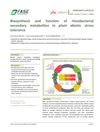 November 2025 in “Frontiers of Agricultural Science and Engineering”
 This study observed that rhizobacterial strain RT3 significantly improved drought tolerance in lettuce by increasing survival rates and fresh biomass after rewatering, with metabolites such as proline and glycine enhancing stress resilience.
 December 2023 in “bioRxiv (Cold Spring Harbor Laboratory)”
 In this study, researchers used a computational drug repurposing approach to identify FDA-approved drugs Dutasteride and Solifenacin as potential inhibitors of Listeria monocytogenes via binding to the virulence factor regulator PrfA, suggesting they may offer new treatment strategies against multi-drug resistant strains.
 January 2024 in “Wiadomości Lekarskie”
 In this study, wounds treated with a combination of 0.02% Decamethoxine and Blastomunil showed enhanced healing and epithelization by the 14th day, leveraging the immunomodulatory and antimicrobial properties of the agents.
 44 citations
,
March 2020 in “Antibiotics”
44 citations
,
March 2020 in “Antibiotics” The researchers reported that carnosic acid and carnosol, extracts from rosemary leaves, specifically inhibit S. aureus virulence expression, suggesting potential topical treatments for atopic dermatitis flares.
 18 citations
,
December 2021 in “Journal of Nanobiotechnology”
18 citations
,
December 2021 in “Journal of Nanobiotechnology” This study found that nanofibers combining a polydopamine coating and curcumin nanocrystals were effective in treating diabetic wounds infected with methicillin-resistant Staphylococcus aureus by providing sequential photothermal antibacterial action and promoting M2 macrophage polarization, which accelerated wound healing through enhanced angiogenesis and cell proliferation.
 July 2024 in “ACS Biomaterials Science & Engineering”
 In this study, researchers used a 3D in vitro organ culture system to show that rifampicin-loaded lipid nanocapsules can penetrate hair follicles more effectively than free rifampicin, highlighting the potential advantage of nanocarrier-based antibiotic treatments for follicular infections.
September 2025 in “e-space (Manchester Metropolitan University)” This study found that testosterone and its metabolite DHT reduced macrophage-mediated phagocytosis of bacteria like MRSA and P. aeruginosa in vitro, and blocking testosterone's conversion to DHT improved bacterial clearance, suggesting potential therapeutic strategies for combating wound infections in the elderly.
 July 2000 in “Dermatologic Surgery”
 Many skin products get contaminated with bacteria, especially if they're in jars or previously opened.
 February 2018 in “Trends in Immunology”
 This study demonstrated that antigens from the skin bacterium Staphylococcus epidermidis can stimulate CD8+ T cells, which in turn enhance wound healing.