 25 citations
,
May 2003 in “Expert Opinion on Therapeutic Patents”
25 citations
,
May 2003 in “Expert Opinion on Therapeutic Patents” This review examines patents and publications on steroid sulfatase inhibitors since 1999 and reports no new clinical results, highlighting their potential for treating estrogen- and androgen-driven conditions.
August 2025 in “Rare Metals” In this study, carbon dots derived from metformin and dopamine (MD‐CDs) effectively promoted healing in bacterial-infected wounds by inhibiting infection, expediting inflammation-to-healing transition, enhancing cell proliferation and migration, and fostering collagen deposition and hair follicle regeneration.
January 2025 in “Regenerative Biomaterials” In this study, a cerium-polypeptide hydrogel was found to effectively treat MRSA-infected wounds by promoting faster wound repair and reducing inflammation compared to a standard hydrogel.
85 citations
,
August 2021 in “Materials & Design” This review summarizes advancements in biomaterial-based encapsulation of probiotics for diverse biomedical uses and reports no new clinical results, while outlining current challenges and future research directions.
61 citations
,
December 1994 in “Planta” 4 citations
,
April 2022 in “Microorganisms” In this study, clinically used preoperative skin preparations with povidone iodine and chlorhexidine gluconate did not meet FDA log-reduction standards for bacterial bioburden in a porcine model, suggesting persistent infection risks.
 June 2014 in “Basic & Clinical Pharmacology & Toxicology”
 This study found that alkaloids isolated from Cucumis metuliferus fruit pulp demonstrated antiviral activity against IBDV in chicken embryo fibroblast cells and NDV in 10-day-old embryonated chicken eggs, while being non-cytotoxic.
7 citations
,
February 2023 in “Exploration of Medicine” This review discusses various strategies for drug repurposing in tuberculosis treatment, highlighting significant potential but reports no new clinical results.
 April 2017 in “Journal of Investigative Dermatology”
 In this study, the novel isoprenylcysteine analog SIG-1451 was shown to inhibit pro-inflammatory cytokine release in various cell-based assays relevant to allergic dermatitis, acting on targets such as IL-4 and IL-6 with potential anti-inflammatory benefits.
13 citations
,
November 2017 in “BMC Veterinary Research” This study suggests that topically applied fusidic acid may penetrate only the most superficial layers of canine skin but can reach sufficient concentrations to potentially treat infections caused by pathogenic staphylococci.
17 citations
,
January 2023 in “Frontiers in Bioengineering and Biotechnology” This study reported that newly developed quaternary ammonium chitosan/carboxymethyl starch/alginate sponges effectively inhibit bacterial growth and promote rapid hemostasis in wound management after tooth extraction in animal models, showing significant promise for clinical use in preventing complications like dry socket.
 82 citations
,
August 2017 in “Cell Reports”
82 citations
,
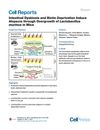
August 2017 in “Cell Reports” This study found that antibiotic-induced gut dysbiosis, particularly overgrowth of Lactobacillus murinus, can lead to hair loss in mice by depleting biotin.
27 citations
,
September 2021 in “Microbiology Spectrum” This study found that multimetal starvation by the immune protein calprotectin triggers unique regulatory responses in Pseudomonas aeruginosa, beyond those seen with individual metal shortages.
44 citations
,
June 2015 in “British Journal of Pharmacology” This study found that betulinic acid inhibits hepatitis C virus replication by suppressing the NF-κB- and ERK1/2-mediated COX-2 pathway, suggesting its potential as a therapeutic supplement.
9 citations
,
April 2024 in “Metabolites” This study reviews the current research on the metabolomic profile and antimicrobial properties of the Cannabis plant, highlighting its effective antibacterial activity against multidrug-resistant bacteria while noting a lack of studies on its impact on plant and aquatic pathogens, emphasizing potential agricultural benefits.
 May 2026 in “Nature Communications”
 In this study, a self-adaptive nanozyme embedded in a madecassoside-enriched hydrogel demonstrated strong antibacterial efficacy and accelerated healing in wounds infected with drug-resistant bacteria, as evidenced by improved repair and regeneration in MRSA-infected mice and preclinical pig models.
120 citations
,
September 2022 in “Materials Today Bio” This review summarizes numerous studies on adhesive hydrogels with natural antibacterial agents for wound dressings, highlighting their potential as effective treatments with strong antibacterial properties, biocompatibility, and mechanical performance, while minimizing reliance on antibiotics.
 June 2025 in “International Journal of Environmental Sciences”
 In this study, researchers developed an herbal shampoo using extracts from multiple plants and observed that specific combinations effectively inhibited bacteria like Pseudomonas aeruginosa and Staphylococcus species, with certain formulations also being well-received by consumers for color and overall satisfaction.
 4 citations
,
April 2021 in “Experimental Dermatology”
4 citations
,
April 2021 in “Experimental Dermatology” This study shares preliminary findings that roxithromycin treatment tendentially increased hair shaft production and altered the hair follicle microbiota in human hair ex vivo, with substantial inter-individual differences observed.
June 2025 in “Formosa Journal of Sustainable Research” In this study, the NADES extract of mangkokan leaves (Polyscias scutellaria) demonstrated antibacterial activity against Escherichia coli and Staphylococcus aureus, with a total flavonoid content measured at 4.944 mgEQ/gSimplisia using the disc diffusion method.
 37 citations
,
September 2003 in “Journal of Medicinal Chemistry”
37 citations
,
September 2003 in “Journal of Medicinal Chemistry” This study found that compound 2g inhibits steroid sulfatase effectively without exhibiting estrogenic activity, making it a promising candidate for breast cancer treatment.
June 2025 in “Healthy-Mu Journal” The optimized Cinchonine gel effectively fights acne bacteria and is safe for twice-daily use.
This study found that BCG injection in COVID-19 convalescent adults reduced long COVID symptoms like hearing and cognitive issues but also led to increased hair loss in women at six months.
August 2026 in “Frontiers in Immunology” This review explores the emerging role of postbiotics—such as inactivated bacteria, cell components, and metabolites—in enhancing wound healing and skin microbiome health, highlighting evidence from various preclinical and preliminary clinical studies.
2 citations
,
September 2024 in “PLoS ONE” This study suggests that combining bendamustine with tucidinostat may improve survival in patients with relapsed or refractory adult T-cell leukemia/lymphoma, highlighting its potential for clinical investigation.
November 2023 in “Journal of Investigative Dermatology” Inhibiting EGFR weakens skin's defense against bacteria.
May 2021 in “bioRxiv (Cold Spring Harbor Laboratory)” This study found that calprotectin induces complex multi-metal starvation responses in Pseudomonas aeruginosa, affecting its metal homeostasis pathways and resistance to polymyxin B.
96 citations
,
December 2018 in “Immunity” This study found that inhibiting TGF-β receptors in adult dermal fibroblasts restored their function and increased resistance to Staphylococcus aureus infection by enhancing their adipogenic and antimicrobial capabilities.
7 citations
,
October 2024 in “Pharmaceutics” This study found that clindamycin-loaded PHA nanoparticles showed potent antibacterial effects against MRSA and enhanced wound healing in a mouse model of MRSA-infected wounds, indicating their potential as a novel treatment for these infections.
 1 citations
,
May 2022 in “Frontiers in Pharmacology”
1 citations
,
May 2022 in “Frontiers in Pharmacology” This study found that astilbin downregulates effector CD4+ T cell activities through the CYP1B1/ROS/PPARγ pathway, suggesting its potential use in treating inflammation.