 September 1997 in “Journal of the European Academy of Dermatology and Venereology”
 People with acne have more CD4+ immune cells in their skin than healthy people.
 February 2024 in “Buletin Veteriner Udayana”
 In this study, a dog diagnosed with both ehrlichiosis and demodicosis showed significant clinical improvement after receiving a treatment regimen of doxycycline, ivermectin, diphenhydramine, vitamin B complex, and sulfur soap baths, noticeable by the 14th and 28th days of therapy.
 35 citations
,
October 2015 in “International Journal of Pharmaceutics”
35 citations
,
October 2015 in “International Journal of Pharmaceutics” Tiny particles carrying roxithromycin can effectively target and deliver the drug to hair follicles without irritation.
1 citations
,
July 2020 in “Qanun Medika - Medical Journal Faculty of Medicine Muhammadiyah Surabaya” This case report describes a patient with HIV who experienced overlapping symptoms of primary and secondary syphilis and showed clinical and serological improvement after treatment with benzathine penicillin and antiretroviral drugs.
10 citations
,
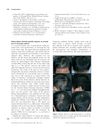
November 2019 in “American Journal of Tropical Medicine and Hygiene” This case report highlights a patient who developed pancytopenia, transaminase elevation, and alopecia after consuming large amounts of veterinary albendazole purchased online, which he used without medical supervision.
 10 citations
,
July 2012 in “International Journal of Dermatology”
10 citations
,
July 2012 in “International Journal of Dermatology” This article addresses diffuse pattern essential syphilitic alopecia as an unusual form of secondary syphilis but provides no new clinical findings.
 2 citations
,
August 2018 in “Advances in Animal and Veterinary Sciences”
2 citations
,
August 2018 in “Advances in Animal and Veterinary Sciences” This report documents the first outbreak of a mixed infection of camelpox and dermatophilosis in camels in Iraq, highlighting the need for further study due to the novelty of dermatophilosis in the region.
 18 citations
,
January 2017 in “Annals of dermatology/Annals of Dermatology”
18 citations
,
January 2017 in “Annals of dermatology/Annals of Dermatology” This study found that Th17 lymphocytes may play a more crucial role than cytotoxic T cells in the development of alopecia areata due to their infiltration around the hair bulb/bulge, which exacerbates hair loss as histopathological grade worsens.

In these randomized, placebo-controlled trials, patients with alopecia areata who received baricitinib showed significantly higher eyebrow and eyelash hair regrowth rates compared to placebo, with greater responses observed at the 4 mg dose and in those achieving overall scalp hair improvement by Week 52.
 2 citations
,
November 1973 in “Archives of Dermatology”
2 citations
,
November 1973 in “Archives of Dermatology” This report describes a rare case where scalp alopecia manifested several months before the diagnosis of Hodgkin disease and discusses other similar cases in the literature.
 25 citations
,
October 1976 in “The BMJ”
25 citations
,
October 1976 in “The BMJ” A woman showed neurological symptoms from psittacosis linked to bird exposure, improving after antibiotic treatment.
7 citations
,
May 2021 in “Clinical Case Reports” This abstract discusses Alopecic and aseptic nodule of the scalp as a rare alopecia condition that may be underdiagnosed and reports doxycycline as a safe and effective treatment option.
99 citations
,
May 2013 in “Familial cancer” This article discusses the pulmonary manifestations of Birt-Hogg-Dubé syndrome, noting diagnostic challenges in differentiating it from other lung conditions, and underlines the need for further research on folliculin's role in cyst formation.
 16 citations
,
November 2023 in “Scientific Reports”
16 citations
,
November 2023 in “Scientific Reports” This study developed a niosomal delivery system loaded with tretinoin and bicalutamide, optimized for follicular targeting in acne management, showing promising accumulation in hair follicles in animal models.
 December 2021 in “Research Square (Research Square)”
 This study found that dermal injection of M-CSF stimulated CD11b + myeloid cells can induce alopecia areata in mice by potentially activating B lymphocytes, offering insight into the disease's pathogenesis.
 January 2025 in “Annals of Dermatology”
 This study reports that patients with primary cicatricial alopecia have distinct bacterial colonization and higher antibiotic resistance compared to those with non-inflammatory scalp conditions, indicating the importance of bacterial culture and susceptibility testing for targeted therapies.
1 citations
,
December 2023 in “JAAD International” Mast cells may significantly contribute to central centrifugal cicatricial alopecia.
6 citations
,
September 2011 in “Journal of the American Academy of Dermatology” This report describes a case of secondary syphilis with an unusual folliculocentric papular eruption in an HIV-positive patient, underlining the diagnostic challenges and importance of biopsy with treponemal staining in such cases.
January 2015 in “SciDok (Saarland University and State Library)” This study confirmed the porcine ear skin model's effectiveness for studying nanoparticle-based drug delivery in human hair follicles, noting particle-dependent uptake and enhancement by massage.
 March 2023 in “JAAD case reports”
 In this study, researchers reported that conventional treatments for folliculitis decalvans, which include steroids and antibiotics, are often ineffective, with many patients experiencing frequent recurrences of this scarring scalp disorder.
 40 citations
,
November 2017 in “International journal of nanomedicine”
40 citations
,
November 2017 in “International journal of nanomedicine” In this study, the researchers reported that chloramphenicol-loaded liposomes, particularly those incorporating deoxycholic acid, enhanced follicular uptake and showed strong antibacterial activity against methicillin-resistant Staphylococcus aureus, offering potential for treating MRSA-infected skin conditions with good skin biocompatibility and minimal toxicity.
January 1998 in “Proceedings of the British Society of Animal Science” This study investigated the effects of biotin deficiency and adequacy on cell proliferation and DNA synthesis in isolated mohair follicles, particularly focusing on the incorporation of [methyl-3 H]thymidine.
 7 citations
,
February 2018 in “International Journal of Pharmaceutics”
7 citations
,
February 2018 in “International Journal of Pharmaceutics” This study found that the cyanoacrylate biopsy method could effectively evaluate drug distribution in hair follicles, suggesting its potential utility for assessing topically applied chemicals targeting hair follicles.
 2 citations
,
November 2011 in “Journal of Infection”
2 citations
,
November 2011 in “Journal of Infection” This case study presents an asthma patient with H1N1 pneumonia who developed invasive Aspergillosis despite avoiding steroids, suggesting that factors other than steroid use can contribute to IA in such patients.
August 2025 in “International Journal of Clinical Dermatology” In this study, a possible case of Wolf’s isotopic response was observed, where a 72-year-old woman developed superficial basal cell carcinoma at a prior herpes zoster site on her scalp, possibly due to altered local immunity from the zoster episode.
2 citations
,
May 2022 in “The journal of immunology/The Journal of immunology” In vivo using the C3H mouse model, this study observed that BST2 expression occurs before hair loss in alopecia areata and is followed by an increase in epidermal γδ T cell numbers.
 May 2014 in “Journal of The American Academy of Dermatology”
 The number of new cases of cutaneous B-cell lymphoma has leveled off since the early 2000s, and survival rates have improved since 1973.
 4 citations
,
April 2014 in “Journal of Pharmacology and Pharmacotherapeutics”
4 citations
,
April 2014 in “Journal of Pharmacology and Pharmacotherapeutics” This report describes a case of reversible alopecia in a 10-year-old boy attributed to isoniazid use during anti-tuberculosis therapy.
8 citations
,
March 2023 in “BMC Research Notes” This pilot study explored a new method using laser-capture microdissection and 16S rRNA gene sequencing to analyze the human scalp hair follicle microbiome more accurately, revealing region-specific variations in microbial diversity and abundance.
 May 2023 in “Frontiers in chemistry”
 This study found that hair from the vertex posterior is a reliable sampling region for detecting zolpidem intake, showing consistent drug concentration and peak position compared to other scalp regions.