 14 citations
,
May 2013 in “Emerging infectious diseases”
14 citations
,
May 2013 in “Emerging infectious diseases” This case study reports a prolonged incubation period of over 8 years for a C. gattii infection in a cat that likely originated from exposure in California, suggesting the fungus may remain dormant longer than previously thought.
This study found that hair cosmetics have strong bacteriostatic properties, suggesting that current microbial test methods for these products should be revised.
10 citations
,
October 2014 in “Plastic & Reconstructive Surgery Global Open” In this case study, Botulinum toxin type A injections were associated with improved hair growth and scalp condition in a patient with radiation-induced alopecia, though the mechanisms remain speculative.
September 2011 in “Archives of dermatology” The child was diagnosed with cutaneous leishmaniasis.

This study found that single-born cashmere goats had higher birth weights, pre-weaning growth rates, and superior cashmere production attributes compared to twin-born goats, despite twin-born goats achieving compensatory growth post-weaning.
June 2020 in “Zenodo (CERN European Organization for Nuclear Research)” This study analyzed pediatric and adult patients with antibody deficiencies at a PID center, finding frequent severe infections and genetic mutations, with treatment primarily involving IVIG replacement therapy.
70 citations
,
February 2018 in “Seminars in Arthritis and Rheumatism” This study found that belimumab helped achieve low disease activity in over 40% of systemic lupus erythematosus patients in real-life settings, alongside reduced corticosteroid use and fewer flares.
 March 2024 in “Bioimpacts”
 In this study, curcumin-loaded nanoparticles with a size of 400 nm showed optimal accumulation in human hair follicles after seven days, although mouse models differed significantly in penetration and retention, indicating limitations in their suitability for follicular drug delivery studies.
This case study details a 26-year-old male with depilating folliculitis, emphasizing its higher prevalence in warmer climates and showing good treatment response.
 April 2023 in “Veterinary world/Veterinary World”
 This study identified six species of ectoparasitic insects infesting domestic goats in Bulgaria, with Linognathus stenopsis being the most prevalent across the surveyed farms.
 February 2026 in “Cureus”
 This case report highlights that alopecia areata can mimic syphilitic alopecia in patients with recent or active syphilis, emphasizing the importance of trichoscopy in accurately diagnosing alopecia types and preventing misdiagnosis.
January 2026 in “Figshare” This table reports gene set enrichment analysis scores for hair follicle compartments across diseases and sampling methods, providing comparisons but no new experimental findings.
 April 1981 in “Pediatric research”
 This study found that abnormal liver and kidney copper metabolism in Br females had no clinical effects, whereas defective brain copper metabolism in Br males was clinically significant.
 5 citations
,
March 2012 in “Clinical and Experimental Dermatology”
5 citations
,
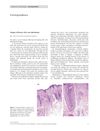
March 2012 in “Clinical and Experimental Dermatology” A woman experienced temporary hair loss after taking albendazole, which resolved on its own within 3 months.
 7 citations
,
January 2018 in “International Journal of Dermatology”
7 citations
,
January 2018 in “International Journal of Dermatology” Syphilis can cause hair loss without other symptoms and should be considered when diagnosing unexplained hair loss.
 January 2025 in “SKIN The Journal of Cutaneous Medicine”
 In this analysis of the BRAVE-AA trials, a significant number of patients with severe alopecia areata treated with baricitinib reached complete or nearly complete scalp coverage (SALT score ≤10 or ≤5) over 52 weeks, particularly among those with less severe baseline characteristics.
2 citations
,
October 1931 in “Archives of Dermatology and Syphilology” This report describes a rare case of scalp kerion due to microsporosis in a Portuguese child, noting the unusual combination with other microsporid features and treatment details.
 7 citations
,
January 2012
7 citations
,
January 2012 This study reported that in the California Ground Squirrel, certain elements bioaccumulate in hair, providing baseline data for environmental health assessments.
November 2025 in “Journal of Investigative Dermatology” Certain CD8+ T cells attack hair follicles in alopecia areata, suggesting they could be targeted for treatment.
 January 2023 in “Revista Brasileira de Parasitologia Veterinária/Brazilian Journal of Veterinary Parasitology”
 This study found that a single topical dose of fluralaner effectively eliminated Lynxacarus radovskyi mites from naturally infested domestic cats within 42 days, with treated cats remaining mite-free until day 98, unlike the untreated control group which continued to test positive.
 4 citations
,
January 2019 in “Dermatologic Therapy”
4 citations
,
January 2019 in “Dermatologic Therapy” This review explores the clinical characteristics, risk factors, and treatment challenges of scalp basal cell carcinoma, noting its potential aggressiveness and difficulty in treatment, but reports no new clinical results.
24 citations
,
May 2006 in “Journal of Investigative Dermatology” This study found that allergen treatment in alopecia areata mice appeared to alter leukocyte subset distribution and impaired dendritic cell migration, which may affect T-cell activation and hair follicle recovery.
 November 2023 in “International Journal of Infectious Diseases”
 In this case study, dermoscopy successfully visualized head lice and their eggs on a 19-year-old girl's scalp, aiding in the diagnosis of pediculosis capitis, which was then treated with sulfur ointment and hair shaving.
1 citations
,
July 2021 in “Clinical Cosmetic and Investigational Dermatology” This case study reports a misdiagnosis of secondary syphilis with probable neurosyphilis as PLEVA in a 12-year-old, highlighting the importance of considering syphilis in patients with unusual symptoms.
November 2025 in “Journal of Investigative Dermatology” PCFCL may have unrecognized subtypes and needs more research.
 130 citations
,
January 1994 in “Differentiation”
130 citations
,
January 1994 in “Differentiation” In this study, researchers found that bulge cells in mouse hair follicles undergo transient proliferation during early anagen, indicating their role as follicular stem cells. However, another factor beyond dermal papilla proximity may be required to initiate a new anagen phase.
 August 2012 in “Reactions Weekly”
 Albendazole likely caused temporary hair loss in a 25-year-old woman.
January 2026 in “Figshare” This report presents gene set enrichment scores for hair follicle compartments using tape strip and bulk biopsy methods, providing statistical data but no new experimental findings.
August 2025 in “Journal of Medical and Biological Engineering” In this study, a needle-free supersonic atomizer delivering Bacopa monnieri extract with hyaluronan was found to enhance hair growth in mice more effectively than the traditional smear method and minoxidil.
 6 citations
,
November 1996 in “Archives of Dermatology”
6 citations
,
November 1996 in “Archives of Dermatology” This case report describes a 29-year-old Japanese-Paraguayan man who experienced a relapse of leprosy 14 years after initial treatment, presenting with severe pain and skin lesions but no sensory impairment.