10 citations
,
June 2022 in “Biomedicine & Pharmacotherapy” This review examines the molecular mechanisms by which the proapoptotic protein ARTS inhibits tumorigenesis and discusses prospects for developing drugs that mimic its function, with no new experimental results reported.
19 citations
,
August 2017 in “American journal of clinical dermatology” This analysis reports that hepatitis B surface protein antigen exposure is associated with an increased risk of alopecia areata.
1 citations
,
July 2022 in “JEADV Clinical Practice” This abstract outlines a guide reviewing both FDA-approved and off-label therapies for androgenetic alopecia and proposes treatment algorithms based on scientific research, highlighting a gap in common treatments for this prevalent condition.
January 2002 in “Journal of Dermatology and Venereology”  1 citations
,
September 2007 in “European journal of paediatric neurology”
1 citations
,
September 2007 in “European journal of paediatric neurology” Low dose valproic acid treatment caused hair loss in a young patient.
2 citations
,
October 2000 in “Journal of Investigative Dermatology” AUC and APL are distinct conditions needing careful clinical assessment.
 19 citations
,
June 2002 in “American Journal of Dermatopathology”
19 citations
,
June 2002 in “American Journal of Dermatopathology” This study found significant differences in bcl-2 expression between areas of the scalp affected and unaffected by androgenetic alopecia, suggesting a uniform follicle population or synchronized follicular cycling in affected areas.
 17 citations
,
January 2015 in “MedChemComm”
17 citations
,
January 2015 in “MedChemComm” New treatments for prostate cancer are less toxic and show promise, but more research is needed to enhance their effectiveness and reduce side effects.
 20 citations
,
September 2019 in “Journal of Cosmetic Dermatology”
20 citations
,
September 2019 in “Journal of Cosmetic Dermatology” This study found that combining stromal vascular fraction with PRP injections significantly improved hair density and reduced hair loss more effectively than PRP alone in patients with androgenetic alopecia.
12 citations
,
December 1981 in “Journal of Endocrinology” This study found that α-melanocyte-stimulating hormone increased melanin production in hair follicles of moulting Siberian hamsters, whereas [8-arginine]-vasotocin inhibited melanin production without affecting tyrosinase activity.
 19 citations
,
January 2017 in “International Journal of Trichology”
19 citations
,
January 2017 in “International Journal of Trichology” This study found that a standardized PRP application protocol was effective as a coadjuvant therapy in most patients with androgenetic alopecia who did not respond to minoxidil or finasteride, based on improvements in Ebling's scale.
 2 citations
,
September 2022 in “Advances in Environmental Biology”
2 citations
,
September 2022 in “Advances in Environmental Biology” This study found that ethanolic extracts of Avicennia marina leaves showed potential antibacterial activity against Vancomycin-Resistant Enterococcus faecium but were less effective than standard antibiotics.
 January 2023 in “Dermatologic Therapy”
 In this randomized controlled trial, the nutritional supplement PPT5 α was associated with increased terminal hair percentages and improved self-assessed hair parameters in women with early-stage androgenetic alopecia.
 June 2020 in “Journal of Evolution of medical and Dental Sciences”
 This study found that platelet-rich plasma treatment effectively decreased hair fall and increased hair growth in male patients with androgenetic alopecia.
 May 2023 in “Elsevier eBooks”
 This study found that platelet-rich plasma may be an effective adjuvant treatment for androgenetic alopecia, especially when combined with antiandrogenetic medications and topical minoxidil, though factors like patient age and family history could influence outcomes.

This study found that vinegar-processed black soybean and its extract accelerated hair growth and prevented alopecia in mice, with potential mechanisms involving modulation of the Wnt/β-catenin signaling pathway, suggesting they may be promising functional foods for hair regeneration.
9 citations
,
August 2021 in “Biomedicines” This study found that 17β-estradiol was the most powerful hormone for inducing APE1/Ref-1 secretion in cultured vascular endothelial cells, with secretion occurring through exosomes dependent on estrogen receptors and intracellular calcium.
October 2006 in “Urology” The study found that different criteria led to different patient groups in the CombAT study compared to the MTOPS study.
6 citations
,
July 2018 in “DOAJ (DOAJ: Directory of Open Access Journals)” This case study reports the first known instance of hepatic adrenocortical carcinoma in a virilized young woman, highlighting the importance of comprehensive evaluation to identify ectopic adrenal tumors.

In this preclinical study, PA-011 derived from Periplaneta americana showed significant hair regrowth effects in androgenetic alopecia mouse models by inhibiting inflammation and oxidative stress, activating hair follicle stem cell proliferation, and normalizing skin microbiota, suggesting promise as an AGA treatment.
 6 citations
,
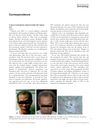
April 2013 in “International Journal of Dermatology”
6 citations
,
April 2013 in “International Journal of Dermatology” This correspondence article discusses a case of androgenetic alopecia treated with valproic acid but does not present new clinical findings.
September 2026 in “Aesthetic Surgery Journal” This study found that autologous non-activated platelet-rich plasma (A-PRP) was effective and safe for treating androgenetic alopecia, showing long-term improvement in hair density, thickness, and count.
 February 2012 in “Expert Review of Endocrinology & Metabolism”
 This abstract reviews the unclear link between androgenic alopecia and prostate cancer, highlighting the need for further research to determine the mechanisms connecting these two conditions.
 2 citations
,
January 2022 in “Journal of the American Academy of Dermatology”
2 citations
,
January 2022 in “Journal of the American Academy of Dermatology” This article discusses the use of virtual reality as a sensory distraction technique during intradermal injections for hair loss treatment and reports no new clinical results.
January 2014 in “生命科学(ISSN1934-7391)” A certain gene variation can affect protein production and is linked to male pattern baldness.
April 2019 in “Journal of the Endocrine Society” This case report highlighted rapid virilization in a woman with adrenocortical carcinoma, stressing the importance of androgen evaluation to suspect underlying ovarian or adrenal tumors.
 8 citations
,
January 2023 in “Surgical Neurology International”
8 citations
,
January 2023 in “Surgical Neurology International” This case report describes the successful use of percutaneous and endovascular embolization with PHIL embolic agent to treat a rare scalp arteriovenous fistula following a hair transplant.
 23 citations
,
December 2004 in “Seminars in oncology”
23 citations
,
December 2004 in “Seminars in oncology” This study found that DVd therapy is at least as effective as VAD/VAd for treating multiple myeloma and causes fewer side effects and reduced hospital visits.
January 2021 in “Faculty of 1000 Research Ltd” The treatment showed promising hair growth results but needs more research.
In this review of autonomous robotic surgery, the authors explore the integration of AI and machine learning in surgical procedures, detailing both the advancements and challenges of these technologies, including ethical concerns and current regulatory frameworks.