26 citations
,
March 1995 in “Differentiation” This study isolated and sequenced the complete gene rKAP4L1, which encodes a cysteine-rich hair keratin-associated protein in rabbit hair follicles.
 17 citations
,
February 2019 in “Journal of steroid biochemistry and molecular biology/The Journal of steroid biochemistry and molecular biology”
17 citations
,
February 2019 in “Journal of steroid biochemistry and molecular biology/The Journal of steroid biochemistry and molecular biology” This study found that manipulating AKR1D1 expression in human liver cells effectively regulates glucocorticoid clearance and receptor activation, highlighting its role in liver-specific steroid hormone regulation.
July 2025 in “International Journal of Molecular Sciences” This genetic study identified four new keratin-associated protein genes in sheep, revealing significant sequence variation and suggesting complex evolutionary dynamics, with unique variants in some sheep breeds linking them to Romanov sheep ancestry.
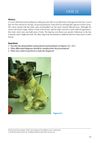 May 2019 in “Small Animal Dermatology”
 This chapter discusses a case of sebaceous adenitis in a Japanese Akita, providing educational material for students and practitioners but reports no new research findings.
 May 2026 in “Open Science Framework”
 This study conducted an in silico evaluation of Korean herbal compounds against key targets involved in androgenetic alopecia, finding Biochanin A, Saponin Re, and Emodin as promising candidates for topical treatments, but highlighting safety and topical formulation challenges.
 2 citations
,
January 2017 in “Folia biologica”
2 citations
,
January 2017 in “Folia biologica” This study identified two single-nucleotide polymorphisms and three haplotypes in the KRTAP7-1 gene across yak, taurine, and zebu cattle, with the BOVIN-KRTAP7-1*A haplotype most prevalent.
April 1977 in “Pediatric Research”  July 2026 in “Zenodo (CERN European Organization for Nuclear Research)”
 This study used a multi-layer in silico framework to evaluate Korean herbal compounds for androgenetic alopecia, identifying Biochanin A, Saponin Re, and Emodin as potential topical candidates with distinct safety and affinity profiles, although these findings remain purely computational without experimental validation.
 July 2026 in “Zenodo (CERN European Organization for Nuclear Research)”
 In this study, in silico analysis identified Saponin Re and Emodin as promising candidates for topical treatment of androgenetic alopecia, with Biochanin A having the most favorable safety profile among the tested compounds.
 April 2017 in “Journal of Investigative Dermatology”
 This study suggests that PKCß plays a critical role in modulating the dermal inflammatory microenvironment in response to dietary lipids in mice.
January 2009 in “Journal of Clinical Dermatology” This study suggests that variations in CAG repeat numbers in the androgen receptor gene may not significantly influence the risk of androgenetic alopecia in Korean males.
 April 2026 in “Zenodo (CERN European Organization for Nuclear Research)”
 In this study, Dodatek A operationalizes the Functional Androgen Axis framework by defining three system-level indices and an efficiency metric to describe androgen function, incorporating key methodological improvements and acknowledging significant limitations for future empirical validation.
 February 2026 in “Scientific Reports”
 This study predicted that key components of Platycladi Cacumen, such as quercetin and apigenin, may have stable binding interactions with targets involved in androgenetic alopecia.
 6 citations
,
January 2016 in “International Journal of Trichology”
6 citations
,
January 2016 in “International Journal of Trichology” This case study suggests that patients with acquired progressive kinking of the hair may benefit from finasteride treatment due to an increased risk of developing androgenetic alopecia.
This review examines the potential of alpha-ketoglutaric acid as an anti-aging agent and for treating age-related diseases, emphasizing its metabolic, immune, and cosmetic benefits but reports no new clinical trials.
 6 citations
,
January 2023 in “Annals of Dermatology”
6 citations
,
January 2023 in “Annals of Dermatology” This article provides new treatment guidelines for AA based on expert consensus while integrating regional healthcare variations, but it reports no new clinical results.
 12 citations
,
August 2011 in “Asian-Australasian Journal of Animal Sciences”
12 citations
,
August 2011 in “Asian-Australasian Journal of Animal Sciences” This study found that polymorphisms in the KAP8.1 gene were significantly associated with cashmere weight, length, and guard hair length in Chinese Inner Mongolian Cashmere goats, but not with fibre diameter.
 3 citations
,
July 2021 in “Life science alliance”
3 citations
,
July 2021 in “Life science alliance” This study observed that disrupting the Pnkp gene in adult mice resulted in a premature aging-like phenotype, suggesting PNKP's vital role in maintaining normal growth and survival of certain progenitor cell populations.
 8 citations
,
January 2013 in “Journal of The Korean Medical Association”
8 citations
,
January 2013 in “Journal of The Korean Medical Association” This article reviews factors influencing hair growth and treatment options for androgenetic alopecia, but it reports no new clinical results on their effectiveness.
2 citations
,
May 2019 in “Small ruminant research” This study identified polymorphisms in HGT-KRTAP7-1 and KRTAP8-1 genes in Argentine llamas that may impact fiber characteristics by altering amino acid residues critical for keratin-associated protein properties.
9 citations
,
September 2013 in “Journal of Applied Animal Research” This study identified eight alleles of the caprine KAP13-3 gene in cashmere goats, which could influence gene expression and cashmere fiber characteristics.
 25 citations
,
May 2012 in “Journal of The European Academy of Dermatology and Venereology”
25 citations
,
May 2012 in “Journal of The European Academy of Dermatology and Venereology” In this study, 62.1% of Korean patients with chronic dermatologic diseases reported using complementary and alternative medicine, though many were dissatisfied with the results.
135 citations
,
March 2000 in “Journal of Biological Chemistry” This review discusses the roles of the Agouti and Agouti-related proteins in pigmentation and energy regulation and reports no new experimental findings.
8 citations
,
January 2017 in “Acta Dermato Venereologica” Thorough clinical examination is crucial for diagnosing unusual alopecia.
December 2025 in “The Journal of Nutritional Biochemistry” This study found that kaempferol may stimulate hair growth in androgenetic alopecia by enhancing dermal papilla cell function and reducing dihydrotestosterone-induced damage, showing comparable efficacy to finasteride in a mouse model.
 November 2022 in “Journal of Investigative Dermatology”
 Among men with androgenetic alopecia, this study found that taking 5 mg of KX-826 twice daily significantly increased hair count compared to a placebo, with the treatment being well-tolerated and no serious adverse effects reported.
 38 citations
,
September 2006 in “Journal of Dermatological Science”
38 citations
,
September 2006 in “Journal of Dermatological Science” This study evaluated the effect of 2% ketoconazole lotion for androgenetic alopecia, but the results regarding its effectiveness on clinical appearance remained unclear.
8 citations
,
January 2015 in “Genetics and Molecular Research” This study found that specific SNPs in the CXCL1 and CXCL2 genes may be associated with increased susceptibility to alopecia areata in the Korean population.
 May 2026 in “Zenodo (CERN European Organization for Nuclear Research)”
 This study identified Saponin Re and Emodin as top candidates for treating androgenetic alopecia, suggesting future research in dermal papilla cell cultures and scalp organoids despite safety concerns.
 81 citations
,
February 2019 in “Experimental & Molecular Medicine”
81 citations
,
February 2019 in “Experimental & Molecular Medicine” This review examines PAK4 signaling pathways in prostate cancer, Parkinson's disease, and melanogenesis, focusing on the potential role of the PAK4-CREB axis, without reporting new clinical results.