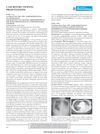
 May 2025 in “The Journal of Rheumatology”
 This case report details a rare instance of primary adrenal insufficiency as a manifestation of antiphospholipid syndrome, with the patient successfully managed through glucocorticoids, warfarin, and hydroxychloroquine.
 4 citations
,
January 2025 in “Translational Psychiatry”
4 citations
,
January 2025 in “Translational Psychiatry” In this study, remote photobiomodulation therapy to the lungs improved behavioral and neurological outcomes in rats with repeated closed-head injuries, suggesting potential preventive benefits for brain health.
 3 citations
,
October 2023 in “Frontiers in physiology”
3 citations
,
October 2023 in “Frontiers in physiology” This study reviewed competing endogenous RNA networks related to skin aging and wound healing, finding mechanisms like UVB-induced senescence and photoaging, as well as potential therapeutic targets for improving skin health and recovery.
249 citations
,
November 2018 in “Cell” TNFα helps grow and maintain liver cells in 3D culture for a long time.
35 citations
,
January 2022 in “Frontiers in Neurology” This review utilizes clinical vignettes to detail various pain syndromes associated with multiple sclerosis, including their pathophysiology and management strategies, highlighting conditions like central neuropathic pain, Lhermitte's phenomenon, and trigeminal neuralgia as they relate to different lesion types.
13 citations
,
September 2022 in “Biomolecules” This study found that specific gene upregulations and mutations in hidradenitis suppurativa skin support the role of inflammation, altered epithelial differentiation, and metabolism dysregulation in the disease's pathogenesis.
2 citations
,
December 2024 in “Neural Regeneration Research” This research review highlights the potential of exosome therapy to transform stroke treatment, reporting that in animal models, exosomes can reduce neuroinflammation, oxidative stress, and cell death, while promoting brain repair and regeneration. However, more evidence is needed before clinical applications in humans are established.
 1 citations
,
December 2022 in “Archives of Dermatological Research”
1 citations
,
December 2022 in “Archives of Dermatological Research” In this study, isotretinoin treatment significantly increased p53 expression in the skin of acne vulgaris patients, correlating with reduced acne severity and suggesting mechanisms for sebum suppression and side effects.
November 2025 in “Photochemistry and Photobiology” This review article identifies a need for standardized guidelines in using photobiomodulation therapy for spinal cord injury repair, emphasizing that current inconsistencies in therapy parameters may hinder optimal outcomes and limit clinical trials.
June 2025 in “International Journal of Molecular Sciences” This review compiles current research on the role of long non-coding RNAs in regulating muscle growth and regeneration processes, particularly their influence on Duchenne muscular dystrophy, and reports no new clinical results.
4 citations
,
April 2025 in “Frontiers in Immunology” This article discusses the potential of extracellular vesicles for developing precise psychiatric therapies and the need for interdisciplinary collaboration, but reports no new clinical results.
 278 citations
,
March 2013 in “Gut”
278 citations
,
March 2013 in “Gut” In this study, nearly 5% of anti-TNF-treated patients with IBD developed psoriasiform skin lesions, with smoking identified as a main risk factor, and ustekinumab proved highly effective in severe cases.
 221 citations
,
January 2014 in “Human Reproduction”
221 citations
,
January 2014 in “Human Reproduction” This study found that the prevalence of polycystic ovary syndrome was 16.6% with Rotterdam criteria but decreased to 6.3% or 8.5% when using alternative criteria involving antral follicle count or anti-Müllerian hormone.
123 citations
,
January 2012 in “The Keio Journal of Medicine” This review discusses anti-angiogenic therapy for cancer, highlighting VEGF blockers' effectiveness but also their limitations, such as resistance and adverse effects; it reports no new clinical results.
 104 citations
,
January 2016 in “Food & Function”
104 citations
,
January 2016 in “Food & Function” This review found that olive oil phenols may have anti-cancer properties in animal models and some human studies, but further research is needed to confirm these effects in humans.
100 citations
,
October 2006 in “Rapid Communications in Mass Spectrometry” This study describes a fast LC/MS/MS method for detecting various synthetic drugs in urine, meeting World Anti-Doping Agency performance limits.
91 citations
,
April 2006 in “PubMed” This review summarizes adverse events associated with EGFR-targeting cancer therapies, such as skin rashes and lung disease, and reports no new clinical results.
90 citations
,
July 2009 in “PTR. Phytotherapy research/Phytotherapy research” In this study, spearmint tea significantly reduced testosterone levels and improved self-reported hirsutism in women with PCOS, but did not change objective hair growth scores over the short trial period.
 87 citations
,
July 2007 in “British Journal Of Nutrition”
87 citations
,
July 2007 in “British Journal Of Nutrition” In this study, oral administration of Lactococcus lactis strain H61 to senescence-accelerated mice was linked to reduced bone density loss, less skin ulcer incidence, and reduced hair loss, along with altered immune responses.
73 citations
,
October 2009 in “Anti-Cancer Agents in Medicinal Chemistry” This study found that new curcumin analogues, such as ASC-J9, can inhibit prostate cancer cell growth by promoting androgen receptor degradation.
72 citations
,
January 2012 in “Annals of Dermatology” In this study, IGF-I was shown to enhance human hair follicle growth, maintain the anagen phase, and increase expression of certain growth factors and anti-apoptotic markers.
 72 citations
,
February 2011 in “The American Journal of Dermatopathology”
72 citations
,
February 2011 in “The American Journal of Dermatopathology” This study found that anti-TNF therapy-induced alopecia exhibits distinct clinical and histopathological features and can mimic psoriatic alopecia and alopecia areata, with some patients improving with topical treatment.
 72 citations
,
January 2003 in “American Journal of Pathology”
72 citations
,
January 2003 in “American Journal of Pathology” This study found that the co-activator CBP enhances the agonistic action of hydroxyflutamide on androgen receptors, suggesting a mechanism for therapy resistance in prostate cancer.
72 citations
,
June 1979 in “Biochemical Society Transactions” This research paper reviews the anti-androgenic properties of the drug flutamide and its metabolite Sch 16423 but presents no new experimental results.
 71 citations
,
April 2020 in “Journal of Cosmetic Dermatology”
71 citations
,
April 2020 in “Journal of Cosmetic Dermatology” This article discusses the potential link between genetic variants associated with androgen receptor activity and racial variations in COVID-19 mortality, suggesting a possible role for anti-androgens in treatment, but reports no new clinical findings.
 70 citations
,
April 2013 in “Endocrine”
70 citations
,
April 2013 in “Endocrine” This review found that lifestyle changes, such as diet and exercise, are beneficial for managing metabolic and endocrine abnormalities in obese patients with PCOS and suggests combining these with anti-obesity agents for enhanced effects.
 70 citations
,
July 2005 in “Journal of Ethnopharmacology”
70 citations
,
July 2005 in “Journal of Ethnopharmacology” In this study, Ganoderma lucidum extract was found to significantly inhibit 5alpha-reductase activity and testosterone-induced prostate growth in rats, suggesting potential use for treating benign prostatic hyperplasia.
65 citations
,
November 2019 in “European Journal of Pharmacology” This review discusses the role of anti-androgen therapies in cancer and other diseases and reports no new clinical results, highlighting both old and new generations of anti-androgens.
 65 citations
,
February 2009 in “The journal of investigative dermatology/Journal of investigative dermatology”
65 citations
,
February 2009 in “The journal of investigative dermatology/Journal of investigative dermatology” This paper discusses the hypothesis that anti-acne agents may work by reducing FGFR2 signaling, and emphasizes FGFR2's potential role in acne pathogenesis, but it reports no new experimental findings.
 64 citations
,
March 2006 in “Food Chemistry”
64 citations
,
March 2006 in “Food Chemistry” In castrated rats, this study found that triterpenoids from Ganoderma lucidum inhibited both types of 5α-reductase and reduced prostate growth linked to testosterone but not dihydrotestosterone.