 9 citations
,
August 2018 in “Journal der Deutschen Dermatologischen Gesellschaft”
9 citations
,
August 2018 in “Journal der Deutschen Dermatologischen Gesellschaft” This study provides the most comprehensive review to date of published cases of frontal fibrosing alopecia, emphasizing a notable association with thyroid disease.
1 citations
,
February 1938 in “Archives of Dermatology” This piece presents a case study of a woman with diffuse alopecia, suggesting a potential link to a chronic focus of infection rather than acute fever.
3 citations
,
February 2020 in “DOAJ (DOAJ: Directory of Open Access Journals)” This review discusses the challenges of managing intraoperative floppy iris syndrome during cataract surgery and highlights the importance of preoperative risk assessment and multidisciplinary collaboration, reporting no new clinical results.
June 2026 in “Dermatology” In this study, frontal fibrosing alopecia showed a higher cumulative remission rate compared to lichen planopilaris, despite similar timeframes and relapse rates between the two conditions.
 25 citations
,
December 2017 in “Facial Plastic Surgery”
25 citations
,
December 2017 in “Facial Plastic Surgery” This study observed that combining high-potency steroids with pimecrolimus might effectively stabilize hairline recession in frontal fibrosing alopecia patients.
 January 2024 in “Archives of pathology & laboratory medicine”
 This study observed that adipose tissue infiltration and ESGC displacement in scalp biopsies were more frequently found in frontal fibrosing alopecia and may play a role in the development of scarring alopecia.
June 2019 in “DOAJ (DOAJ: Directory of Open Access Journals)” This study found that women with diffuse alopecia exhibited deficiencies in several trace elements, including sulfur, iron, and potassium, while men showed deficiencies in calcium, sulfur, and zinc.
 18 citations
,
July 2016 in “Journal of The American Academy of Dermatology”
18 citations
,
July 2016 in “Journal of The American Academy of Dermatology” This study reported that both primary and secondary cutaneous follicle center lymphomas can present with atypical scalp or forehead lesions, leading to potential misdiagnosis as other skin conditions.
February 2013 in “Journal of the American Academy of Dermatology”  9 citations
,
July 2020 in “Journal of Dermatology”
9 citations
,
July 2020 in “Journal of Dermatology” This study found that diffuse and pseudo-fringe sign patterns are common in Asian patients with frontal fibrosing alopecia, and that treatments combining antiandrogens or antimalarials with topical therapy are effective.
9 citations
,
March 2017 in “Journal of Visualized Experiments” This study introduced a novel in vitro murine assay using transgenic mice to identify immunomodulatory compounds, which identified 160 potential hits from 4,398 compounds screened.
1 citations
,
September 2024 in “Life” This study reports three cases of alopecia areata resistant to corticosteroids that improved after 16 weeks of treatment with a combination of fractional carbon dioxide laser and topical tacrolimus, suggesting a potential new therapeutic option that requires further confirmation.
September 2025 in “Bioengineering” In this study, the researchers developed a deep learning framework to pre-emptively screen for adverse drug effects, showing strong predictive performance, including for increased bleeding risks with edoxaban compared to other anticoagulants.
9 citations
,
February 2023 This study found that a Faster Residual Convolutional Neural Network model achieved an accuracy of 84.3% in recognizing alopecia areata and various scalp conditions from image databases.
 41 citations
,
December 2008 in “Current Opinion in Ophthalmology”
41 citations
,
December 2008 in “Current Opinion in Ophthalmology” This review describes techniques to manage intraoperative floppy iris syndrome linked to alpha-1 blocker use in cataract surgery, highlighting the need for patient disclosure of medication use but reports no new clinical results.
July 2026 in “Journal of the American Academy of Dermatology”  35 citations
,
November 2010 in “Journal of Cutaneous Pathology”
35 citations
,
November 2010 in “Journal of Cutaneous Pathology” This study reported that dilated follicular infundibula are a highly useful histopathologic criterion for diagnosing alopecia areata, particularly during its recovery stage.
1 citations
,
November 2004 in “Hair transplant forum international” This article discusses distinguishing features of Diffuse Alopecia Areata and Fibrosing Alopecia in a Pattern Distribution, but reports no new clinical results.
 March 2025 in “Dermatologic Surgery”
 This study found that fractional radiofrequency microneedling may be as effective and safe as intralesional corticosteroid injections for treating patchy alopecia areata, with potentially fewer side effects.
2 citations
,
September 2021 in “Anais Brasileiros de Dermatologia” Increased sunscreen use may be linked to frontal fibrosing alopecia in Hispanic females.
 9 citations
,
January 2018 in “Journal of the European Academy of Dermatology and Venereology”
9 citations
,
January 2018 in “Journal of the European Academy of Dermatology and Venereology” A male patient developed frontal fibrosing alopecia after antiandrogen therapy for prostate cancer.
 13 citations
,
September 2017 in “Skin appendage disorders”
13 citations
,
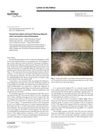
September 2017 in “Skin appendage disorders” Some women with Frontal Fibrosing Alopecia also have Lichen Planopilaris, which can lead to more symptoms and affect hair outside the scalp.

This case study documented a 36-year-old woman with postpartum-onset frontal fibrosing alopecia who showed significant improvement in hair regrowth after early combination therapy with dutasteride, tofacitinib, and intralesional triamcinolone acetonide, suggesting potential benefits of multimodal treatment in this typically irreversible condition.
 5 citations
,
June 2024 in “Cureus”
5 citations
,
June 2024 in “Cureus” In a study involving adults with mild to moderate dandruff, researchers observed that post-hair wash interventions significantly reduced dandruff as measured by three assessment methods, showing substantial reliability and correlation, which supports their use in clinical settings for evaluating scalp dandruff treatments.
53 citations
,
June 2019 in “JEADV. Journal of the European Academy of Dermatology and Venereology/Journal of the European Academy of Dermatology and Venereology” This study observed that abnormal hormone levels were associated with lower disease activity in frontal fibrosing alopecia, while thyroid disorders were a common comorbidity among the affected population.
 July 2024 in “Iranian journal of pathology”
 This study described the clinicopathological features of patients with frontal fibrosing alopecia who underwent skin biopsies.
June 2026 in “British Journal of Dermatology” This study presents cases suggesting that hair transplantation may trigger de novo frontal fibrosing alopecia in some patients, highlighting a potential association worth considering as cosmetic hair procedures become more common.
 May 2025 in “The Journal of Rheumatology”
 In this case report, two patients with polyautoimmunity and difficult-to-treat lupus erythematosus experienced significant symptom improvement after adding anifrolumab to their regimen, suggesting its potential as an effective add-on therapy for refractory cutaneous symptoms in autoimmune conditions characterized by elevated interferon alpha activity.
7 citations
,
August 2017 in “Genetic testing and molecular biomarkers” This report suggests that patients with primary spontaneous pneumothorax should be evaluated for FLCN mutations, as they may indicate Birt-Hogg-Dube syndrome and associated cancer risks.
1 citations
,
January 2026 in “JDDG Journal der Deutschen Dermatologischen Gesellschaft” In this study, LC-OCT was used to distinguish between subtypes of scarring alopecia, laying the groundwork for further hypotheses and future research in larger and longitudinal studies to examine treatment responses.