 6 citations
,
May 2023 in “Drugs”
6 citations
,
May 2023 in “Drugs” This study reports that baricitinib was more effective than placebo in promoting hair growth in adults with severe alopecia areata after 36 weeks of treatment in clinical trials.
 11 citations
,
January 2022 in “Journal der Deutschen Dermatologischen Gesellschaft”
11 citations
,
January 2022 in “Journal der Deutschen Dermatologischen Gesellschaft” This review discusses current and emerging therapies for alopecia areata, highlights the challenges in managing this chronic disease, and emphasizes the importance of addressing its psychosocial impacts; it reports no new clinical results.
 February 2021 in “Dermatological reviews”
 In this study, a specially adapted nonablative radiofrequency device significantly increased hair growth measures in most patients with androgenetic alopecia, including hair count and density.
 January 2019 in “Acta dermatovenerologica Alpina, Pannonica et Adriatica (Tiskana izd.)”
 This study found that the treatment group experienced a higher average increase in hair counts than the placebo group, but the difference was not statistically significant.
 25 citations
,
June 2018 in “Clinical and Experimental Dermatology”
25 citations
,
June 2018 in “Clinical and Experimental Dermatology” This study found that combining fractional radiofrequency microneedling with 5% topical minoxidil improved hair count and thickness more than minoxidil alone in Chinese men with male pattern hair loss.
 9 citations
,
January 2018 in “Dermatologic Therapy”
9 citations
,
January 2018 in “Dermatologic Therapy” In this study, the HairLux fractional radiofrequency device was found to be effective and safe for stimulating hair growth in androgenetic alopecia, with patients experiencing increased hair density and thickness after ten treatments.
14 citations
,
December 2017 in “Journal of Investigative Dermatology Symposium Proceedings” This review discusses unconventional therapies for managing alopecia areata, highlighting antihistamines, cryotherapy, and low-dose naltrexone, but reports no new clinical results and emphasizes the need for further research.
32 citations
,
May 2017 in “Lasers in medical science” This study found that radiofrequency treatment, with or without hydrolyzed collagen, increased dermis thickness, neocollagenesis, and FGF2 overexpression in rat skin tissue.
 72 citations
,
July 2014 in “American journal of clinical dermatology”
72 citations
,
July 2014 in “American journal of clinical dermatology” This review analyzed randomized controlled trials on alopecia areata treatment and found that while several treatments showed effectiveness, most studies had limitations affecting their interpretability.
 205 citations
,
April 2013 in “British Journal of Dermatology”
205 citations
,
April 2013 in “British Journal of Dermatology” In this study, platelet-rich plasma significantly increased hair regrowth and reduced symptoms of alopecia areata compared to triamcinolone acetonide or placebo, with no observed side effects.
 27 citations
,
January 2013 in “The journal of investigative dermatology/Journal of investigative dermatology”
27 citations
,
January 2013 in “The journal of investigative dermatology/Journal of investigative dermatology” This study identified somatostatin as a potential secretory factor contributing to the immune privilege of human hair follicles.
 136 citations
,
January 2013 in “International Journal of Trichology”
136 citations
,
January 2013 in “International Journal of Trichology” This study found that adding microneedling to minoxidil treatment significantly improved hair growth in men with androgenetic alopecia compared to minoxidil alone across all assessed measures.
47 citations
,
December 2011 in “Experimental Dermatology” This study suggests that the neuropeptide CGRP may protect against, but not restore, IFNγ-induced collapse of hair follicle immune privilege in alopecia areata.
115 citations
,
April 2010 in “Archives of Dermatology” In this randomized, blinded study, the surgical face-lift improved facial skin laxity by 49% compared to 16% with a minimally invasive fractional radiofrequency treatment, with FRF causing fewer adverse effects.
60 citations
,
October 2009 in “PubMed” This study reports that intralesional triamcinolone acetonide was effective and well-tolerated for treating extensive alopecia areata in patients who often showed specific initial hair characteristics.
 48 citations
,
May 1999 in “International Journal of Dermatology”
48 citations
,
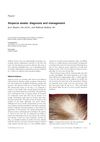
May 1999 in “International Journal of Dermatology” This article reviews the diagnosis and management of alopecia areata but reports no new research findings.