 January 2025 in “Journal of Food Biochemistry”
 In this study, 2′‐Fucosyllactose (2′‐FL) administration significantly reduced hair loss and increased hair length and thickness in a testosterone-induced androgenic alopecia mouse model, suggesting potential as a therapeutic agent for AGA.
 January 2025 in “Lasers in Medical Science”
 In this reported case, a 13-year-old boy with alopecia areata experienced complete lesion resolution and varied hair regrowth across different laser treatment parameters after three months of combined oral prednisone, topical ointment, and CO2 fractional laser therapy.
1 citations
,
April 2023 in “International journal of molecular sciences” In this study, AMACO was found to be non-essential for the formation or function of anchoring cords in mice, despite its presence in the structure.
January 2026 in “Dermatologic Therapy” This study found that combining ablative fractional CO2 laser treatment with topical minoxidil significantly improved frontal hairline regrowth and patient satisfaction in men with androgenetic alopecia compared to using minoxidil alone, without serious adverse effects.
 8 citations
,
June 2022 in “Frontiers in Medicine”
8 citations
,
June 2022 in “Frontiers in Medicine” This study found that tofacitinib is an effective and more tolerable treatment than systemic corticosteroids for moderate-to-severe alopecia areata, and its combination with corticosteroids may offer improved efficacy.
 January 2025 in “Lasers in Medical Science”
 In this study, researchers found that combining fractional CO2 laser sessions with topical dutasteride was more effective in improving male androgenic alopecia than using the laser treatment alone, as observed through global photo assessments and dermoscopic parameters.
 June 2019 in “Asian Journal of Medical Research”
 This study reports that while both dermaroller and fractional CO2 laser treatments for acne can lead to hyperpigmentation, itching was specifically noted only after fractional CO2 laser treatment.
 1 citations
,
March 2024 in “International Journal of Dermatology”
1 citations
,
March 2024 in “International Journal of Dermatology” This case report describes a therapy-resistant folliculitis decalvans patient who showed nearly complete response with increased hair density after treatment with CO2 laser-assisted photodynamic therapy.
May 2025 in “OPAL (Open@LaTrobe) (La Trobe University)” This study revealed that tofacitinib may inhibit CD8+ T cell infiltration in alopecia areata by modulating the linoleic acid metabolism-Mg2+ pathway, providing new insights for potential treatments and diagnosis.
 3 citations
,
May 2023 in “International Journal of Molecular Sciences”
3 citations
,
May 2023 in “International Journal of Molecular Sciences” In this study, researchers observed that phospholipid-calcium carbonate hybrid nanoparticles effectively delivered Tofacitinib citrate topically, which significantly inhibited hair follicle apoptosis and promoted hair growth in a mouse model of chemotherapy-induced alopecia, compared to a traditional Tofacitinib solution.
 January 2024 in “LA Referencia (Red Federada de Repositorios Institucionales de Publicaciones Científicas)”
 This study found that Carbon Quantum Dots effectively detected and quantified Co²⁺ ions and methylcobalamin in tap water with high sensitivity and recovery rates between 95% and 105%.
 June 2024 in “Australasian Journal of Dermatology”
 This study found that tofacitinib was a safe and effective treatment for patients with moderate-to-severe alopecia areata, with a significant percentage achieving notable reductions in their Severity of Alopecia Tool scores after 18 months.
September 2023 in “Journal of the American Academy of Dermatology” This study examined the application of new clinical guidelines for diagnosing frontal fibrosing alopecia in 18 men, highlighting that current diagnostic criteria may often overlook early beard involvement and sideburn recession.
 48 citations
,
November 2017 in “Journal of the American Academy of Dermatology”
48 citations
,
November 2017 in “Journal of the American Academy of Dermatology” Tofacitinib 2% ointment helped hair regrow in 3 out of 10 patients with alopecia areata, but caused side effects like scalp irritation and raised cholesterol in some.
 July 2025 in “Journal of the Pakistan Medical Association”
 In this study, intralesional triamcinolone acetonide combined with 5-fluorouracil was more effective for treating keloids, showing a good to excellent response in 95% of cases and fewer side effects, compared to triamcinolone acetonide alone, which achieved a 70% response rate.
 June 2023 in “QJM: An International Journal of Medicine”
 This study found that combining fractional CO2 laser treatment with platelet-rich plasma led to a statistically significant improvement in hair regrowth for male androgenetic alopecia, compared to using the laser treatment alone.
 September 2025 in “Tạp chí Da liễu học Việt Nam”
 This study found that both 2.5 mg/mL and 5 mg/mL concentrations of intralesional triamcinolone acetonide are effective for treating patchy alopecia areata, but the higher concentration promoted greater hair regrowth and density with more side effects.
 February 2024 in “Skin research and technology”
 This study found that line-field confocal optical coherence tomography effectively visualized microscopic alterations in alopecia areata, suggesting its potential use in diagnosis and monitoring.
 4 citations
,
July 2010 in “Journal of Plastic Reconstructive and Aesthetic Surgery”
4 citations
,
July 2010 in “Journal of Plastic Reconstructive and Aesthetic Surgery” This report describes the first known case of atypical fibroxanthoma developing on a hair-transplanted scalp, potentially linked to sun exposure and CO2 laser treatment.
 November 2023 in “Deleted Journal”
 In this study, the researchers found no superiority of combining 308-nm excimer laser with intralesional corticosteroid over corticosteroid alone for treating frontal fibrosing alopecia, and reported side effects such as erythema and postinflammatory hyperpigmentation in both treatment groups.
May 2025 in “OPAL (Open@LaTrobe) (La Trobe University)” This study found that tofacitinib may inhibit CD8+ T cell infiltration in alopecia areata by affecting the linoleic acid metabolism-Mg2+ pathway in a sodium sulfide-induced mouse model, highlighting new insights for clinical diagnosis and treatment strategies.
July 2024 in “Journal of Investigative Dermatology” The Fas/FasL pathway may play a role in alopecia areata.
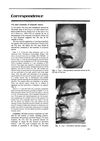 8 citations
,
January 1989 in “Journal of The American Academy of Dermatology”
8 citations
,
January 1989 in “Journal of The American Academy of Dermatology” This report suggests that CO2 laser treatment may be an effective alternative for removing traumatic tattoos caused by firearms, based on two successful patient cases.
 July 2024 in “Dermatology Practical & Conceptual”
 This article discusses the diagnostic challenges between certain neonatal scalp conditions and highlights the potential of line-field confocal optical coherence tomography to provide detailed, non-invasive skin examination, without presenting new clinical findings.
 November 2022 in “The journal of investigative dermatology/Journal of investigative dermatology”
 This study suggests that allergens like linalool found in personal care products may contribute to the pathobiology of frontal fibrosing alopecia by affecting immune responses and stem cell function in hair follicles.
 April 2025 in “Archives of Dermatological Research”
 In this study, the combination of CO2 fractional laser therapy with Bimatoprost 0.03% was found to be more effective in promoting hair regrowth in Alopecia Areata patients than laser therapy alone, with higher response rates and minimal adverse effects reported.
 7 citations
,
March 2021 in “Journal of the American Academy of Dermatology”
7 citations
,
March 2021 in “Journal of the American Academy of Dermatology” This study observed that some children and young adults with alopecia areata experienced flares during long-term tofacitinib treatment, despite initial successful hair regrowth.
 2 citations
,
January 2022 in “Skin research and technology”
2 citations
,
January 2022 in “Skin research and technology” In this study, optical coherence tomography detected hair follicles at the dermoepidermal junction not visible on the scalp surface in alopecia areata patients, suggesting OCT may help monitor treatment response.
 February 2024 in “Skin research and technology”
 The researchers in this study identified molecular mechanisms involved in frontal fibrosis alopecia, highlighting immune response and fatty acid metabolism, and developed a four-gene diagnostic model showing high accuracy in distinguishing affected individuals from controls.
This article discusses the effects of ablative carbon dioxide laser treatment for skin rejuvenation, noting it requires only a single treatment but involves more complex postoperative management, without reporting new clinical outcomes.