January 2014 in “Journal of Tissue Engineering and Reconstructive Surgery” This study found that rabbit hair follicle stem cells, combined with electro-spun nano silk fibers, successfully constructed a tissue-engineered urethra, suggesting potential for future in vivo repair studies.

This study found that vinegar-processed black soybean and its extract accelerated hair growth and prevented alopecia in mice, with potential mechanisms involving modulation of the Wnt/β-catenin signaling pathway, suggesting they may be promising functional foods for hair regeneration.
 8 citations
,
August 2007 in “Histopathology”
8 citations
,
August 2007 in “Histopathology” This article discusses the kinetic and topographical heterogeneity in follicular thyroid neoplasms and reports no new research findings; the authors emphasize understanding diverse growth patterns.
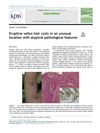 January 2018 in “The Kaohsiung journal of medical sciences”
 This case report describes an atypical presentation of eruptive vellus hair cysts on the elbows, where standard diagnostic techniques were unreliable due to the loss of cystic structural integrity.
 1 citations
,
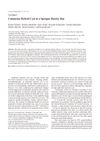
January 2012 in “Journal of Toxicologic Pathology”
1 citations
,
January 2012 in “Journal of Toxicologic Pathology” This case report describes a hybrid cyst in a Sprague-Dawley rat, showing both infundibular and matrical differentiation similar to different parts of normal hair follicles.
 2 citations
,
January 2000 in “Journal of Toxicologic Pathology”
2 citations
,
January 2000 in “Journal of Toxicologic Pathology” This study identified a single autosomal recessive gene responsible for hypotrichosis in a mutant rabbit strain, affecting hair growth and causing epidermal and hair follicle abnormalities.
 356 citations
,
December 1986 in “The journal of cell biology/The Journal of cell biology”
356 citations
,
December 1986 in “The journal of cell biology/The Journal of cell biology” This study found that specific human hair keratins are differentially expressed in the hair follicle, suggesting a shared pathway of epithelial differentiation between hair cortex and nail plate cells.
 72 citations
,
January 2003 in “American Journal of Pathology”
72 citations
,
January 2003 in “American Journal of Pathology” This study found that the co-activator CBP enhances the agonistic action of hydroxyflutamide on androgen receptors, suggesting a mechanism for therapy resistance in prostate cancer.
 9 citations
,
August 2017 in “Journal of comparative pathology”
9 citations
,
August 2017 in “Journal of comparative pathology” This study suggests that uncontrolled embryonic trichogenesis may play a role in the development of trichoblastoma in rabbits.
 36 citations
,
February 2018 in “British Journal of Dermatology”
36 citations
,
February 2018 in “British Journal of Dermatology” In this study, researchers found that eccrine sweat glands in human scalp skin are morphologically integrated into the pilosebaceous unit, suggesting they form a common homeostatic tissue environment with adjacent structures.
 10 citations
,
January 2010 in “Acta Histochemica Et Cytochemica”
10 citations
,
January 2010 in “Acta Histochemica Et Cytochemica” This study found that patients with alopecia areata and androgenetic alopecia showed increased c-kit expression and decreased Ki-67 expression in hair follicle cells compared to controls, suggesting a possible feedback mechanism involving stem cell factor signaling.
 9 citations
,
January 2011 in “EXPERIMENTAL ANIMALS”
9 citations
,
January 2011 in “EXPERIMENTAL ANIMALS” This study describes a novel hairless mutant rat strain, F344-Hr(krh), developed via ENU mutagenesis, which provides a model for skin disease and potentially focal glomerulosclerosis due to specific genetic mutations.
 4 citations
,
August 2017 in “Journal of cutaneous pathology”
4 citations
,
August 2017 in “Journal of cutaneous pathology” This case report documents only the second known instance of congenital lymphadenoma, expanding the diagnostic possibilities for cutaneous lymphoepithelial tumors in children.
 1 citations
,
November 2024 in “Romanian Journal of Morphology and Embryology”
1 citations
,
November 2024 in “Romanian Journal of Morphology and Embryology” This overview examines the biology, origin, structure, and function of various cells and structures, such as the blood-retinal barrier and Merkel cells, and discusses their roles in disease pathogenesis, along with recent findings related to the lymph nodes' paracortex.
 1 citations
,
December 2022 in “Parasitologists United Journal”
1 citations
,
December 2022 in “Parasitologists United Journal” This study observed that M. domestica larva-derived chitosan and gut extracts enhanced wound healing and collagen deposition in both immunocompetent and immunosuppressed mice, indicating potential benefits for combined therapy.
 1 citations
,
June 2021 in “Curēus”
1 citations
,
June 2021 in “Curēus” This study discusses incidental findings of syringomas and syringomatous proliferations in areas of scalp alopecia, suggesting they may be secondary to reactive changes from subclinical alopecia.
 March 2011 in “European Urology Supplements”
 The document concludes that a new biosensor can efficiently detect prostate cancer cells and that standardized referrals help find significant cancers effectively.

This Ph.D. project aims to evaluate the self-assembling potential of hair keratin extracts and study the cellular response to both crude and purified keratins, highlighting their potential applications from biomedical to water remediation.
 February 2015 in “Journal of Biomedical Materials Research Part B: Applied Biomaterials”
 This study suggests that 4-META resin may be more effective than cyanoacrylate for promoting wound healing in rats, as the wounds were covered by epithelial tissue faster with 4-META resin.
292 citations
,
October 1985 in “The Journal of Cell Biology” This study observed that the expression of certain keratins during human epidermal development marks the tissue's commitment to stratification and keratinization processes.
December 2021 in “Pathologica” This case report describes a rare instance of trichogerminoma with unusually numerous mitotic figures and a higher Ki67 proliferative rate, distinguishing it from previously documented cases.
June 2025 in “Histopathology” This study found that in superficial angiomyxomas, S100A4-positive mesenchymal niches may induce non-neoplastic adnexal epithelial growth, and highlighted evidence of mesenchymal-to-epithelial transition in eccrine duct branching, especially in Carney's complex cases.
11 citations
,
January 2005 in “Brazilian Journal of Medical and Biological Research” This study found no qualitative skin differences during development between mutant hairless USP mice and BALB/c mice, except for enlarged cysts in the hairless strain.
 August 2023 in “Micromachines”
 In this study, researchers developed a multilayered gel bead culture model using a microgel-spotting device, successfully mimicking the early development of skin appendages and supporting in vitro hair follicle regeneration with structures resembling native hair follicles.
34 citations
,
September 2020 in “Clinical, cosmetic and investigational dermatology” This research found that hyaluronic acid increased cell proliferation and type I collagen more effectively than poly-L-lactic acid in both human fibroblast cultures and rat dermis.
16 citations
,
September 2006 in “The Journal of Immunology” This study identified that mouse MILL1 and MILL2 are glycoproteins distinct from human MICA/B, primarily due to their association with β2-microglobulin and TAP-independent surface expression.
 4 citations
,
May 2021 in “The American Journal of Surgical Pathology”
4 citations
,
May 2021 in “The American Journal of Surgical Pathology” This study suggests that cutaneous lymphadenoma is a distinct benign lymphoepithelial tumor characterized by androgen receptor expression, hair follicle stem cell markers, and common EGFR gene mutations.
2 citations
,
August 2025 in “Reports — Medical Cases Images and Videos” In this case report, a rare melanotrichoblastoma tumor was identified in a 51-year-old female following the histological and immunohistochemical analysis of a lesion on the pubo-inguinal area, presenting with strong epithelial marker positivity and a low proliferative index.
August 2025 in “American Journal of Dermatopathology” In this study, researchers presented cases of cellular neurothekeoma in three male family members with early-onset in infancy, suggesting a potential genetic component and inheritance pattern, which deviates from the typical presentation seen mostly in women between 20–30 years.
March 2024 in “Veterinary sciences” This study is the first to detail major geriatric diseases in aged Julia Creek dunnarts, particularly highlighting hormonal issues like cystic glandular hyperplasia in females and testicular degeneration in males, suggesting these conditions are linked to aging and potentially hormonal dysregulation.