 12 citations
,
August 2011 in “Asian-Australasian Journal of Animal Sciences”
12 citations
,
August 2011 in “Asian-Australasian Journal of Animal Sciences” This study found that polymorphisms in the KAP8.1 gene were significantly associated with cashmere weight, length, and guard hair length in Chinese Inner Mongolian Cashmere goats, but not with fibre diameter.
 2 citations
,
April 2022 in “Clinical, cosmetic and investigational dermatology”
2 citations
,
April 2022 in “Clinical, cosmetic and investigational dermatology” In this case series, four African American women with treatment-resistant central centrifugal cicatricial alopecia showed scalp itch relief and significant hair regrowth after using a new botanical formula for 8 weeks to 1 year, with no adverse effects reported.
 July 2023 in “Nasza Dermatologia Online”
 More research is needed on CCCA in children, especially Black and Asian adolescents.
 November 1998 in “Hair transplant forum international”
 This article discusses the American Board of Hair Restoration Surgery certification process and its role in recognizing physicians' knowledge and skills, but it reports no new results.
33 citations
,
October 2006 in “European Journal of Immunology” This study found that CD44 and CD49d together enhance signaling pathways in lymphocytes in mice with alopecia areata, influencing their activation and function.
 37 citations
,
August 2016 in “Clinical, Cosmetic and Investigational Dermatology”
37 citations
,
August 2016 in “Clinical, Cosmetic and Investigational Dermatology” This article discusses central centrifugal cicatricial alopecia, highlighting its prevalence, potential genetic factors, and management challenges, but reports no new clinical conclusions and calls for further research.
July 2005 in “The American Journal of Human Genetics” The AR gene is linked to male-pattern baldness, TNFSF4 to heart disease, SLC19A3 to BBGD, MCT8 to a syndrome, and segmental duplications to genetic variation.
 78 citations
,
August 2012 in “Human molecular genetics online/Human molecular genetics”
78 citations
,
August 2012 in “Human molecular genetics online/Human molecular genetics” This study found that three genetic loci, including the newly identified JMJD1C, are associated with circulating testosterone and dihydrotestosterone levels, explaining a small portion of their variance in European men.
This study identified the Arabidopsis cation chloride cotransporter CCC1 as essential for regulating pH and function in the trans-Golgi network/early endosome, with its absence causing significant growth and stress response defects.
 72 citations
,
November 2012 in “PloS one”
72 citations
,
November 2012 in “PloS one” This study found that dysregulation of the folliculin-p0071 interaction may lead to changes in cell adhesion and signaling, contributing to conditions like emphysema and renal cell carcinoma.

CaBP1 and 2 are necessary for maintaining calcium currents and hearing in inner ear cells.
 75 citations
,
March 2009 in “Journal of The American Academy of Dermatology”
75 citations
,
March 2009 in “Journal of The American Academy of Dermatology” This review discusses the evolution and ongoing debate about the causes of central centrifugal cicatricial alopecia in African American women, without presenting new clinical findings.
56 citations
,
April 2019 in “The Plant Journal” This study found that CNGC 6, CNGC 9, and CNGC 14 are crucial for maintaining calcium oscillations necessary for normal root hair growth in plants, with mutations leading to defects like swelling and bursting.
4 citations
,
October 2024 in “Experimental Dermatology” In this study, researchers identified 173 differentially expressed genes in alopecia areata patients linked to immune and hair follicle pathways, constructed a regulatory network involving mRNA, miRNA, and lncRNA, and highlighted CD8A and FOXD2-AS1 as potential diagnostic markers and therapeutic targets.
July 2024 in “Journal of Investigative Dermatology” CRISPR/Cas9 and prime editing can potentially fix skin disorder genes safely and effectively.
10 citations
,
June 2021 in “Journal of Investigative Dermatology” GNPTAB gene is crucial for normal hair color in humans and mice.
 1 citations
,
April 2022 in “The Journal of Family Practice”
1 citations
,
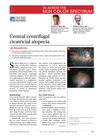
April 2022 in “The Journal of Family Practice” This report describes early and late stages of central centrifugal cicatricial alopecia in two Black women, highlighting progression from a small to a large central patch of hair loss.
 32 citations
,
November 2011 in “International Journal of Dermatology”
32 citations
,
November 2011 in “International Journal of Dermatology” This article reviews central centrifugal cicatricial alopecia, focusing on its multifactorial etiology and challenges in clinical diagnosis, and calls for more research and better treatment options.
 1 citations
,
June 2018 in “International Journal of Dermatology”
1 citations
,
June 2018 in “International Journal of Dermatology” DNCB is highly effective for treating alopecia areata with minimal long-term side effects.
53 citations
,
October 2003 in “Genetics” This study identified a mutation hotspot in the caracul (Ca) locus of mice, implicating the mK6irs1/Krt2-6g gene in hair formation and potentially human hair and skin diseases.
May 2025 in “International Journal of Women’s Dermatology” This study found that patients with central centrifugal cicatricial alopecia were less likely to report treatment improvement and more commonly associated with certain hairstyling practices compared to those with other scarring alopecias.
 21 citations
,
October 2013 in “Molecular Biology of the Cell”
21 citations
,
October 2013 in “Molecular Biology of the Cell” This study found that the protein CCN2 in dermal papilla cells is a physiologically relevant suppressor of hair follicle formation by destabilizing β-catenin, which may help maintain stem cell quiescence.
 December 2022 in “Frontiers in plant science”
 This study identifies two new proteins, CCDC22 and CCDC93, essential for root and root hair growth in Arabidopsis, and demonstrates their genetic link to a VTI13-dependent vacuolar trafficking pathway.
July 2022 in “Journal of Investigative Dermatology” Arg1+ macrophages may play a role in Alopecia Areata, offering new treatment targets.
 February 2025 in “PubMed”
 In this study, researchers evaluated CS12192, a selective JAK3 inhibitor, in an alopecia areata mouse model and found it reversed hair growth inhibition comparably to baricitinib, with better safety and similar immune-modulating mechanisms.
 December 2025 in “International Journal of Surgery”
 In this study, researchers identified a causal link between Epstein-Barr virus infection and clear cell renal cell carcinoma, highlighting GBP1 as a key target and suggesting finasteride as a potential inhibitor, offering a new direction for treatment strategies.
 January 2016 in “Hair transplant forum international”
 This article is an abstract header with author credentials and reports no study findings.
 62 citations
,
March 2008 in “American Journal of Human Genetics”
62 citations
,
March 2008 in “American Journal of Human Genetics” This study located a potential genetic link for androgenetic alopecia on chromosome 3q26, marking an early step in identifying new susceptibility genes for male pattern baldness.
5 citations
,
March 2021 in “F1000Research” This study found that the ABCG2 (rs2231142) polymorphism was associated with an increased risk of hyperuricemia and hypercholesterolemia in young Mexican males.
 5 citations
,
February 2019 in “The New England Journal of Medicine”
5 citations
,
February 2019 in “The New England Journal of Medicine” This article discusses the composition and function of the dermal papilla in hair follicles, focusing on its role in hair shaft generation and suggesting that cell loss in this area may contribute to hair loss.