4 citations
,
September 2020 in “Journal of Mind and Medical Sciences” This study synthesized a new organic sunscreen with broad photoprotective properties and demonstrated it to be non-toxic. The resultant cream, containing nanostructured lipid carriers, showed suitable application qualities and achieved a satisfactory SPF value of 16.
4 citations
,
July 2020 in “Journal of proteomics” This study found no significant proteomic differences in hair samples across racial or geometric groups in a culturally diverse South African cohort, highlighting the limited value of racial classification in precision medicine.
 3 citations
,
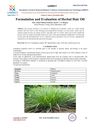
October 2024 in “International Journal of Advanced Research in Science Communication and Technology”
3 citations
,
October 2024 in “International Journal of Advanced Research in Science Communication and Technology” In this study, lemon grass hair oil was formulated using various herbs and evaluated on parameters such as viscosity, saponification value, and pH to explore its potential for general hair application.
3 citations
,
October 2024 in “Animals” In this proteomic analysis, the researchers found that transitioning from crimped to straight wool in Tan sheep is linked to significant changes in wool protein expression, revealing distinct patterns of keratins and keratin-associated proteins that could influence wool quality and economic value.
2 citations
,
June 2025 in “Medicina” This retrospective study in pediatric patients with Sjögren's syndrome found consistent indications of tear film instability and identified systemic features like arthralgia, Raynaud's phenomenon, and frequent autoantibody positivity, underscoring the value of integrating clinical and ophthalmological assessments for early diagnosis.
1 citations
,
December 2023 in “International journal of molecular sciences” In this study, researchers found that miR-199a-3p plays a regulatory role in hair follicle development via the PTPRF/β-catenin axis and established a mouse model of alopecia areata by downregulating this small RNA, suggesting its potential value in studying alopecia diseases.
 1 citations
,
December 2022 in “Gynecological Endocrinology”
1 citations
,
December 2022 in “Gynecological Endocrinology” This study found that among women with PCOS, higher HOMA-IR levels were associated with acanthosis nigricans, and increased DHEA-SO4, FAI, and FI values were linked to hirsutism.
 1 citations
,
February 2022 in “International Journal of Health and Pharmaceutical (IJHP)”
1 citations
,
February 2022 in “International Journal of Health and Pharmaceutical (IJHP)” This study found that a combination of cantigi and henna leaf extracts, in a 1:2 ratio, demonstrated the strongest antioxidant activity with an IC50 value of 29.85 µg/mL.
1 citations
,
January 2022 in “Journal of Drug Delivery Science and Technology” This study successfully developed and optimized ethanol-free microemulsion systems for the transdermal delivery of finasteride, showing that the predicted optimal formulations had physicochemical characteristics close to estimated values, without significant damage to treated hair fibers.
 April 2026 in “International Journal of Molecular Sciences”
 In this study, Ageratum houstonianum ethanolic extract and its active component agerarin were found to promote hair growth and follicle elongation by increasing SCUBE3 expression via activation of MAPK–AP-1 signaling in human dermal papilla cells, suggesting potential therapeutic value for treating hair loss.
 March 2026 in “American Journal of Clinical Dermatology”
 This narrative review highlights important religious and cultural factors influencing dermatologic care for Muslim patients and proposes culturally sensitive strategies to improve patient-centered care, emphasizing respect for privacy, dignity, and spiritual values.
 February 2026 in “Journal of Sylva Indonesiana”
 This study found that the heartwood extract of Avicennia marina demonstrated strong antioxidant activity, with an IC50 value of 61.50 µg/mL, suggesting potential for development into supplements or topical applications targeting degenerative diseases related to oxidative stress.
 January 2026 in “Frontiers in Pharmacology”
 This study suggests that cedrol may improve mitochondrial function, gut microbiota, and intestinal barrier integrity, indicating its potential value in treating inflammatory bowel disease.

In this study, researchers in Baghdad, Iraq found that men with hair loss had higher body fat mass and haematocrit values, and lower blood pressure compared to men without hair loss, suggesting potential links between metabolic and hematologic changes and baldness.

This study explored the molecular mechanisms by which Polygonum multiflorum may treat androgenic alopecia, suggesting it influences cell apoptosis and inflammation through specific pathways, with potential application value pending further testing.
 June 2025 in “Research Journal of Pharmacy and Technology”
 In this study, researchers developed a herbal hair oil formulation using various herbs and oils designed to counteract greying, promote hair growth, and reduce dandruff, finding that the formulation met standard values for organoleptic characteristics, grittiness, sensitivity, pH, and viscosity.
 May 2025 in “International Journal of Trichology”
 This retrospective study in a tertiary hair clinic concluded that routine monitoring of heart rate, weight, liver, and kidney function is not necessary for asymptomatic patients with normal baseline values undergoing low-dose oral minoxidil treatment, although monitoring is advised for those with preexisting renal impairment.
 May 2025 in “Journal of Experimental Pharmacology”
 This study found that Allium ascalonicum L. extract may improve insulin resistance by increasing insulin tolerance test values and lowering blood glucose levels, though more research is needed to understand its effects on metabolic disorders.
 June 2024 in “Research Square (Research Square)”
 This study found that among patients with systemic lupus erythematosus, the absence of skin rash and low levels of complement C3 were significant risk factors for developing lupus nephritis, with their combination demonstrating good predictive diagnostic value.
 April 2024 in “Pharmacoepidemiology and drug safety (Print)”
 This study found that using at least one ICD-10 code for alopecia in Medicaid claims data accurately identified alopecia in women of childbearing age, with positive predictive values between 95.3% and 100% across various algorithms tested.
 January 2024 in “Clinical Research and Reports”
 This study reviews the barriers faced by Muslim women in accessing dermatological healthcare, emphasizing the need for cultural competency regarding their values and practices to improve care within this understudied area.
 July 2023 in “International Journal of Pharmaceutical Sciences and Drug Analysis”
 In this study, researchers prepared and analyzed two varieties of homeopathic medicated hair oil using UV-VIS spectrophotometry. They reported specific absorbance values for each oil type, which were made by mixing mother tinctures of Jaborandi, Embelica officinalis, and Robinia with coconut oil.
 June 2023 in “Skin Research and Technology”
 In this study, researchers used high-resolution MRI to distinguish anatomical differences in the scalp and hair follicles between tertiary androgenetic alopecia and severe alopecia areata, identifying subcutaneous tissue layer thickness as a key discriminative factor with high diagnostic value.
 April 2023 in “Research Square (Research Square)”
 This study found that lower GPX4 mRNA levels in polymorphonuclear neutrophils of systemic lupus erythematosus patients were negatively associated with disease activity and serological markers, suggesting a diagnostic value for GPX4 mRNA.
In this study, cepharanthine and tetrandrine demonstrated efficacy against SARS-CoV-2 in a cell-based infection assay, with cepharanthine showing a lower IC50 value.
 June 2021 in “Current Biochemistry”
 This study determined that a 6.25% concentration of propolis effectively inhibits the growth of dandruff-causing bacteria, with effectiveness values of 223.52% and 99.59% compared to ketoconazole and another propolis extract, respectively.
April 2021 in “Journal of Mind and Medical Sciences” In this case report, a 13-year-old boy's acute appendicitis revealed Crohn's disease after unsuccessful conservative management required surgery, highlighting the diagnostic value of histopathological examination of the appendix.
 October 2020 in “Misr journal of agricultural engineering”
 This study examined the drying of pomegranate peel as a method for reducing waste and found that drying efficiency varied with temperature and air velocity, potentially adding value to this by-product.
January 2019 in “International Journal of Plant Animal and Environmental Sciences” This study found that a 50% ethanol extract from marine green alga Chlamydomonas sp. W80 exhibited several bioactive properties, including skin lightening and hair growth promotion effects, with potential implications for bioenergy and high-value coproducts.
May 2018 in “Digital ProScholar Media eBooks” This study evaluated the antimicrobial activity of a newly synthesized fluoroquinolone against Staphylococcus, Streptococcus, and Escherichia coli strains. The researchers compared results from the microdilution technique and agar disk diffusion method to EUCAST's recommended breakpoint values, building on promising in silico molecular docking tests.