 32 citations
,
May 2010 in “Pharmacopsychiatry”
32 citations
,
May 2010 in “Pharmacopsychiatry” This article investigates whether finasteride influences adult hippocampal neurogenesis related to depression and reports no new clinical findings; the authors suggest further research on its neurosteroid inhibition.
 47 citations
,
June 2009 in “Journal of Biological Chemistry”
47 citations
,
June 2009 in “Journal of Biological Chemistry” This study found that finasteride competitively inhibits the enzyme AKR1D1 with low micromolar affinity but does not act as a mechanism-based inactivator.
78 citations
,
December 2008 in “The Journal of Sexual Medicine” This review highlights that sexual dysfunction associated with 5-alpha-reductase inhibitors is recognized in clinical literature, with erectile dysfunction being the most common adverse effect, followed by ejaculatory dysfunction and decreased libido.
 31 citations
,
September 2008 in “International Journal of Andrology”
31 citations
,
September 2008 in “International Journal of Andrology” This review examined studies on erectile dysfunction and 5 alpha-reductase inhibitors, concluding that these drugs do not significantly cause erectile dysfunction and emphasizing testosterone's importance over dihydrotestosterone in erectile function.
 72 citations
,
April 2008 in “The Journal of urology/The journal of urology”
72 citations
,
April 2008 in “The Journal of urology/The journal of urology” This study found that 1-year use of 5alpha-reductase inhibitors, dutasteride or finasteride, significantly lowered dihydrotestosterone levels without adversely affecting bone density, lipids, or hemoglobin in normal men.
64 citations
,
March 2008 in “Neuropsychopharmacology”  77 citations
,
October 2007 in “International Journal of Andrology”
77 citations
,
October 2007 in “International Journal of Andrology” This study found that testosterone replacement, with or without finasteride, did not lead to significant cognitive improvements over 36 months in healthy older men without prior cognitive impairment.
 225 citations
,
July 2007 in “The Journal of Sexual Medicine”
225 citations
,
July 2007 in “The Journal of Sexual Medicine” In this study, patients informed about finasteride's potential sexual side effects reported a significantly higher occurrence of these side effects, suggesting a nocebo effect.
 103 citations
,
June 2007 in “Endocrinology and Metabolism Clinics of North America”
103 citations
,
June 2007 in “Endocrinology and Metabolism Clinics of North America” This article discusses treatment options for androgenetic alopecia, noting that medical interventions like finasteride and minoxidil can halt and partially reverse hair loss in mild to moderate cases, especially when combined with surgery.
 195 citations
,
February 2007 in “The Journal of Clinical Endocrinology and Metabolism”
195 citations
,
February 2007 in “The Journal of Clinical Endocrinology and Metabolism” In this study, administering 5alpha-reductase inhibitors reduced dihydrotestosterone levels and was associated with mild, reversible decreases in semen parameters in healthy men.
 99 citations
,
October 2006 in “BMC clinical pharmacology”
99 citations
,
October 2006 in “BMC clinical pharmacology” This preliminary study suggests that finasteride might cause depressive symptoms, indicating the need for cautious prescription in patients at high risk for depression.
 82 citations
,
August 2006 in “Pharmacology, Biochemistry and Behavior”
82 citations
,
August 2006 in “Pharmacology, Biochemistry and Behavior” This review proposes focusing on relationships between neuroactive steroids and psychiatric disorder symptoms, rather than relying on traditional disorder classifications, and reports no new clinical findings.
 137 citations
,
March 2006 in “Cns Drug Reviews”
137 citations
,
March 2006 in “Cns Drug Reviews” This review explores finasteride's effects on neuroactive steroid levels and their potential influence on disorders like depression and alcohol withdrawal but reports no new clinical findings.
 26 citations
,
June 2005 in “Journal of Molecular Endocrinology”
26 citations
,
June 2005 in “Journal of Molecular Endocrinology” This study found that both finasteride and dutasteride act as slow, time-dependent inhibitors of steroid 5α-reductase type II, with dutasteride being more efficient, influenced by the enzyme's genetic variants.
55 citations
,
March 2005 in “Neuropharmacology” A neurosteroid can reduce caffeine-induced anxiety in rats.
 29 citations
,
June 2004 in “Pharmacology, Biochemistry and Behavior”
29 citations
,
June 2004 in “Pharmacology, Biochemistry and Behavior” Finasteride reduces alcohol withdrawal effects, especially in female mice.
408 citations
,
May 2004 in “The Journal of clinical endocrinology and metabolism/Journal of clinical endocrinology & metabolism” This study found that dutasteride more effectively reduced serum dihydrotestosterone levels than finasteride in patients with benign prostatic hyperplasia.
 1707 citations
,
December 2003 in “The New England Journal of Medicine”
1707 citations
,
December 2003 in “The New England Journal of Medicine” Combination therapy of doxazosin and finasteride safely and effectively reduces benign prostatic hyperplasia progression risk.
 47 citations
,
November 2002 in “Journal of Neurochemistry”
47 citations
,
November 2002 in “Journal of Neurochemistry” This study found that progesterone pretreatment in rats potentiated the effect of ethanol on mesocortical dopamine levels, suggesting an influence of neuroactive steroids on ethanol's action.
 88 citations
,
October 2002 in “Journal of Dermatology”
88 citations
,
October 2002 in “Journal of Dermatology” In this study, 19 patients treated with finasteride for androgenetic alopecia developed moderate to severe depression, which resolved after stopping the medication, suggesting an association between finasteride and mood disturbances.
 110 citations
,
April 2002 in “The Journal of clinical endocrinology and metabolism/Journal of clinical endocrinology & metabolism”
110 citations
,
April 2002 in “The Journal of clinical endocrinology and metabolism/Journal of clinical endocrinology & metabolism” Dihydrotestosterone gel improved well-being and sexual function in older men without negatively affecting prostate health.
 22 citations
,
October 2001 in “Biochemical Pharmacology”
22 citations
,
October 2001 in “Biochemical Pharmacology” This study found that GI198745 acts as a time-dependent inhibitor of rat 5α-reductase type 2 but a rapid-equilibrium inhibitor of type 1, potentially making it more effective than finasteride in preventing rat prostate growth.
 393 citations
,
November 2000 in “Archives of General Psychiatry”
393 citations
,
November 2000 in “Archives of General Psychiatry” This review discusses the neurobiology of sexual function and reports no new results; the authors cover multiple endocrine and neurotransmitter influences on sexual desire, arousal, and orgasm stages.
 187 citations
,
June 1999 in “Journal of The American Academy of Dermatology”
187 citations
,
June 1999 in “Journal of The American Academy of Dermatology” This study reported that finasteride 1 mg/day significantly increased hair growth and slowed hair loss in men with frontal scalp hair thinning over one year, and these benefits continued or improved in the second year.
 581 citations
,
October 1998 in “Journal of The American Academy of Dermatology”
581 citations
,
October 1998 in “Journal of The American Academy of Dermatology” In male pattern hair loss, this study found that finasteride 1 mg daily significantly slowed hair loss and increased hair growth over two years compared to placebo.
 1054 citations
,
February 1998 in “The New England Journal of Medicine”
1054 citations
,
February 1998 in “The New England Journal of Medicine” In this study, men with benign prostatic hyperplasia who took finasteride for four years experienced reduced urinary symptoms, fewer surgeries, less acute urinary retention, increased urinary flow rates, and decreased prostate volume.
 728 citations
,
August 1996 in “The New England Journal of Medicine”
728 citations
,
August 1996 in “The New England Journal of Medicine” Terazosin and finasteride effectively treat BPH, but combining them adds no extra benefit.
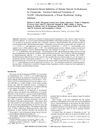 136 citations
,
March 1996 in “Journal of the American Chemical Society”
136 citations
,
March 1996 in “Journal of the American Chemical Society” This study explains finasteride's high potency and specificity as a mechanism-based inhibitor for treating benign prostatic hyperplasia by detailing its interaction with human type 2 steroid 5α-reductase.
 26 citations
,
July 1995 in “Neurobiology of Aging”
26 citations
,
July 1995 in “Neurobiology of Aging” Finasteride affects prostate weights and pituitary activity differently with age.