 April 2024 in “Current Rheumatology Reviews”
 This case report describes an 8-year-old girl with Mixed Connective Tissue Disease who experienced remission after treatment with immunomodulator drugs, highlighting the diagnostic value of anti-U1 RNP antibody testing in children.
 February 2023 in “Molecules”
 In this study, N. ottonis cactus cell extract applied to mice promoted hair growth and increased the number of hair follicles, suggesting its potential as a hair-growth-promoting agent.
 September 2017 in “The journal of investigative dermatology/Journal of investigative dermatology”
 In this study, the reconstructed skin epidermal model derived from hair follicles showed gene expression and enzyme functionality consistent with native human skin, suggesting its viability for studying skin metabolism and potential toxicity of dermo-cosmetic ingredients.
 18 citations
,
August 2015 in “Biochemical and Biophysical Research Communications”
18 citations
,
August 2015 in “Biochemical and Biophysical Research Communications” This study found that the XEDAR receptor can activate the non-canonical NF-kB pathway involving p100 processing, which is regulated by interactions with TRAF proteins and specific kinases.
 146 citations
,
May 2002 in “The American journal of pathology”
146 citations
,
May 2002 in “The American journal of pathology” This study found that cathepsin L deficiency in mice led to significant abnormalities in hair follicle development and cycling, including disrupted hair shaft outgrowth and premature hair growth phase entry.
 July 2026 in “Current Issues in Molecular Biology”
 This study found that Plerixafor, a CXCR4 antagonist, promotes melanogenesis in melanocytes by increasing MITF and tyrosinase expression and enhancing melanocyte migration, and it effectively restores pigmentation in a mouse depigmentation model without toxicity, highlighting its potential for treating pigmentary disorders.
2 citations
,
August 2022 in “World Journal of Clinical Cases” In this study, researchers found multiple somatic mutations and copy number variations in a patient with Cronkhite-Canada syndrome, providing novel insights into its potential genetic mechanisms.
 4 citations
,
July 2012 in “Genesis”
4 citations
,
July 2012 in “Genesis” This study reported that a Megsin-Cre transgene enables genetic manipulation primarily in skin, forestomach, and esophagus tissues, offering a new tool for studying development and diseases in these areas.
 May 2025 in “Journal of Inflammation Research”
 In this case report, a 28-year-old Chinese man with severe dissecting cellulitis of the scalp experienced nodules resolution and hair regrowth after treatment with ixekizumab and tofacitinib, marking the first reported use of this drug combination for the condition.
 25 citations
,
November 2015 in “Journal of Ethnopharmacology”
25 citations
,
November 2015 in “Journal of Ethnopharmacology” This study found that Cacumen platycladi extract significantly promoted hair growth and reduced dihydrotestosterone levels by inhibiting 5α-reductase activity in an androgen-sensitive mouse model.
33 citations
,
August 2000 in “Experimental Cell Research”  2 citations
,
July 2007 in “Cancer biology & therapy”
2 citations
,
July 2007 in “Cancer biology & therapy” This study found that 86% of patients with follicular non-Hodgkin's lymphoma were alive and nearly two-thirds remained in complete remission eight years after initial treatment with the radioimmunotherapy drug Bexxar.
 16 citations
,
December 2006 in “International Journal of Dermatology”
16 citations
,
December 2006 in “International Journal of Dermatology” This clinical case study describes an aggressive squamous cell carcinoma developing within a giant epidermal cyst on the abdomen.
November 2025 in “Journal of Investigative Dermatology” Alopecia Areata may involve reduced antioxidant defenses in hair follicles, affecting stem cell function.
 April 2018 in “The journal of investigative dermatology/Journal of investigative dermatology”
 This phase 2a trial evaluated Samcyprone for common wart treatment and found that while a sensitization reaction is necessary for therapeutic response, its level does not predict wart clearance.
28 citations
,
September 2014 in “Journal of Veterinary Internal Medicine” This study found that the novel drug VDC-1101 showed a 45% objective response rate in treating canine cutaneous T-cell lymphoma, offering a potential treatment option for this challenging disease.
This study found that Xiaochuang Drink significantly reduced the sebaceous gland and hair follicle diameter in a rabbit ear acne model and was determined to be safe at clinical doses.
 7 citations
,
June 2015 in “The anatomical record”
7 citations
,
June 2015 in “The anatomical record” This study in Hexi cashmere goats found that secondary follicle activity increases with time, and Hoxc13 expression varies significantly across different growth stages, suggesting a role in follicle activity.
 19 citations
,
August 2023 in “Experimental & Molecular Medicine”
19 citations
,
August 2023 in “Experimental & Molecular Medicine” This study found that the CXXC5 protein is overexpressed in diabetic foot ulcer tissues, suppressing wound healing, and that the small molecule KY19334 accelerated healing in diabetic mice by activating the Wnt/β-catenin pathway.
 15 citations
,
January 2022 in “Journal of Oleo Science”
15 citations
,
January 2022 in “Journal of Oleo Science” This study found that a phytosomal delivery system improved the bioavailability of Cuscuta reflexa extract compared to the plain extract, suggesting enhanced potential for this formulation.
20 citations
,
January 2017 in “Genetica” This study suggests that the methylation degree of HOXC8 exon 1 in the hair follicle may influence cashmere fiber growth in Liaoning cashmere goats.
 10 citations
,
January 2013 in “Journal of skin cancer”
10 citations
,
January 2013 in “Journal of skin cancer” In this study, PKC ε transgenic mice exposed to ultraviolet radiation showed increased hair follicle stem cell frequency and altered gene expression compared to wild-type mice, suggesting a potential role in skin cancer susceptibility.
33 citations
,
September 1990 in “Proceedings of the National Academy of Sciences” This study found that a 671-base pair promoter sequence from the ultra-high-sulfur keratin gene is sufficient to direct tissue-specific and development-specific expression of a reporter gene during hair growth in transgenic mice.
January 2026 in “Cosmetics” This study reported that Cacumen Platycladi extract significantly reduced hair loss and increased hair density in a 12-week clinical trial, suggesting it may be a safe and effective natural treatment.
 75 citations
,
October 2010 in “Mammalian genome”
75 citations
,
October 2010 in “Mammalian genome” In this study, specific genetic polymorphisms in the KRT71 gene were associated with hairless and curly phenotypes in Sphynx and Devon Rex cats.
 February 2025 in “Tạp chí Y học Việt Nam”
 This study observed that CT imaging is essential for evaluating posterior column injuries in patients with tibial plateau fractures, finding a 26.7% occurrence rate in the posterolateral column and 25.7% in the posteromedial column, aiding in accurate intervention planning.
 14 citations
,
July 2012 in “Journal of the American Academy of Dermatology”
14 citations
,
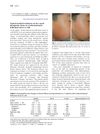
July 2012 in “Journal of the American Academy of Dermatology” This study found that topical tacalcitol improved roughness and scaling in erythromelanosis follicularis faciei et colli, although it was less effective for facial erythema.
1 citations
,
June 2018 in “Dermatologic Surgery” This overview details the Dermatologic Surgery journal's extensive coverage of dermatologic surgery topics, including cosmetic and reconstructive procedures, but it reports no new research findings.
February 2023 in “Frontiers in Pharmacology” This study found that the water extract of Cacumen Platycladi promotes hair growth and follicle development in mice, possibly by influencing dermal papilla cells through the Akt/GSK3β/β-Catenin signaling pathway.
17 citations
,
January 2010 in “PubMed” CD10 helps distinguish between basal cell carcinoma and benign hair follicle tumors.