This article reviews approved treatments for androgenetic alopecia and reports no new research findings, highlighting the need for further studies.
 March 2025 in “Future Oncology”
 This study found that participants with HR-positive/HER2-negative advanced or metastatic breast cancer treated with sacituzumab govitecan had better quality of life and longer survival compared to standard chemotherapy recipients.
 5 citations
,
November 2020 in “Frontiers in Cell and Developmental Biology”
5 citations
,
November 2020 in “Frontiers in Cell and Developmental Biology” This study introduced a simple and reliable in vitro assay capable of large-scale simultaneous screening of hair growth-promoting compounds using a 3D co-culture system of human dermal papilla and outer root sheath cells.
July 2022 in “Dermatologic Therapy” 
This laboratory study observed that Prunus Tomentosa Thumb Total Flavone significantly promoted hair growth and follicle maturation in a C57BL 6 mouse model of hair loss.
 12 citations
,
April 2005 in “Mycoses”
12 citations
,
April 2005 in “Mycoses” This study found that 1-day itraconazole therapy was more effective for acute vulvovaginal candidosis than for recurrent cases, where relapses occurred despite no yeast resistance.
 July 2022 in “Media Dermato Venereologica Indonesiana”
 In this case study, a 29-year-old man with alopecia areata experienced satisfactory hair regrowth after five months of combined intralesional triamcinolone acetonide and platelet-rich plasma therapy.
 13 citations
,
June 2012 in “Journal of Dermatological Case Reports”
13 citations
,
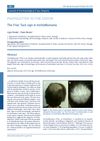
June 2012 in “Journal of Dermatological Case Reports” This report describes an 8-year-old male with trichotillomania, confirmed by trichoscopy showing characteristic hair damage and patterns.
January 2020 in “JAAD case reports” Systemic mastocytosis may cause a type of hair loss called cicatricial alopecia.
28 citations
,
December 2002 in “Der Hautarzt” TrichoScan accurately measures hair growth and loss, showing increased hair counts and thickness with treatment.
January 2015 in “Traditional Chinese Medicine” This review discusses recent advances in Traditional Chinese Medicine treatments for androgenic alopecia, highlighting approaches such as syndrome differentiation, specialized formulas, and acupuncture, but reports no new clinical results.
1 citations
,
January 2024 in “Arab Board Medical Journal” This study found that tofacitinib was an effective and well-tolerated treatment for alopecia areata, with significant to moderate hair regrowth in 78% of patients observed.
 January 2025 in “Surgical & Cosmetic Dermatology”
 This article reviews a case of alopecia triangularis temporalis, emphasizing the need for histopathological confirmation to avoid misdiagnosis and highlighting surgical correction as the preferred treatment for confirmed cases.
October 2022 in “Amplla Editora eBooks”  7 citations
,
January 2022 in “Molecules”
7 citations
,
January 2022 in “Molecules” This study found that tectoridin, an isoflavone from Rhizoma Belamcandae, may stimulate hair growth by activating Wnt signaling in human and mouse cell cultures.
 August 2021 in “Revista Colombiana de Reumatología/Revista Colombiana de Reumatologia”
 This case study reported that a 24-year-old patient with severe, treatment-resistant alopecia areata experienced excellent clinical improvement after one month of treatment with tofacitinib, a JAK inhibitor.
 February 2025 in “JAAD International”
 Five monthly sessions of minoxidil-dutasteride-copper peptide tattooing significantly improve hair regrowth in men with androgenetic alopecia.

In this case report, the authors observed that onabotulinum toxin A therapy, extended to areas around traumatic excoriations and alopecia, resulted in notable healing and hair regrowth in a patient with trigeminal trophic syndrome and trichotillomania.
 May 2025 in “Journal of the Egyptian Womenʼs Dermatologic Society”
 This randomized controlled trial found that intralesional vitamin D3 was as effective and safe as intralesional triamcinolone acetonide for treating patchy alopecia areata on the scalp, with no significant influence from serum vitamin D levels on treatment response.
 31 citations
,
August 2001 in “PubMed”
31 citations
,
August 2001 in “PubMed” This study found that the TrichoScan method detected significant increases in hair counts and cumulative hair thickness in men after finasteride treatment, suggesting its potential for monitoring hair treatment responses.
 45 citations
,
December 2018 in “Lasers in Medical Science”
45 citations
,
December 2018 in “Lasers in Medical Science” In a 24-week randomized trial, this study found that the RAMACAP laser helmet significantly increased hair density and diameter in androgenetic alopecia patients compared to a sham device, although limitations included a small sample size and potential issues with the control used.
 5 citations
,
January 2018
5 citations
,
January 2018 This study optimized a screening assay to identify molecules that inhibit or enhance TRPM5 ion channel activity, which may have implications for treating dysfunctions linked to cardiac arrhythmias and diabetes.
 56 citations
,
June 2015 in “Nature Protocols”
56 citations
,
June 2015 in “Nature Protocols” This protocol describes using two-photon laser-scanning microscopy to study hair regeneration in live mice, offering detailed imaging capabilities for observing hair follicle stem cell behavior and manipulating cellular populations.
 5 citations
,
January 2009
5 citations
,
January 2009 This study found that Betamethasone was more effective than Tacrolimus and soft paraffin in promoting hair regrowth in patients with mild to moderate patchy alopecia areata.
97 citations
,
January 2006 in “Dermatology” This study found that intramuscular triamcinolone acetonide or pulse therapy effectively treats alopecia areata with manageable side effects, but further strategies are needed to reduce relapse rates.
 16 citations
,
July 2017 in “Rheumatology and Therapy”
16 citations
,
July 2017 in “Rheumatology and Therapy” This review examines the outcomes of treating Brazilian patients with alopecia universalis using tofacitinib and highlights the need for randomized controlled trials to determine optimal dosing and duration.
This study reviews existing literature on regenerative therapy for androgenetic alopecia, highlighting that integrating growth factors, biotin, D-pantenol, and other active ingredients using the Vittahair protocol may enhance hair follicle regeneration, increase hair density, and improve hair quality, providing a precise and evidence-based treatment alternative.
June 2023 in “International Ayurvedic Medical Journal” This review article compiles extensive information on Tridax procumbens, an Ayurvedic herb, detailing its traditional uses, chemical makeup, and various pharmacological properties, including its roles in wound healing and as an antimicrobial agent.
 July 2023 in “Annals of King Edward Medical University”
 This randomized clinical trial compared bimatoprost 0.03% solution and mometasone furoate 0.1% cream for treating alopecia areata in 60 patients, finding that mometasone furoate led to better hair regrowth, while both treatments showed significant effectiveness.
October 2025 in “Journal of the Endocrine Society” This case report describes a 36-year-old female patient with panhypopituitarism, experiencing severe adrenal insufficiency and thyroid hormone deficiency, which led to electrolyte imbalance, QT interval prolongation, and ventricular tachycardia; treatment stabilized her condition, underscoring the importance of hormonal evaluation in arrhythmia assessment.