 August 2025 in “Preprints.org”
 In this case study, a female bison calf's generalized dermatitis caused by mixed staphylococcal infection improved with targeted treatment, highlighting the importance of timely diagnosis and careful health management in wildlife conservation.
August 2025 in “American Journal of Dermatopathology” In this study, researchers presented cases of cellular neurothekeoma in three male family members with early-onset in infancy, suggesting a potential genetic component and inheritance pattern, which deviates from the typical presentation seen mostly in women between 20–30 years.
 January 2025 in “Annals of Dermatology”
 This study reports that patients with primary cicatricial alopecia have distinct bacterial colonization and higher antibiotic resistance compared to those with non-inflammatory scalp conditions, indicating the importance of bacterial culture and susceptibility testing for targeted therapies.
January 2025 in “Case Reports in Veterinary Medicine” In this case study, a female European bison calf developed generalized bacterial dermatitis caused by *Staphylococcus aureus*, which improved after targeted treatment, highlighting the need for timely diagnosis and disease management in wildlife conservation.
 July 2024 in “Current Pharmaceutical Design”
 This study reviews advancements in the use of biodegradable polymers for wound healing, highlighting various polymer formulations and the observed enhancement of processes like cell proliferation and wound healing in both in-vitro and in-vivo experiments.

In this study using a mouse model, researchers utilized single-cell RNA sequencing to create a comprehensive cellular atlas of infected versus uninfected wounds, revealing that Enterococcus faecalis infections lead to immunosuppressive changes in skin cells and disrupt normal wound healing processes.
 April 2024 in “Military Medical Research/Military medical research”
 This review explores the current and experimental therapies for chronic wounds, emphasizing the potential of cellular and immunotherapies in addressing these persistent conditions, but notes a shortage of comprehensive studies on their effectiveness.
 February 2024 in “Curēus”
 This review highlights the critical importance of a balanced diet, with adequate proteins, vitamins, and minerals, to support skin health and potentially treat inflammatory skin conditions like psoriasis and atopic dermatitis, emphasizing the need for evidence-based dietary guidance.
November 2022 in “IntechOpen eBooks” This review discusses nanoparticle-based wound-healing materials, detailing their benefits, limitations, and recent advancements, and emphasizes the need for further understanding to enhance therapeutic outcomes.
March 2018 in “Cambridge University Press eBooks” Transplant patients face higher skin cancer risks due to immunosuppressive therapy, requiring careful skin health monitoring.
 April 2011 in “한국생물공학회 학술대회”
 This study found that an anti-atopic lotion containing fucoidan helped heal skin damage in hairless mice with atopic dermatitis by reducing skin thickness and modulating immune responses.
February 2009 in “Journal of the American Academy of Dermatology”  3 citations
,
December 1994 in “JEADV. Journal of the European Academy of Dermatology and Venereology/Journal of the European Academy of Dermatology and Venereology”
3 citations
,
December 1994 in “JEADV. Journal of the European Academy of Dermatology and Venereology/Journal of the European Academy of Dermatology and Venereology” In this study, itraconazole was shown to accumulate in the deeper skin layers of guinea pigs after oral administration, suggesting this delivery method effectively targets infective organisms there.
 May 2023 in “Asian journal of research in pharmaceutical sciences”
 This study concluded that topical ketoconazole is effective and safe for treating superficial fungal infections and has potential for new dermatologic uses despite concerns over oral administration's adverse effects.
 15 citations
,
February 2013 in “Pharmaceutical nanotechnology”
15 citations
,
February 2013 in “Pharmaceutical nanotechnology” This study found that invasomes enhanced the iontophoretic transdermal delivery of finasteride in rabbits, increasing AUC and T1/2 compared to oral suspension.
 June 2015 in “Reactions Weekly”
 A man developed alopecia areata after starting cancer treatment with vandetanib.
 11 citations
,
June 2012 in “Archives of Dermatological Research”
11 citations
,
June 2012 in “Archives of Dermatological Research” This study demonstrated that high doses of L-cystine and vitamin B6 effectively prevent doxorubicin-induced hair loss in mice.
14 citations
,
July 2021 in “Journal of the American Academy of Dermatology” Topical dapsone gel reduced flare-ups in folliculitis decalvans without side effects.
60 citations
,
August 1969 in “British Journal of Dermatology” This study used an autoradiographic technique to observe that germicides in surfactants are primarily deposited on the stratum corneum of guinea-pig and human skin.
 June 2022 in “Scientific Reports”
 This study found that prevelex coatings on microwell array devices enhanced the formation of uniform cell spheroids and enabled the development of hair follicles in tissue engineering applications.
5 citations
,
January 2024 in “BMC Cancer” In this descriptive study, researchers assessed the most common short-term side effects of anthracycline and taxane-based chemotherapy in 122 Moroccan women with localized breast cancer, documenting frequent systemic, gastrointestinal, dermatological, neurological, musculoskeletal, and ocular toxicities.
 350 citations
,
June 1989 in “The American Journal of Medicine”
350 citations
,
June 1989 in “The American Journal of Medicine” This study suggests that itraconazole may significantly improve therapy for aspergillosis, with 12 out of 15 evaluable patients responding to the treatment.
59 citations
,
October 1976 in “BMJ” This case report observed that a child developed thrombocytopenia, characterized by a low platelet count and prolonged bleeding time, while on sodium valproate monotherapy for seizures.
322 citations
,
October 2006 in “British Journal of Clinical Pharmacology” This article reviews the history and challenges of warfarin use and suggests that monitoring genetic and environmental factors could improve individualized dosing and safety, but no new results are reported.
 5 citations
,
December 2022 in “Annals Academy of Medicine Singapore”
5 citations
,
December 2022 in “Annals Academy of Medicine Singapore” This review reports that nirmatrelvir-ritonavir has significant drug-drug interactions with many common dermatological medications, whereas molnupiravir may be an alternative therapy due to the absence of such interactions observed so far.
86 citations
,
November 2020 in “Annals of Oncology” These guidelines discuss prevention and management strategies for dermatological toxicities but report no new clinical results; they include expert recommendations for conditions like acneiform rash and hand-foot syndrome.
 April 2026 in “Journal of Cancer”
 This review reports that the compound Cepharanthine shows promise as a cancer therapy by inducing cell death, arresting cell growth, inhibiting tumor progression, modulating key oncogenic pathways, and reversing multidrug resistance, suggesting its potential for further investigation in oncology.
 6 citations
,
April 2013 in “International Journal of Dermatology”
6 citations
,
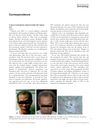
April 2013 in “International Journal of Dermatology” This correspondence article discusses a case of androgenetic alopecia treated with valproic acid but does not present new clinical findings.
24 citations
,
December 2020 in “Kardiologiia” This study found that combining bromhexine and spironolactone was effective in improving clinical outcomes and reducing viral load or hospitalization duration in patients with mild to moderate COVID-19.
14 citations
,
September 2017 in “Clinical and Experimental Dermatology” In this report, a 26-year-old man with folliculitis decalvans unresponsive to standard treatments experienced significant disease clearance after 25 months of systemic photodynamic therapy, marking the first documented use of this therapy for this condition.