 27 citations
,
January 2016 in “Quality of Life Research”
27 citations
,
January 2016 in “Quality of Life Research” This study developed and validated a 50-item questionnaire, the PCOSQ-50, to effectively assess the quality of life in Iranian women with polycystic ovary syndrome, addressing aspects often missed by previous questionnaires.
This study successfully adapted the Alopecia Areata Quality of Life Index Questionnaire into Turkish, finding it to be valid and reliable for assessing the quality of life in Turkish patients with alopecia areata.
 January 2022 in “Turkiye Klinikleri Journal of Dermatology”
 This study found that the Turkish version of the Multidimensional Assessment of Interoceptive Awareness-2 Scale is valid and reliable for use with Turkish dermatology patients.
 9 citations
,
January 2014 in “Postepy Dermatologii I Alergologii”
9 citations
,
January 2014 in “Postepy Dermatologii I Alergologii” This study evaluated the Polish version of Skindex-29, demonstrating its reliability and validity as a tool to measure quality of life in dermatology patients.
 15 citations
,
October 2015 in “PLOS ONE”
15 citations
,
October 2015 in “PLOS ONE” This study developed the Chi-PCOSQ, a culturally adapted Chinese assessment tool for measuring health-related quality of life in women with polycystic ovary syndrome, showing promising reliability and validity.
 24 citations
,
March 2010 in “Value in Health”
24 citations
,
March 2010 in “Value in Health” This review found that the only PCOS-specific quality of life measure, the PolyCystic Ovary Syndrome Questionnaire, has an incomplete development history and lacks some essential measurement properties for clinical trial use.
June 2026 in “Value in Health” The measures for eyebrow and eyelash hair loss in severe Alopecia Areata are reliable and useful for clinical trials.
 45 citations
,
January 1999 in “Dermatology”
45 citations
,
January 1999 in “Dermatology” This study validated the VQ-Dermato, the first dermatology-specific quality of life instrument in French, and found it to be reliable, acceptable for routine use, and more responsive than the SF36.
 1 citations
,
November 2019 in “Actas Dermo-Sifiliográficas”
1 citations
,
November 2019 in “Actas Dermo-Sifiliográficas” This study found that the Spanish version of the hair-specific Skindex-29 questionnaire effectively detected changes in health-related quality of life among women with female-pattern hair loss, and the scores were significantly correlated with the SF-12 survey results after treatment with a 5 alpha-reductase inhibitor.
 24 citations
,
March 2007 in “International Journal of Dermatology”
24 citations
,
March 2007 in “International Journal of Dermatology” This study translated and culturally adapted the Skindex-16 questionnaire into Arabic, finding it to be a reliable and valid measure of quality-of-life impacts from skin diseases in Saudi patients.
 4 citations
,
November 2011 in “Archives of Dermatology”
4 citations
,
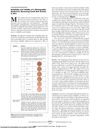
November 2011 in “Archives of Dermatology” This study describes a simple, noninvasive hair counting method used in a hair growth prevention trial, assessing its reliability and validity.
 May 2023 in “Siriraj Medical Journal”
 This study demonstrated that the Thai version of the FDLQI is a valid and reliable tool for assessing the quality of life of family members of patients with dermatological diseases.
 4 citations
,
February 2021 in “International Journal of Women's Dermatology”
4 citations
,
February 2021 in “International Journal of Women's Dermatology” This study determined that trichoscopy is a sensitive and specific tool that effectively aids in diagnosing alopecia in women, especially when clinical diagnosis is uncertain.
 4 citations
,
November 2020 in “Journal of Investigative Dermatology Symposium Proceedings”
4 citations
,
November 2020 in “Journal of Investigative Dermatology Symposium Proceedings” The Brigham Eyebrow Tool for Alopecia is a simple and reliable way to measure eyebrow hair loss.
19 citations
,
February 2018 in “International Journal of Endocrinology and Metabolism” This study found that the revised 43-item PCOSQ had better validity and reliability than the original version, although further studies are needed to assess its predictive efficacy.
December 2024 in “eCommons - AKU (Aga Khan University)” This study concluded that the platelet rich plasma injectable competency assessment tool (PICAT) demonstrated strong validity, internal consistency, and inter-rater reliability for evaluating dermatology residents at PNS Shifa Hospital.
 2 citations
,
December 2018 in “International Journal of Dermatology”
2 citations
,
December 2018 in “International Journal of Dermatology” This study developed a new semiquantitative grading scale for frontal and vertex androgenetic alopecia, which was found to be more sensitive and objective than existing classifications.
 2 citations
,
March 2016 in “The Journal of Dermatology”
2 citations
,
March 2016 in “The Journal of Dermatology” The researchers reported that the facial Psoriasis Log-based Area and Severity Index (fPLASI) more reliably and sensitively captured clinical improvement in facial psoriasis than the existing facial Psoriasis Area and Severity Index (fPASI).

This abstract provides no results, as it pertains to a presentation on determining hip muscle forces using an EMG-to-force processing model.
 38 citations
,
May 2009 in “European journal of dermatology/EJD. European journal of dermatology”
38 citations
,
May 2009 in “European journal of dermatology/EJD. European journal of dermatology” This study found that the TrichoScan method for evaluating hair loss showed excellent correlation with manual marking and provided more consistent, reproducible results with less variability and operator error.
19 citations
,
June 2020 in “General and comparative endocrinology” This study found that hair cortisol concentration is a promising stress indicator in cattle but not in pigs, where external factors and lower cortisol response may interfere with its validity.
 3 citations
,
June 2016 in “Dermatology Reports”
3 citations
,
June 2016 in “Dermatology Reports” This study concluded that the digit-length ratio (2D:4D) does not predict androgenic alopecia development, suggesting prenatal androgen exposure does not predispose men to this condition.
 January 2024 in “Institutional Repositories DataBase (IRDB)”
 This study developed a method to measure local steroid hormone concentrations in hair, providing new insights into hormone dynamics associated with androgenetic alopecia.
 59 citations
,
August 2014 in “International Journal of Biological Macromolecules”
59 citations
,
August 2014 in “International Journal of Biological Macromolecules” In this study, the researchers optimized the extraction conditions for crude polysaccharide from Hibiscus rosa-sinensis leaves, achieving a yield of 9.66% and demonstrated strong antioxidant activities in vitro.
 17 citations
,
July 2017 in “International Journal of Behavioral Medicine”
17 citations
,
July 2017 in “International Journal of Behavioral Medicine” This study validated the Egyptian Arabic version of the Skindex-16 and found that skin conditions significantly impacted patients' quality of life, particularly in the emotional domain.
 5 citations
,
October 2018 in “Research in psychotherapy”
5 citations
,
October 2018 in “Research in psychotherapy” This study presents the Italian adaptation of the ECR-M16 to assess attachment dimensions in cancer outpatients and notes that its factor structure is partly similar to the original.
3 citations
,
November 2023 in “BMC Public Health” In this study, EQ-5D-5L and SF-6DV2 showed suitable measurement properties in assessing health utility among Chinese university staff and students, though they reported differences in sensitivity and cannot be used interchangeably.
 8 citations
,
March 2021 in “Medicine”
8 citations
,
March 2021 in “Medicine” This study analyzed the Chinese version of the Symptom Checklist-90 and suggested revising 18 items to improve its quality and relevance.
39 citations
,
January 2009 in “Journal of Ovarian Research” This study found moderate to poor agreement among observers assessing ultrasonographic features of polycystic ovaries, suggesting the need for standardized training modules to improve consistency.
9 citations
,
January 2023 in “Journal of Clinical Medicine” This study presents a validated questionnaire, the FFA-QLI, which effectively assesses and differentiates the quality of life impact among patients with frontal fibrosing alopecia, showing greater sensitivity in identifying severe cases than the DLQI.