19 citations
,
October 2019 in “BMC Neuroscience” This study found weak to very weak correlations between estradiol, progesterone, and testosterone levels in the cerebrospinal fluid and serum of males without cerebral disorders.
18 citations
,
September 2024 in “Journal of the European Academy of Dermatology and Venereology” This review found that the DLQI is widely used as a benchmark in the development and validation of dermatology quality-of-life measures.
6 citations
,
December 2021 in “Journal of Clinical Medicine” This study introduced the Lichen Planus Activity and Damage Index (LiPADI), which effectively assesses the severity and progression of lichen planus, aligning well with other clinical indicators.
6 citations
,
January 2020 in “Open Journal of Psychiatry” This study concludes that the Greek version of the Dysmorphic Concern Questionnaire is a reliable and valid tool for assessing body dysmorphic disorder-related concerns in both research and clinical settings.
5 citations
,
April 2024 in “BMJ Open” This scoping review revealed that methods for measuring traumatic scar thickness using ultrasound are inconsistently reported and mainly remain in early research phases, highlighting a need for standardizing these methods to bridge the gap to routine clinical practice.
 April 2026 in “Mathematics”
 This study used a probabilistic framework to show that platelet-rich plasma preparation results in significant variability in platelet dose due to factors like injected volume and concentration factor.
February 2026 in “Journal of Cosmetic Dermatology” A new reliable scale improves accuracy in measuring hair density and treatment response.
October 2025 in “Preprints.org” In this study, chronic unpredictable stress affected male and female wild-derived house mice differently; stressed females gained less weight, had long grooming times, and lower immobility in tests, while stressed males showed increased hair corticosterone levels and shorter immobility times.
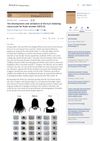 October 2023 in “The Journal of Dermatology”
 This study developed and validated the Hair-Shedding Visual Scale for Asian Women, finding it to be an effective tool for identifying FPHL and TE.
October 2022 in “The Laryngoscope” The InCISE score is a promising tool for assessing wound healing in head and neck surgery but needs more research for broader use.
 August 2024 in “Frontiers in Public Health”
 In this study, researchers developed and tested an Italian version of the Skindex-16AA to assess Health-Related Quality of Life in patients with moderate-to-severe Alopecia Areata, emphasizing the importance of patient perception in evaluating their mental health and quality of life.
January 2023 in “RSC Advances” This study found that two eco-friendly analytical methods for quantifying Finasteride and Tadalafil in a new dosage form were effective, green, and suitable for quality control.
 31 citations
,
November 2000 in “Clinical and Experimental Dermatology”
31 citations
,
November 2000 in “Clinical and Experimental Dermatology” This study developed the Women's Androgenetic Alopecia Quality of Life Questionnaire, which shows high reliability and internal consistency for assessing the impact of AGA on women's quality of life.
 23 citations
,
July 1989 in “Postgraduate medical journal”
23 citations
,
July 1989 in “Postgraduate medical journal” This study found that spironolactone 100 mg daily did not demonstrate objective benefits in managing idiopathic hirsutism, as it increased hair shaft diameter without reducing serum androgen levels.
 November 2025 in “Frontiers in Medicine”
 This study developed the SAALIQ, a culturally adapted tool specifically for measuring quality of life in Spanish-speaking patients with alopecia areata, highlighting its strong psychometric performance and the benefit of capturing overlooked domains compared to generic measures.
 October 2020 in “System Dynamics Review”
 This study models the pathways of nandrolone and its metabolites in the body and suggests methods to counteract finasteride's role in enabling PED users to cheat drug tests.
 May 2018 in “Actas Dermo-Sifiliográficas”
 This study validated a Spanish version of the Hair Specific Skindex 29 scale for assessing quality of life in women with female androgenetic alopecia, showing similar psychometric properties to the original.
 November 2010 in “Value in Health”
 Real-life dosing of biologics for plaque psoriasis often deviates from recommended guidelines, especially for high-need patients.
 506 citations
,
March 2005 in “The Journal of Clinical Endocrinology and Metabolism”
506 citations
,
March 2005 in “The Journal of Clinical Endocrinology and Metabolism” This study found that testosterone therapy improved physical performance and strength in older men with low testosterone over 36 months, whether administered alone or with finasteride.
 167 citations
,
January 2006 in “Gynecological Endocrinology”
167 citations
,
January 2006 in “Gynecological Endocrinology” This study found that women with polycystic ovary syndrome reported a poorer health-related quality of life compared to women in the general population and patients with other medical conditions.
 52 citations
,
March 2007 in “Dermatologic Therapy”
52 citations
,
March 2007 in “Dermatologic Therapy” This article describes the development and validation of a standardized instrument for measuring skin involvement in cutaneous lupus erythematosus, aiming to aid future clinical research and trials.
 38 citations
,
June 2004 in “Human Reproduction”
38 citations
,
June 2004 in “Human Reproduction” This review discusses the challenges of using surrogate variables versus primary clinical end-points in PCOS trials and reports no new research results; the authors suggest focusing future studies on primary outcomes.
 36 citations
,
January 1998 in “Journal of Dermatological Treatment”
36 citations
,
January 1998 in “Journal of Dermatological Treatment” This study developed a standardized questionnaire to measure patient-perceived changes in hair growth and appearance, which showed significant favoring of active treatment over placebo in a clinical trial for male androgenetic alopecia.
 34 citations
,
February 2013 in “The Journal of Clinical Endocrinology and Metabolism”
34 citations
,
February 2013 in “The Journal of Clinical Endocrinology and Metabolism” This study estimates the prevalence of hyperandrogenic states in late adolescent and young females, revealing that these disorders often begin at a young age.
 30 citations
,
March 2016 in “European Journal of Pharmaceutical Sciences”
30 citations
,
March 2016 in “European Journal of Pharmaceutical Sciences” This study found that using drug microplates in transdermal finasteride films enhances aqueous solubility and skin permeation compared to films with pure finasteride.
 25 citations
,
December 2017 in “The Journal of Clinical Endocrinology & Metabolism”
25 citations
,
December 2017 in “The Journal of Clinical Endocrinology & Metabolism” This study found that using an oral contraceptive with bicalutamide significantly reduced hirsutism in women with PCOS compared to an oral contraceptive alone, although it increased total cholesterol and LDL levels.
 23 citations
,
August 2018 in “Anais Brasileiros De Dermatologia”
23 citations
,
August 2018 in “Anais Brasileiros De Dermatologia” This study found that patients with androgenetic alopecia reported more impact on their quality of life in terms of emotions, functioning, and symptoms than those with alopecia areata.
 22 citations
,
November 2021 in “Dermatology and Therapy”
22 citations
,
November 2021 in “Dermatology and Therapy” This study found that the Alopecia Areata Patient Priority Outcomes questionnaire is a reliable and valid tool for measuring the severity and impact of hair loss in individuals with alopecia areata.
 19 citations
,
June 2002 in “American Journal of Dermatopathology”
19 citations
,
June 2002 in “American Journal of Dermatopathology” This study found significant differences in bcl-2 expression between areas of the scalp affected and unaffected by androgenetic alopecia, suggesting a uniform follicle population or synchronized follicular cycling in affected areas.
 15 citations
,
January 2024 in “The AAPS Journal”
15 citations
,
January 2024 in “The AAPS Journal” This study demonstrates that bioequivalence for proposed 50-mg ritlecitinib capsules versus clinical 100-mg capsules can be supported using a PBPK model-based biowaiver, achieving over 90% probability of success.