March 2024 in “Faculty of 1000 Research Ltd” In this study, researchers at Jawaharlal Nehru Medical College are comparing the effectiveness and side effects of Adapalene gel (0.1%) and Tazarotene gel (0.05%) in acne treatment among patients aged 12-35, with assessments every 4, 8, and 12 weeks. Results are not reported yet.
January 2024 in “Faculty of 1000 Research Ltd” This study found that aesthetic plastic surgeons in Guangdong, China, show strong interest in continuing education, with varied preferences based on the type of hospital they work in.
December 2023 in “JEADV Clinical Practice” This study found that dermoscopy of the axilla in patients with frontal fibrosing alopecia revealed significantly higher odds of brownish peripillary halos, suggesting a diagnostic clue for the condition in this region.
January 2022 in “Skin Appendage Disorders” This case report describes areata-like lupus in a 63-year-old woman, characterized by nonscarring patchy alopecia similar to alopecia areata, without meeting systemic lupus erythematosus criteria.
 December 2020 in “Skin appendage disorders”
 This discussion highlights the evolving clinical spectrum of lichen planopilaris, noting atypical features and presentations in younger males that suggest potential different pathomechanisms from previously recognized variants.
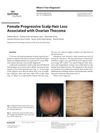 January 2019 in “Skin appendage disorders”
 This report presents a rare case where a bilateral ovarian thecoma in a postmenopausal woman led to an unusual pattern of female androgenetic alopecia mimicking male pattern hair loss.
 November 2018 in “Skin appendage disorders”
 The document concludes that a woman has both Frontal Fibrosing Alopecia and Lichen Simplex Chronicus, a previously unreported combination of conditions.
 December 2007 in “CRC Press eBooks”
 This paper reviews alopecia areata incognita, a condition causing diffuse hair loss without typical patches, and highlights the need for scalp biopsy for diagnosis, but reports no new findings.
October 2022 in “Skin appendage disorders” This study found that isolated scalp microneedling did not improve scalp coverage or hair density in male pattern hair loss patients, with no adverse events reported.
January 2018 in “Surgical and Cosmetic Dermatology” This study found that treatments with 5% minoxidil, with or without latanoprost, were effective in controlling hair loss and increasing hair strand count in patients with telogen effluvium or androgenic alopecia.
 26 citations
,
December 2020 in “Nature metabolism”
26 citations
,
December 2020 in “Nature metabolism” Martin-Perez et al. show that rapamycin's beneficial effects in a mouse model of Leigh syndrome are linked to the downregulation of protein kinase C.
6 citations
,
May 2022 in “Journal of Organometallic Chemistry” This study developed a catalytic system using indenyl-molybdenum(II)-bipyridine complexes and ionic liquid solvents to achieve a 95% yield of campholenic aldehyde from α-pinene oxide under mild conditions.
 5 citations
,
February 2019 in “bioRxiv (Cold Spring Harbor Laboratory)”
5 citations
,
February 2019 in “bioRxiv (Cold Spring Harbor Laboratory)” This study found that in a mouse model of Leigh syndrome, rapamycin alters brain proteome and may extend survival by targeting protein kinase C.
 January 2019 in “Applied Organometallic Chemistry”
 The compound (NH4)2Mn0.17Cu0.83Cl4.2H₂O has a specific structure, shows weak magnetism at low temperatures, and undergoes phase changes at high temperatures.
 7 citations
,
April 2023 in “Frontiers in immunology”
7 citations
,
April 2023 in “Frontiers in immunology” This source reports that a network meta-analysis found oral baricitinib and ruxolitinib to be effective and safe for treating alopecia areata, significantly improving response rates over placebos and showing fewer adverse effects than steroid treatments, though precise dosing needs further study.
 1 citations
,
May 2017 in “Journal of the American Academy of Dermatology”
1 citations
,
May 2017 in “Journal of the American Academy of Dermatology” Oral tofacitinib may be an effective and tolerable treatment for some people with severe alopecia areata.
 48 citations
,
April 2013 in “Expert Opinion on Investigational Drugs”
48 citations
,
April 2013 in “Expert Opinion on Investigational Drugs” This article reviews emerging treatments for androgenetic alopecia, including topical 5-alpha-reductase inhibitors and prostaglandin modulators, but reports no clinical results and calls for further efficacy evidence, especially for PRP.
 11 citations
,
January 2013 in “International Journal of Trichology”
11 citations
,
January 2013 in “International Journal of Trichology” This report discusses a case of short anagen syndrome in a 3-year-old Hispanic girl and emphasizes its differentiation from loose anagen syndrome, without presenting new empirical findings.
 2 citations
,
January 2014 in “Springer eBooks”
2 citations
,
January 2014 in “Springer eBooks” Polycystic Ovary Syndrome (PCOS) often leads to severe acne, and lifestyle changes and hormonal treatments can help manage it.

This study reviewed and reclassified 37 cases of primary scarring alopecia using histological methods to achieve more accurate diagnoses within subtypes like lupus erythematosus and lichen planopilaris.

This review discusses loose anagen hair syndrome, a benign and self-limited condition predominantly affecting children, and highlights the importance of differentiating it from other hair disorders like telogen effluvium and trichotillomania, but reports no new results.
 16 citations
,
August 2014 in “Archives of Pharmacal Research”
16 citations
,
August 2014 in “Archives of Pharmacal Research” This study found that surface-modified liquid crystalline nanoparticles significantly enhanced skin permeation of finasteride and dutasteride compared to unmodified nanoparticles, suggesting potential for improved treatment efficacy in androgenetic alopecia.
 3 citations
,
November 2018 in “Journal of cellular physiology”
3 citations
,
November 2018 in “Journal of cellular physiology” In laboratory settings, this study suggests that Serenoa repens and N-acetyl glucosamine with milk proteins may promote hair follicle vascularization through specific cellular interactions and actions.
2 citations
,
December 2018 This study found that dermatoscopy can quickly and non-invasively detect facial vellus hair involvement in patients with alopecia frontal fibrosante, occurring frequently and associated with specific facial lesions.
 2 citations
,
February 2018 in “Journal of dermatology & cosmetology”
2 citations
,
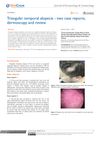
February 2018 in “Journal of dermatology & cosmetology” This article discusses triangular temporal alopecia, highlighting dermoscopy's role in diagnosis and the limited therapeutic options, without reporting new clinical results.

This study found a significant discordance between clinical symptoms and dermatoscopic signs with histopathological inflammation in patients with LPP and AFF, affecting diagnostic and therapeutic approaches.
 May 2020 in “JOJ Dermatology & Cosmetics”
 This report describes a rare case of Trichostasis Spinulosa on the heel, an uncommon location for this type of lesion.

Lichen planopilaris and frontal fibrosing alopecia are likely the same disease with different clinical appearances.