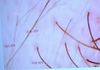
TLDR Brownish halos around axillary hair can help diagnose frontal fibrosing alopecia.
The study examined dermoscopic findings in the axilla of 30 women with frontal fibrosing alopecia (FFA) compared to a control group of 32 volunteers. It found that brownish peripillary halos were significantly more common in FFA patients, occurring in 83.3% of cases, and could serve as a diagnostic clue for FFA in the axillary region. Other findings, such as variability in hair diameter and multiple hairs per follicular ostium, were observed but not unique to FFA. The study underscores the potential of dermoscopy in distinguishing FFA from other conditions affecting the axilla and highlights the importance of the control group due to the lack of existing literature on dermoscopy findings in the axilla of healthy individuals.
27 citations
,
May 2016 in “British journal of dermatology/British journal of dermatology, Supplement”
339 citations
,
February 2014 in “Journal of The American Academy of Dermatology” Most patients with frontal fibrosing alopecia are postmenopausal women, and treatments like finasteride and dutasteride can improve or stabilize the condition.
31 citations
,
April 2010 in “British journal of dermatology/British journal of dermatology, Supplement” Frontal fibrosing alopecia can cause sudden hair loss on limbs, similar to scalp hair loss.
73 citations
,
April 2010 in “Anais Brasileiros de Dermatologia” Dermoscopy helps diagnose and monitor treatment for hair loss from scarring conditions like discoid lupus and lichen planopilaris.
129 citations
,
January 2009 in “International Journal of Trichology” Trichoscopy can diagnose female hair loss with high accuracy by looking for specific patterns in hair and scalp appearance.
329 citations
,
January 1997 in “Journal of the American Academy of Dermatology” Frontal fibrosing alopecia is a hair loss condition in postmenopausal women, similar to lichen planopilaris, with ineffective treatments.
325 citations
,
June 1994 in “Archives of Dermatology” Postmenopausal frontal fibrosing alopecia may be a unique condition linked to postmenopausal changes.
December 2023 in “JEADV Clinical Practice” Brownish halos around axillary hair can help diagnose frontal fibrosing alopecia.
14 citations
,
April 2014 in “Medical Clinics of North America” The document concludes that quick referral and appropriate treatments are crucial for managing common skin conditions and preventing permanent damage.