28 citations
,
December 2020 in “Journal of Ginseng Research” This study found that ginsenoside Rf from Panax ginseng may serve as an effective anti-pigmentation agent by inhibiting the CREB/MITF pathway, reducing melanogenesis in melanocytes and UV-irradiated human skin.
 27 citations
,
September 2015 in “PharmaNutrition”
27 citations
,
September 2015 in “PharmaNutrition” This article discusses various potential health benefits and increasing global interest in astaxanthin but presents no new clinical results, though ongoing trials are exploring its effects on chronic diseases and other conditions.
26 citations
,
January 2022 The skin is essential for protection, temperature control, and immune defense.
24 citations
,
January 2009 in “International Journal of Trichology” This review discusses the mechanisms by which sunlight exposure aggravates hair aging and highlights the role of hair pigments in providing photochemical protection, reporting no new results.
23 citations
,
May 2010 in “Surface and interface analysis” This study found that chemical treatments such as hair bleach and UV radiation significantly reduced the amount of 18-methyleicosanoic acid on the outer surface of human hair.
 20 citations
,
January 2003 in “Journal of oleo science”
20 citations
,
January 2003 in “Journal of oleo science” This study found that both everyday physical and environmental stresses, as well as chemical treatments, contributed to hair damage, with cuticle layers being more noticeably affected.
18 citations
,
April 2010 in “Archives of Dermatology” This case report describes a patient with psoriasis and alopecia universalis where psoriasis plaques supported hair growth, suggesting cytokine interaction may influence competing immune responses.
17 citations
,
October 2009 in “Dermatology” This study reported that ultraviolet light treatment from a Kromayer lamp stimulated hair growth in four out of six patients with alopecia, whereas intralesional triamcinolone acetonide had a mixed effect.
 16 citations
,
February 2015 in “Photochemistry and Photobiology”
16 citations
,
February 2015 in “Photochemistry and Photobiology” The researchers reported that hair offers a measurable protective barrier against UVB and UVA radiation, which increases with hair density, thickness, and melanin content, suggesting a role in skin cancer prevention.
15 citations
,
June 2019 in “JEADV. Journal of the European Academy of Dermatology and Venereology/Journal of the European Academy of Dermatology and Venereology” This study found that bleaching, dyeing, and UVA/Vis radiation caused significant cuticle damage and protein loss in both Caucasian and Afro-ethnic hair, highlighting the aggressive nature of these treatments.
 13 citations
,
February 1999 in “International Journal of Cosmetic Science”
13 citations
,
February 1999 in “International Journal of Cosmetic Science” This study observed a higher incidence of telogen effluvium from July to October, suggesting a summer-related effect in populations above the Tropic of Cancer, possibly influenced by ultraviolet light.
12 citations
,
March 2023 in “Processes” In this study, extracts from Chenopodium quinoa, Glycine max, and Malpighia emarginata demonstrated stability, low toxicity, and effective cleaning potential as surfactants in shampoo formulations, showing performance similar to or better than commercial shampoos in terms of surface and interfacial tension and sebum removal.
10 citations
,
May 2021 in “Clinical, cosmetic and investigational dermatology” In this mouse study, UVA and UVB exposure led to hair follicle miniaturization, graying, and prolonged hair cycle duration, associated with changes in stem cells and increased Wnt signaling activity.
10 citations
,
November 2017 in “Skin Appendage Disorders” This series of eight North American patients with erosive pustular dermatosis of the scalp suggests that factors like immunosenescence and ultraviolet damage may contribute to the condition's development.
 10 citations
,
August 1991 in “PubMed”
10 citations
,
August 1991 in “PubMed” This study supports the idea that inflammation may play a role in the development of androgenetic alopecia, as indicated by certain immune deposits and porphyrins found more frequently in bald scalp biopsies compared to controls.
 8 citations
,
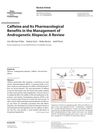
January 2020 in “Skin Pharmacology and Physiology”
8 citations
,
January 2020 in “Skin Pharmacology and Physiology” This article discusses the potential for topical caffeine as a natural alternative for treating androgenetic alopecia due to its ability to penetrate skin, but it reports no new clinical findings.
8 citations
,
November 2020 in “Journal of Cosmetic Dermatology” This preclinical study observed that a nanoencapsulated ingredient complex, AcPi, may prevent hair follicle aging and hair loss by reducing oxidative stress, enhancing mitochondrial activity and WNT/β-catenin signaling, and controlling androgenic metabolism when tested on human scalp cultures.
6 citations
,
December 2019 in “International Journal of Cosmetic Science” This study found that tryptophan fluorescence in natural white hair is significantly weaker than in other unpigmented keratin fibers, possibly due to greater environmental UV exposure or unknown chemical interactions.
 5 citations
,
January 2015 in “Current problems in dermatology”
5 citations
,
January 2015 in “Current problems in dermatology” The document provides a practical guide for diagnosing and treating various types of hair loss.
 4 citations
,
November 2021 in “Frontiers in Cell and Developmental Biology”
4 citations
,
November 2021 in “Frontiers in Cell and Developmental Biology” Aging causes hair loss and graying due to stem cell decline and changes in cell behavior and communication.
 3 citations
,
October 2024 in “Frontiers in Medicine”
3 citations
,
October 2024 in “Frontiers in Medicine” This study investigated single-cell changes in photoaged skin, revealing distinct cell clusters and increased activity in PD-L1 and PD-1 pathways in sun-exposed areas, enhancing understanding of UVA-induced skin damage and potential prevention targets for photoaging and UV-induced skin cancers.
 3 citations
,
April 2022 in “Dermatologic Surgery”
3 citations
,
April 2022 in “Dermatologic Surgery” This systematic review found that photobiomodulation therapies using ultraviolet and infrared light effectively treated alopecia areata, while red and infrared light treatments were effective for androgenetic alopecia.
 3 citations
,
January 2022 in “Journal of The American Academy of Dermatology”
3 citations
,
January 2022 in “Journal of The American Academy of Dermatology” This study found that sunscreen and moisturizer use was associated with a higher likelihood of developing frontal fibrosing alopecia in the reviewed studies.
 3 citations
,
October 2021 in “Clinical, Cosmetic and Investigational Dermatology”
3 citations
,
October 2021 in “Clinical, Cosmetic and Investigational Dermatology” This review discusses the epidemiology, risk factors, clinical features, and management of scalp melanomas, highlighting their high mortality rates and specific challenges in diagnosis and treatment; it reports no new research findings.
 3 citations
,
October 1979 in “Laboratory animals”
3 citations
,
October 1979 in “Laboratory animals” This study found that phenylbutazone and fluocinolone acetonide have similar anti-redness effects in both haired and hairless animals, making hairless rats a potential alternative for testing without needing depilation.
 2 citations
,
October 2020 in “Journal of The American Academy of Dermatology”
2 citations
,
October 2020 in “Journal of The American Academy of Dermatology” This research discusses androgenic alopecia's potential role in severe COVID-19 symptomatology and suggests further exploration of the scalp's role in virus transmission.
2 citations
,
October 2008 in “InTech eBooks” This review discusses the benefits of non-denatured soybean extracts in skincare, suggesting potential roles in skin lightening, anti-aging, delaying hair growth, and photoprotection, but it reports no new clinical results.
2 citations
,
November 2013 This article discusses dermatologic adverse events associated with topoisomerase inhibitors and anthracyclines, such as alopecia and hand-foot syndrome, but reports no new clinical results.
2 citations
,
April 2011 in “InTech eBooks” This review discusses the potential skin care benefits of non-denatured soybean extracts, including skin lightening and UV protection, but reports no clinical results.
 1 citations
,
September 2025 in “Journal of Zhejiang University SCIENCE B”
1 citations
,
September 2025 in “Journal of Zhejiang University SCIENCE B” This abstract outlines the current understanding of cutaneous squamous cell carcinoma (cSCC), identifying it as the second most common non-melanoma skin cancer with risk factors like UV exposure and immunosuppression. It highlights cSCC's potential to metastasize and become fatal, affecting 2%-5% of in situ cases.