 May 2014 in “Transfusion and Apheresis Science”
 PRP is a safe natural treatment that improves skin by reducing wrinkles and enhancing texture for up to 4 months.
 June 2008 in “British Journal of Dermatology”
 Herpes gestationis is linked to certain antigens, atopic eczema affects T cell populations and may be eased by breastfeeding, higher doses of anti-androgen treatment can improve androgenic alopecia, topical minoxidil increases hair thickness, long-term methotrexate therapy can cause liver fibrosis in psoriasis patients, and Lichen Sclerosus et Atrophicus patients aren't at higher risk for autoimmune disorders.
 January 2008 in “Journal of The American Academy of Dermatology”
 Hair loss affects 20% of people, more in men and those over 35, and is often associated with a sensitive scalp.
 January 2008 in “Journal of The American Academy of Dermatology”
 A nonchemical lotion was found effective in killing head lice and their eggs in most people, indicating it could be useful for managing head lice.
 June 2023 in “Current Issues in Molecular Biology”
 In this study, the alcoholic extract DN106212 from Centipeda minima was shown to be more effective in promoting hair growth in C57BL/6 mice compared to dimethyl sulfoxide and tofacitinib, suggesting its potential as a natural hair growth agent.
 10 citations
,
September 2021 in “JAMA Dermatology”
10 citations
,
September 2021 in “JAMA Dermatology” This study reports that persistent chemotherapy-induced alopecia in breast cancer patients frequently resembles androgenetic alopecia, and treatment with minoxidil, alone or with antiandrogens, improved hair density in many cases.
 17 citations
,
October 2015 in “Medicine and Pharmacy Reports”
17 citations
,
October 2015 in “Medicine and Pharmacy Reports” This article reviews current research on animal models for hair regrowth treatments and reports no new findings; it highlights the need for studies comparing therapy efficiency and long-term safety.
 12 citations
,
February 2013 in “Journal of Cutaneous Pathology”
12 citations
,
February 2013 in “Journal of Cutaneous Pathology” This review evaluates various biopsy protocols for alopecia diagnosis and discusses the authors' experience with the St John's protocol but presents no new clinical findings.
 1 citations
,
December 2012 in “Journal of the European Academy of Dermatology and Venereology”
1 citations
,
December 2012 in “Journal of the European Academy of Dermatology and Venereology” This letter to the editor reports that sentinel lymph node status is the strongest independent predictor for both disease-free and overall survival in patients with thick melanoma.
 March 2023 in “Journal of Applied Biomedicine”
 This study suggests that oleanolic acid may promote hair growth in mice with testosterone-induced androgenetic alopecia by activating the Wnt/β-catenin pathway and influencing various molecular levels.
 May 2014 in “Journal of The American Academy of Dermatology”
 The project aimed to understand how genetic test results affect patients' actions and feelings in dermatology.
 16 citations
,
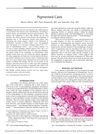
July 2013 in “The American Journal of Dermatopathology”
16 citations
,
July 2013 in “The American Journal of Dermatopathology” This study observed that pigmented casts are present in various alopecia types but are not specific to any single diagnosis, with distinct morphological features noted in trichotillomania.
 14 citations
,
May 2013 in “Experimental Dermatology”
14 citations
,
May 2013 in “Experimental Dermatology” This study found that the modified wash test was generally more effective than TrichoScan® for diagnosing hair loss, particularly telogen effluvium, though both methods showed only fair concordance with clinical diagnosis.
 34 citations
,
May 2013 in “Journal of the European Academy of Dermatology and Venereology”
34 citations
,
May 2013 in “Journal of the European Academy of Dermatology and Venereology” In this study, changes in hair cycle phases during pregnancy and the post-partum period showed a rise in telogen rates after delivery, especially among non-breastfeeding women, but no drastic exaggerations were noted.
 127 citations
,
December 2007 in “Journal of Investigative Dermatology”
127 citations
,
December 2007 in “Journal of Investigative Dermatology” This review examines regenerative hair waves and complex hair cycle domains in transgenic mice, highlighting how these dynamic processes contribute to skin regeneration and the physiological regulation of organs, but reports no new experimental results.
 September 2007 in “Journal of Investigative Dermatology”
 ANp63 is crucial for skin integrity, new filaggrin gene mutations link to eczema, hair can regrow from non-stem cells, sunburns are increasing, and glucocorticoids help treat skin allergies by affecting immune cells.
 12 citations
,
July 1957 in “Journal of Investigative Dermatology”
12 citations
,
July 1957 in “Journal of Investigative Dermatology” This historical observation found that parathyroid extract treatment in newborn rats led to a condition resembling scleroderma, characterized by skin hardening, calcium deposition, and possible necrosis.
 23 citations
,
January 2016 in “Journal of Nanjing Medical University”
23 citations
,
January 2016 in “Journal of Nanjing Medical University” This study found that higher BMI in PCOS patients at a Chinese clinic was associated with functional disorders of androgen excess, suggesting BMI may predict hyperandrogenism in this population.
 January 1953 in “The Lancet”
 Cortisone may help hair regrow by altering the local environment, with regrowth starting 3-4 weeks after treatment, but its use is not widely recommended.
 29 citations
,
March 2008 in “Postcolonial Studies”
29 citations
,
March 2008 in “Postcolonial Studies” The article concludes that the global hair trade is exploitative and reflects complex cultural and economic issues.
 July 2023 in “International Journal of Pharmaceutical Sciences and Drug Analysis”
 In this study, researchers prepared and analyzed two varieties of homeopathic medicated hair oil using UV-VIS spectrophotometry. They reported specific absorbance values for each oil type, which were made by mixing mother tinctures of Jaborandi, Embelica officinalis, and Robinia with coconut oil.
 July 2023 in “Journal of the Mexican chemical society”
 This study found that Hibiscus rosa-sinensis dried leaves extract displayed the strongest pancreatic lipase inhibitory activity among 37 tested plant extracts, showing potential as an anti-obesity agent with effects comparable to the pharmaceutical drug orlistat in reducing plasma triacylglycerol levels in rats.
 2 citations
,
June 2023 in “Plants”
2 citations
,
June 2023 in “Plants” This paper reviews extraction methods for obtaining polysaccharides from brown macroalgae like Sargassum, highlighting their antiviral, antimicrobial, and antitumoral bioactivities in both in vivo and in vitro studies, while also discussing challenges in research and commercialization of Sargassum-based products.
 May 2023 in “Tạp chí Y Dược học Cần Thơ”
 In this study, researchers assessed the effects of a shampoo containing pomelo peel essential oil and Bồ Kết on hair growth in shaved white mice, finding it promoted faster, longer, and denser hair growth compared to untreated mice.

This study found that a complex extract of Polygonatum sibiricum and Nelumbinis semen improved menopause symptoms in an ovariectomized rat model by enhancing blood lipid metabolism and reducing osteoporosis, without increasing risks of side effects like endometriosis, unlike conventional hormone-replacement therapy.
 May 2023 in “Advancements in Homeopathic Research”
 This study investigated the effectiveness of a botanical formulation, Zauberӧl®, on testosterone-induced alopecia in Wistar rats, focusing on ingredients such as Arnica montana and Hibiscus Rosa sinensis. Results are not reported in the abstract.
 April 2023 in “Jurnal Farmasi Indonesia”
 In this study using New Zealand White rabbits, a nanoemulsion combining candlenut oil and celery powder improved hair growth over 28 days, showing greater hair weight and thickness than both positive and negative controls, suggesting potential as an alopecia treatment.
 April 2023 in “Experimental Dermatology”
 This study found that a single intradermal injection of human dermal papilla cells increased hair follicle number and thickness in pigs, suggesting potential effectiveness for hair growth in humans.
 1 citations
,
April 2023 in “International Journal of Molecular Sciences”
1 citations
,
April 2023 in “International Journal of Molecular Sciences” This study found that Botryococcus terribilis ethanol extract significantly reduced inflammation markers in LPS-stimulated RAW264 cells, potentially via Axl inhibition and alteration of immune-related gene expression.
January 2006 in “한국미용학회지” This study observed that unbalanced dietary life is a major cause of hair loss, with hair loss most frequently occurring at the front of the head, and found that people most want hair growth promoting agents for future treatment.