January 2019 in “Prosiding Program Kreativitas Mahasiswa” This study found that a 15% Pisum sativum extract concentration in hair tonic showed the most effective hair growth, with a length of 14.51mm and weight of 0.16g.
January 2016 in “Jurnal Farmasi Indonesia” In this study, hibiscus leaf extract hair tonic at 10% concentration showed better hair growth promotion activity compared to minoxidil 2% in a rabbit model, although it caused eye irritation.
This study found that a 10% hibiscus leaf extract hair tonic demonstrated better hair growth activity than 2% minoxidil in rabbits but caused eye irritation.
May 2024 in “Jurnal Penelitian Farmasi dan Herbal” In this experimental study using male rabbits, researchers found that a 7.5% concentration of green tea leaf ethanol extract hair tonic was nearly as effective in promoting hair growth as the positive control, minoxidil, over a 21-day period.
 January 2018 in “International journal for pharmaceutical research scholars”
 In this study, topical application of tonic preparations containing 5% ethanol extract of Phyllanthus niruri to shaved mice showed potential as a hair growth enhancer, as indicated by observations of increased hair length and weight over a 21-day period.
 June 2025 in “Current Trends in Biotechnology and Pharmacy”
 This study found that when applied for 24 hours, a polyherbal formulation made from Ficus religiosa and Abrus precatorious promoted more significant hair growth in Male Wistar rats than Minoxidil and the control group, and the extracts also exhibited notable antibacterial activities.
 April 2025 in “International Journal for Research in Applied Science and Engineering Technology”
 This study developed and tested a herbal hair growth tonic using medicinal plant extracts on animal models, reporting higher anagen/telogen ratio, follicular density, and hair length compared to controls, suggesting it as a potential natural alternative to synthetic products.
 February 2024 in “International Journal of Health and Pharmaceutical”
 In this study, Avemor, a tonic containing aloe vera and moringa oleifera, along with varying concentrations of dried moringa leaf extracts, was tested on rabbits for hair growth, but the results showed variable effectiveness compared to a minoxidil control.
 30 citations
,
December 2014 in “Toxicological Research”
30 citations
,
December 2014 in “Toxicological Research” This study found that 3% peppermint oil significantly enhanced hair growth in C57BL/6 mice, showing increased dermal thickness, follicle number, and follicle depth compared to other treatments.
 2 citations
,
December 2022 in “Journal of the European Academy of Dermatology and Venereology”
2 citations
,
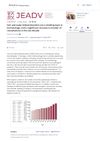
December 2022 in “Journal of the European Academy of Dermatology and Venereology” This article confirms a significant rise in hair and scalp-related disorders at tertiary outpatient dermatology centers, particularly in cases of androgenetic alopecia and frontal fibrosing alopecia.
 January 2014 in “Anales Médicos de la Asociación Médica del Centro Médico ABC”
 This study suggests that a combination of topical minoxidil with oral finasteride and dutasteride may promote new hair growth in androgenetic alopecia, with minor safety concerns reported.
 March 2002 in “Clin-Alert”
 In 2002, various drugs caused serious side effects, including vitamin B12 deficiency, heart issues, blindness, hypersexuality, allergic reactions, blood clotting problems, pupil dilation, capillary leak syndrome, muscle breakdown, hepatitis, skin reactions, and lupus.
 October 2005 in “CRC Press eBooks”
 Telogen effluvium is a condition where hair falls out due to various factors like illness, stress, or nutrient deficiency.
 January 1987 in “Side effects of drugs annual”
 This chapter reviews dermatological drugs and cosmetics, identifying common allergens and preservatives linked to contact dermatitis without reporting new clinical results.
 19 citations
,
October 2011 in “Clinics in Dermatology”
19 citations
,
October 2011 in “Clinics in Dermatology” This review discusses the cutaneous side effects of chemotherapy, noting that they frequently involve changes to skin, hair, and nails, and reports no new results.
 November 2019 in “Harper's Textbook of Pediatric Dermatology”
 This review discusses potential causes of alopecia and hair overgrowth in pediatric patients, detailing diagnostic techniques and treatments, but presents no new research findings.
This study reported that a topical hair tonic containing a 7.5% talok leaf and 2% pare leaf extract combination promoted hair growth in female Wistar rats similarly to minoxidil, showing a 64.71% increase in hair growth with no significant difference from minoxidil in statistical analysis.
 32 citations
,
January 2008 in “Journal of Microencapsulation”
32 citations
,
January 2008 in “Journal of Microencapsulation” In this study, nanocapsule-based preparations containing hinokitiol promoted hair growth in mice comparably to Minoxidil solution, as indicated by photographic and histological analysis.
 19 citations
,
January 2010 in “International Journal of Ayurveda Research”
19 citations
,
January 2010 in “International Journal of Ayurveda Research” In this study, topical application of Tectona grandis seed extracts on albino mice significantly accelerated hair growth initiation time and increased the percentage of hair follicles in the anagenic phase compared to the standard minoxidil treatment.
 15 citations
,
October 2012 in “InTech eBooks”
15 citations
,
October 2012 in “InTech eBooks” Niosomes are a promising and effective way to deliver drugs through the skin.
 January 2026 in “Magazine Portal Bibliotech Digital (Universidad Nacional de Colombia)”
 This study found that rosemary extracts, both individually and in combination as shampoo and hair tonic, stimulated significant hair growth in male C57BL6//BIOU mice, even surpassing the growth achieved with the commercial drug 5% minoxidil.
 December 2025 in “Jurnal Farmasi Tinctura”
 This study found that a hair tonic containing 15% ethanol extract of cocoa leaves effectively stimulated hair growth in rabbits, outperforming minoxidil 2%, and was safe with no skin irritation observed.
 January 2024 in “http://isrctn.com/”
 Teak leaf extract hair tonic was tested for hair growth and safety.
January 2022 in “Buletin penelitian tanaman rempah dan obat/Bulletin komunikasi penelitian tanaman rempah dan obat” This study observed that a hair tonic containing 3% ethanolic extract of bidara leaves stimulated rabbit hair growth more effectively over 28 days than both distilled water and 2% minoxidil, attributing this effect to the extract's anti-inflammatory and antioxidant properties.
In this experimental study, hibiscus leaf extract at a 30% concentration showed effectiveness in promoting hair growth on guinea pigs, with measurable increases in hair length and weight by the 21st day.
This study found that ethanolic extract and fractions of Ceiba leaf tonic may enhance rabbit hair growth similarly to 2% minoxidil.
July 2018 in “Media Informasi” This study found that a 3:2 combination of pandan leaf and mother-in-law's tongue extracts in hair tonic showed similar hair growth activity as 5% minoxidil after three weeks.
7 citations
,
April 2025 in “Journal of the American Academy of Dermatology” This scoping review investigates cases of toxic minoxidil exposure in cats and dogs, detailing their clinical presentations, management strategies, and outcomes, without reporting specific results.
 August 2021 in “Majalah Obat Tradisional”
 This study found that a hair tonic formulated from green tea extract showed similar hair growth-promoting activity to 2% Minoxidil in rabbits, without causing skin irritation or bacterial contamination.
36 citations
,
January 1991 in “PubMed” In this pilot study, 2% topical Minoxidil showed no benefit in preventing hair loss during chemotherapy for gynecologic cancers, although it was non-toxic.