This study reported that high cholesterol levels were linked to increased prostate cancer risk, while selenium supplementation affected gene expression, suggesting nutritional and clinical factors might influence prostate cancer risk and biology.
 March 2012 in “Daehan hwajangpum hakoeji/Daehan hwa'jangpum haghoeji”
 This study observed that a cream containing functional compounds from medicinal plants increased collagen production in human skin, while a hair tonic enhanced hair growth in mice.

This study found that a significant portion of counterfeit drugs seized among bodybuilders did not match their labels, with many containing undeclared anabolic steroids or other unexpected active ingredients.
 January 2011 in “Springer eBooks”
 Eating a balanced diet with the right vitamins and minerals is important for healthy hair, but too many supplements can be harmful.

This review discusses cyclosporine A's mechanisms of action and side effects compared to tacrolimus in renal transplantation, but it reports no new experimental results; the authors highlight implications for cardiovascular risk management.
 January 2002 in “Journal of Toxicology-cutaneous and Ocular Toxicology”
 Botanical extracts are increasingly important in cosmetics and drugs for their effectiveness and safety, backed by traditional use and scientific evidence.
 October 2001 in “WORLD SCIENTIFIC eBooks”
 This compilation on contact and occupational dermatology in the Asia-Pacific region discusses various allergens and irritants without reporting new clinical findings.
 June 1996 in “Irish Journal of Medical Science (1971 -)”
 This study found a statistically significant increase in glycosylated hemoglobins among patients with adult-acquired panhypopituitarism undergoing long-term GH replacement therapy, with two developing diabetes requiring treatment.
 January 1991 in “Journal of Pediatric Health Care”
 Hair loss in children can be caused by fungal infections, trauma, autoimmune disorders, or stress, and treatments vary depending on the cause.
Treatments for acute leukaemia lead to high remission rates, but relapses occur, requiring ongoing advancements in care.
46 citations
,
December 2010 in “PubMed” This study demonstrated that tocotrienol supplementation increased hair number in individuals with hair loss compared to a placebo, likely due to its antioxidant effects.
 34 citations
,
April 2009 in “Expert Opinion on Pharmacotherapy”
34 citations
,
April 2009 in “Expert Opinion on Pharmacotherapy” This review discusses evidence-based treatments for common hair loss forms, noting robust support for androgenetic alopecia therapies but limited long-term data and fewer high-quality studies for alopecia areata and cicatricial alopecias.
 1 citations
,
January 1997 in “Skin research”
1 citations
,
January 1997 in “Skin research” Hinokitiol and pantothenylethylether in hair products can cause strong allergic reactions.
 14 citations
,
July 2012 in “Journal of the American Academy of Dermatology”
14 citations
,
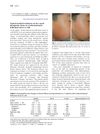
July 2012 in “Journal of the American Academy of Dermatology” This study found that topical tacalcitol improved roughness and scaling in erythromelanosis follicularis faciei et colli, although it was less effective for facial erythema.
 January 2025 in “ARC Journal of Clinical Case Reports”
 This case report suggests that using encapsulated retinol in polylysine may effectively treat actinic keratosis with minimal irritation, potentially providing a safer alternative for frequent use.
15 citations
,
June 2016 in “Computers in Biology and Medicine” This study's simulation found that Ascorbyl Tetraisopalmitate penetrates more efficiently through the skin's stratum corneum than via the infundibulum, following different pathways and dynamics in each membrane.
39 citations
,
June 2009 in “Oncology” This study observed that high-dose retinol palmitate was well-tolerated in resected stage I lung cancer patients, though it raised concerns about potential impacts on lipid metabolism due to elevated gamma-GT levels and triglycerides.
 1 citations
,
December 2022 in “Journal of cosmetic dermatology”
1 citations
,
December 2022 in “Journal of cosmetic dermatology” This study found that combining a potent steroid with a vitamin D analogue may offer more convenient treatment for localized alopecia areata than using a superpotent steroid alone, with comparable efficacy but fewer side effects.
August 2025 in “Quality in Sport” In this review, the authors highlighted the importance of vitamin A for vision, immune function, growth, and skin, noting that deficiency can lead to serious health issues like night blindness and increased infection risk, while excessive intake poses toxicity risks, particularly from supplements.
July 2025 in “JAAD Case Reports” This study introduces a novel pro-drug formulation of all-trans retinoic acid that reduces skin inflammation and achieves sustained drug release over several days compared to traditional methods.
 March 2026 in “Clinical Cosmetic and Investigational Dermatology”
 This research found that combining a 308-nm excimer laser with oral compound glycyrrhizin and topical 0.03% tacrolimus was more effective for treating pediatric facial and cervical vitiligo, resulting in faster and higher rates of repigmentation with minimal adverse effects compared to glycyrrhizin and tacrolimus alone.
 2 citations
,
March 2017 in “Asian Journal of Beauty and Cosmetology”
2 citations
,
March 2017 in “Asian Journal of Beauty and Cosmetology” This study found that caffeic acid reduced UVB-induced damage and oxidative stress in human dermal papilla cells, suggesting its protective efficacy against such cellular damage.
This article discusses variations in retinoid pharmacokinetics affecting their toxicity and clinical efficacy, but reports no new results; the authors emphasize considering toxicity in selecting suitable compounds.
 1 citations
,
May 2017 in “Journal of The American Academy of Dermatology”
1 citations
,
May 2017 in “Journal of The American Academy of Dermatology” The moisturizer with phytol improved skin texture and reduced fine wrinkles better than the moisturizer without it.
July 2025 in “Journal of Investigative Dermatology” Solid Lipid Particle technology makes retinol more stable, effective, and gentle on the skin.
 May 2024 in “International Journal of Advanced Academic Studies”
 This study found that in Iraqi women with PCOS, those taking vitamin E supplements experienced a significant reduction in androgenic symptoms like hair loss, weight gain, and acne, along with lower levels of certain hormones linked to the condition.
September 2019 in “Journal of Investigative Dermatology” This study observed that PCE-DP may improve skin pigmentation by increasing epidermal turnover and inhibiting melanin uptake and inflammation in human epidermal keratinocytes.
 January 2011 in “Side effects of drugs annual”
 Tretinoin gel is safe for sun exposure, but tacalcitol doesn't significantly improve non-segmental vitiligo.