4 citations
,
January 2008 in “Journal of Shandong University” In this study, goat hair follicles cultured in serum-free medium grew faster than those in medium with serum, and growth rates increased with the addition of VEGF and EGF.
7 citations
,
October 2011 in “BMC Cancer” This study found no evidence that HDGF expression transforms melanocytes into tumors in a mouse model, although it may play a role in cell differentiation and tumor progression.
January 2020 in “Global dermatology” This study investigated the effects of GFC with FGF5s and NMN at a depth of 0.8 mm using a microneedle for treating hair loss, but the abstract provides no measurable results.
January 2005 in “Di-san junyi daxue xuebao” This study found that VEGF significantly promoted hair follicle growth and regeneration in mice with scleroderma.
578 citations
,
April 1993 in “Cell” This study found that mice with a disrupted TGFα gene display a curly whisker-coat phenotype, similar to waved-1 mice, suggesting TGFα's crucial role in skin architecture and hair development.
118 citations
,
June 1993 in “Journal of Biological Chemistry” This study found that mouse and human protransglutaminase 3 enzymes require calcium-regulated activation for their role in later stages of cell envelope formation in the epidermis and hair follicle.
 8 citations
,
June 2019 in “Journal of Ginseng Research”
8 citations
,
June 2019 in “Journal of Ginseng Research” This study found that a gintonin-enriched fraction from ginseng promoted hair growth in mice by stimulating dermal papilla cell proliferation and increasing hair follicles and weight.
 14 citations
,
June 2021 in “British journal of dermatology/British journal of dermatology, Supplement”
14 citations
,
June 2021 in “British journal of dermatology/British journal of dermatology, Supplement” This paper presents consensus guidelines for standardized diagnostic criteria and assessment methods for frontal fibrosing alopecia to improve clinical research and data collection globally.
 March 2024 in “Hair transplant forum international”
 This article discusses the aesthetic impact and primary treatment options for cutis verticis gyrata, but it reports no new clinical results.
May 2022 in “Reactions Weekly” 120 citations
,
May 2012 in “Experimental Cell Research” This study found that VEGF stimulates the proliferation of human hair follicle dermal papilla cells via the VEGFR-2/ERK pathway, without involving p38, JNK, or AKT signaling.
 16 citations
,
April 2017 in “Journal of Cosmetic Dermatology”
16 citations
,
April 2017 in “Journal of Cosmetic Dermatology” This study found that fig leaf extract significantly downregulated inflammatory and androgenic gene expression in vitro, suggesting potential topical benefits for certain skin disorders.
25 citations
,
December 2018 in “Journal of Investigative Dermatology” TRPV4 slows hair growth by affecting hair follicle cells.
52 citations
,
June 1991 in “Journal of Virology” In this study, researchers found that the ability of hamster polyomavirus to cause lymphoid tumors in Syrian hamsters may be linked to its association with the tyrosine kinase p59fyn.
6 citations
,
September 2024 in “Current Oncology” This review summarizes evidence and adverse event management recommendations for Sacituzumab Govitecan in metastatic triple-negative breast cancer and hormone receptor-positive breast cancer, emphasizing favorable survival data from clinical trials.
 April 2026 in “International Journal of Current Pharmaceutical Review and Research”
 This study concluded that Growth Factor Concentrate was more effective than Platelet-Rich Plasma in enhancing hair growth and patient satisfaction for individuals with androgenic alopecia and telogen effluvium, while maintaining similar safety.
January 1994 in “Skin research” EGF and TGF-α help maintain hair cell cultures, but TGF-β1 stops their growth.
May 2026 in “Journal of Fish Biology” In this study, feeding Gymnocypris eckloni with Flammulina velutipes residues enhanced foregut morphology and beneficially altered gut microbiota, highlighting potential improvements in intestinal health for aquaculture use.
 February 2026 in “International Journal of Nanomedicine”
 This study found that controlled release of hIGF-1 from TF/hIGF-1 effectively enhanced re-epithelialization and granulation tissue formation in diabetic wounds in animal models compared to controls, suggesting a promising approach for diabetic wound treatment.
2 citations
,
September 2022 in “Annals of Oncology” This study observed that MIRV improved gastrointestinal symptoms and other quality of life measures in patients with platinum-resistant ovarian cancer compared to chemotherapy.
 September 2017 in “Journal of Clinical Dermatology”
 This study found that applying a growth factor cocktail including FGF9 with microneedling significantly increased hair density and diameter in patients with androgenetic alopecia, with similar results regardless of microneedle depths between 0.5 mm and 0.8 mm.
January 2003 in “Hepatology” 32 citations
,
May 2017 in “Lasers in medical science” This study found that radiofrequency treatment, with or without hydrolyzed collagen, increased dermis thickness, neocollagenesis, and FGF2 overexpression in rat skin tissue.
 January 2015 in “Hair transplant forum international”
 This snippet mentions an increase in women seeking surgical hair restoration and subsequently encountering more cases of frontal fibrosing alopecia, but the abstract doesn't contain results or conclusions.

The document recommends a multidisciplinary approach and experience sharing to advance facial feminization surgery as a medical field.
157 citations
,
May 2016 in “Plastic and reconstructive surgery/PSEF CD journals” This review of facial feminization surgery literature suggests it is generally safe and satisfactory for patients, though more research is needed to establish best practices and quality-of-life outcomes.
 13 citations
,
September 2018 in “Hair transplant forum international”
13 citations
,
September 2018 in “Hair transplant forum international” This article discusses the unique aspects of hair transplantation for achieving natural and dense coverage, but it provides no new clinical results.
This article describes a new hair transplant technique combining FUT and FUE to increase graft numbers in patients with high levels of baldness and reduced scalp laxity, but it does not report clinical outcomes.
 3 citations
,
January 2015 in “Journal of clinical and diagnostic research”
3 citations
,
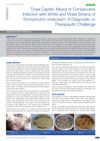
January 2015 in “Journal of clinical and diagnostic research” This case report described a seven-year-old with tinea capitis, which improved clinically after six weeks of griseofulvin treatment, changing the fungal strain from Trichophyton violaceum white variant to violet strain.
 2 citations
,
June 2019 in “Operative Techniques in Otolaryngology-Head and Neck Surgery”
2 citations
,
June 2019 in “Operative Techniques in Otolaryngology-Head and Neck Surgery” This review discusses the pedicled temporoparietal fascial flap for head and neck reconstruction, detailing its anatomy, technique, complications, and sustained relevance despite newer microvascular methods; it reports no new clinical results.