 January 2024 in “Dermatologic therapy”
 In this study, pediatric patients with alopecia areata treated with systemic tofacitinib showed significant improvement at 12 months, but the small sample size and retrospective design limit conclusions about its effectiveness.
 1 citations
,
September 2022 in “BioNanoScience”
1 citations
,
September 2022 in “BioNanoScience” This clinical case report describes a patient with ulcerative colitis whose symptoms improved using the Janus kinase inhibitor, tofacitinib, allowing disease remission and hair regrowth.
 February 2024 in “PloS one”
 This review concluded that oral tofacitinib and adalimumab are promising treatments for cicatricial alopecia, showing effectiveness in improving signs and symptoms but requiring regular monitoring for adverse effects. The authors emphasize the need for further extensive studies to solidify these findings.
 May 2023 in “International Journal of Trichology”
 This case report details the successful use of oral tofacitinib for six months, which led to significant hair regrowth in an adult male Indian patient with extensive and refractory alopecia areata, highlighting tofacitinib's potential in managing resistant cases within this population.
The authors concluded that capecitabine and high-dose toremifene may be an effective treatment option for patients unable to undergo anthracycline or taxane therapies, based on one woman's cancer management.
 26 citations
,
October 2020 in “Pediatric Dermatology”
26 citations
,
October 2020 in “Pediatric Dermatology” This study found that oral tofacitinib led to clinically significant improvement in alopecia areata severity scores among pre-adolescents, though results varied and further evaluation in clinical trials is needed.
35 citations
,
February 2022 in “Frontiers in Pediatrics” This study found that tofacitinib may be effective in treating various pediatric rheumatic diseases, particularly juvenile idiopathic arthritis, although some patients did not respond, and side effects were observed.
 15 citations
,
November 2020 in “Pharmaceutics”
15 citations
,
November 2020 in “Pharmaceutics” In this ex vivo and mouse model study, Tofacitinib-loaded nanoparticles demonstrated enhanced delivery of the drug into hair follicles and reduced inflammatory effects compared to conventional forms, indicating potential for safer, topical use in treating alopecia areata.
May 2025 in “International Journal of Trichology” In this case report, a 7-year-old boy with alopecia totalis experienced significant hair regrowth after adding topical tofacitinib and mometasone to his treatment regimen, suggesting potential benefits of topical Janus kinase inhibitors for pediatric patients with this condition.
 December 2023 in “Acta dermato-venereologica”
 This retrospective cohort study reported that oral tofacitinib was effective in treating alopecia areata, with 83.2% of patients showing improvement and 16.0% achieving complete remission. Earlier intervention and previous hair regrowth were linked to better outcomes, and no severe adverse events were observed.
 7 citations
,
April 2021 in “British Journal of Dermatology”
7 citations
,
April 2021 in “British Journal of Dermatology” In this research letter from the British Journal of Dermatology, the authors explore the use of topical tofacitinib to treat alopecia areata affecting facial hair, but specific results are not reported in the abstract.
July 2024 in “Journal of Controlled Release” In this study, researchers developed topical tofacitinib-loaded cationic lipid nanoparticles, which improved absorption and targeted hair follicles in an ex vivo pig ear model, showing promise in treating alopecia areata by reducing symptoms through the JAK/STAT pathway.
 8 citations
,
May 2017 in “Singapore Medical Journal”
8 citations
,
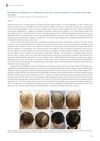
May 2017 in “Singapore Medical Journal” A Korean woman with complete hair loss regrew her hair after taking tofacitinib, with no side effects.
 7 citations
,
January 2022 in “Molecules”
7 citations
,
January 2022 in “Molecules” This study found that tectoridin, an isoflavone from Rhizoma Belamcandae, may stimulate hair growth by activating Wnt signaling in human and mouse cell cultures.
65 citations
,
February 2011 in “Molecular cancer therapeutics” This study reported that the novel AKT inhibitor CCT128930 demonstrated significant antitumor activity in human cancer cell lines and xenografts, highlighting its potential as an anticancer therapy.
July 2026 in “Cosmoderma” This study highlights that alopecia areata, an autoimmune condition often starting in childhood, poses a higher risk of becoming chronic with an early onset and can result in poor therapy response.
July 2026 in “Journal of Investigative Dermatology” Tanshinone Capsule may help regrow hair by boosting specific cell signals.
5 citations
,
March 2021 in “Hepatitis Monthly” This study found that tenofovir alafenamide fumarate (TAF) is an effective and safer alternative to tenofovir disoproxil fumarate (TDF) for chronic hepatitis B, with fewer long-term side effects like nephrotoxicity and decreased bone density.
 May 2025 in “JEADV Clinical Practice”
 This case study reports significant improvements in joint pain and hair regrowth in a 31-year-old female with alopecia universalis, psoriasis vulgaris, and psoriatic arthritis using a combination of tofacitinib and methotrexate after other treatments failed.
3 citations
,
August 2022 in “International Journal of Molecular Sciences” This study demonstrated that 5-azacytidine treatment may reduce TSC lesion-related hair follicles in mice, suggesting chromatin remodeling agents could be effective for tuberous sclerosis cutaneous lesions lacking tuberin.
4 citations
,
March 2007 in “British Journal of Dermatology” This case report observed that terminal hair growth on the nose tip was associated with gefitinib treatment in a 65-year-old woman with lung adenocarcinoma.
 16 citations
,
January 2017 in “Acta dermatovenerologica Alpina, Pannonica et Adriatica (Tiskana izd.)”
16 citations
,
January 2017 in “Acta dermatovenerologica Alpina, Pannonica et Adriatica (Tiskana izd.)” This case study reports that a 23-year-old woman with alopecia universalis experienced complete hair regrowth after six months of treatment with tofacitinib, a JAK-3 inhibitor.
 August 2025 in “Scientific Electronic library online (Sciences Carlos III Health Institute)”
 This study reviewed various studies and concluded that Janus kinase inhibitors, particularly tofacitinib, seem to promote hair regrowth in about half of patients with alopecia areata, though expected class-specific adverse effects were observed.
 1 citations
,
May 2017 in “Journal of the American Academy of Dermatology”
1 citations
,
May 2017 in “Journal of the American Academy of Dermatology” Oral tofacitinib may be an effective and tolerable treatment for some people with severe alopecia areata.
In a proof-of-concept study at Xiangya Hospital, the researchers observed that combining tofacitinib with low-dose interleukin-2 helped maintain remission in refractory alopecia areata patients, with three out of four maintaining complete remission for 11–20 months post-treatment and no adverse events reported.
3 citations
,
November 2019 in “Journal of dermatology” This case report details the successful use of oral itraconazole in treating a giant tufted angioma with hair loss that developed during pregnancy, leading to significant symptom relief and hair regrowth after discontinuation of the medication.
12 citations
,
December 2022 in “Current Protein and Peptide Science” This review discusses the molecular mechanisms and clinical applications of thymosin β4, highlighting its potential benefits for inflammation, wound healing, tumor metastasis, and other medical conditions but reports no new experimental results.
 25 citations
,
January 2021 in “Journal of drugs in dermatology”
25 citations
,
January 2021 in “Journal of drugs in dermatology” This review reports that sonidegib and vismodegib, two Hedgehog inhibitors used for treating advanced basal cell carcinoma, have similar efficacy and safety profiles, but differ in pharmacokinetics, with sonidegib achieving peak concentration more rapidly and reaching steady state later than vismodegib.
 30 citations
,
December 2019 in “PLoS ONE”
30 citations
,
December 2019 in “PLoS ONE” This study found that formulating raloxifene in nano-lipid carriers significantly enhanced its permeation and cytotoxicity against cancer cells compared to raw raloxifene.