April 2026 in “Case Reports in Dermatology” In this case report, a woman with Graham-Little-Piccardi-Lassueur Syndrome and hidradenitis suppurativa showed significant improvements in both conditions after six months of treatment with tofacitinib, a Janus Kinase inhibitor, with no recurrence or adverse events noted during a two-year follow-up.
 9 citations
,
October 2021 in “International Journal of Dermatology”
9 citations
,
October 2021 in “International Journal of Dermatology” This study found that tofacitinib effectively induced hair regrowth in 62.2% of severe alopecia areata patients in Saudi Arabia after six months, with higher baseline Severity of Alopecia Tool scores and past steroid use linked to reduced response.
1 citations
,
December 2025 in “Journal of the American Academy of Dermatology”  2 citations
,
September 2022 in “Dermatologic Therapy”
2 citations
,
September 2022 in “Dermatologic Therapy” In this study, tofacitinib showed a mixed response in treating refractory alopecia areata, with some patients experiencing complete or partial hair regrowth and others showing no response, particularly those with alopecia universalis.
March 2026 in “Voprosy dermatologii i venerologii/Dermatologiâ ža̋ne veneralogiâ ma̋selelerì” This literature review highlights the critical importance of early dermatological diagnosis of tuberous sclerosis, focusing on its genetic basis, dermatological markers, and the role of genetic testing and multidisciplinary support, while discussing treatment options like mTOR inhibitors and their limitations.
188 citations
,
June 1998 in “Molecular cell” This study found that mimicking the XPD point mutation in mice resulted in trichothiodystrophy-like symptoms, supporting the role of basal transcription and DNA repair defects in the disease.
 March 2020 in “Section 5: Patient safety and quality assurance”
 This study found that tofacitinib and baricitinib had an acceptable adverse reaction profile when used to treat rheumatoid arthritis, with similar side effects to those described in their technical data sheets.
 13 citations
,
January 2011 in “International Journal of Trichology”
13 citations
,
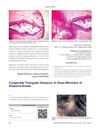
January 2011 in “International Journal of Trichology” CTA is often mistaken for AA but doesn't respond to steroids and may require hair transplantation.
 5 citations
,
January 2021 in “Inflammatory Bowel Diseases”
5 citations
,
January 2021 in “Inflammatory Bowel Diseases” In this report, a female patient with ulcerative colitis, alopecia areata, and pyoderma gangrenosum showed improvement in all three conditions after being treated with tofacitinib.
July 2025 in “Clinical Medicine” In this institution-based randomized trial, oral betamethasone mini-pulse therapy for alopecia areata showed a faster therapeutic response compared to oral tofacitinib, as measured by trichoscopic changes and achievement of 50% hair regrowth.
 1 citations
,
September 2024 in “Indian Journal of Postgraduate Dermatology”
1 citations
,
September 2024 in “Indian Journal of Postgraduate Dermatology” In this report, trichoscopy was highlighted as a valuable tool for diagnosing temporal triangular alopecia in children due to its ability to reveal distinctive patterns that differentiate it from similar conditions like alopecia areata, eliminating the need for invasive biopsy.
10 citations
,
January 1987 in “PubMed” This study found that triiodothyronine and epidermal growth factor differentially affected craniofacial development in neonatal rats, with various impacts on hair growth direction, incisor eruption, and ear and eyelid development.
October 2006 in “Urology” The study found that different criteria led to different patient groups in the CombAT study compared to the MTOPS study.
December 2015 in “PLOS ONE” This content contains no study findings or new results, instead referring only to statistical methods and figure captions.
 49 citations
,
March 2017 in “Journal of the American Academy of Dermatology”
49 citations
,
March 2017 in “Journal of the American Academy of Dermatology” This case series found that oral tofacitinib treatment in eight adolescents with alopecia universalis led to significant regrowth of hair, though relapse is likely after stopping therapy.
 78 citations
,
March 2017 in “JAMA Dermatology”
78 citations
,
March 2017 in “JAMA Dermatology” Tofacitinib helped regrow hair in people with severe alopecia, but side effects occurred and benefits stopped after treatment ended.
 March 2014 in “Journal of The American Academy of Dermatology”
 Tavaborole is a safe and effective toenail fungus treatment, with the 5% solution being the best option.
 June 2024 in “Australasian Journal of Dermatology”
 This study found that tofacitinib was a safe and effective treatment for patients with moderate-to-severe alopecia areata, with a significant percentage achieving notable reductions in their Severity of Alopecia Tool scores after 18 months.
 12 citations
,
August 2018 in “Journal of Dermatological Science”
12 citations
,
August 2018 in “Journal of Dermatological Science” This study observed that adipose-derived stem cells modified with trichogenic factors have similar properties to dermal papilla cells and show enhanced hair regeneration potential compared to unmodified adipose-derived stem cells.
2 citations
,
January 2018 in “International Journal of Trichology” This case report describes trichothiodystrophy in two sisters with only hair fragility, illustrating the condition's variable presentation and the importance of regular monitoring for potential associated impairments.
21 citations
,
January 2000 in “Fetal Diagnosis and Therapy” This study found that trichothiodystrophy can be diagnosed prenatally in the second trimester using an endoscopically-guided fetal eyebrow biopsy, with sulfur content analysis being the most reliable test.
13 citations
,
July 2012 in “International Journal of Trichology” In this study, the varied phenotype of trichothiodystrophy was highlighted, with findings of distinctive hair shaft abnormalities and a wide range of multisystem issues, including neurologic and urologic disorders.

This study concluded that oral tofacitinib significantly improved hair growth in patients with alopecia areata, alopecia totalis, and alopecia universalis over a 24-week period, but longer studies are needed to assess long-term safety.
 November 2020 in “Dubai medical journal”
 This case report described a 24-year-old with alopecia totalis who saw full scalp hair regrowth by the 9th month while using oral tofacitinib, which was well-tolerated and did not show serious adverse effects. Longer-term studies are needed to confirm its overall effectiveness for alopecia totalis.
6 citations
,
November 2020 in “JAAD Case Reports” This study identified overlapping genetic susceptibility loci in both alopecia areata and inflammatory bowel disease, specifically with Crohn's disease and ulcerative colitis.
2 citations
,
May 2017 in “Journal of the American Academy of Dermatology” Tofacitinib helped a 19-year-old regrow hair after other treatments failed.
 2 citations
,
October 2018 in “Archives of Dermatological Research”
2 citations
,
October 2018 in “Archives of Dermatological Research” The researchers reported that topical tofacitinib in mice increased hair follicles in the growth phase and boosted noggin and BMP4 mRNA expressions, compared to a vehicle and minoxidil.
 2 citations
,
September 2022 in “Frontiers in Immunology”
2 citations
,
September 2022 in “Frontiers in Immunology” This article reviews the emerging non-inflammatory roles of regulatory T cells in the skin and reports no new clinical findings, suggesting broad biological influence beyond traditional immune functions.
 November 2009 in “Actas dermo-sifiliográficas/Actas dermo-sifiliográficas”
 Hair transplantation effectively treated a bald patch in an 18-year-old woman with Temporal Triangular Alopecia.