 September 2022 in “PubMed”
 Entadfi, a mix of finasteride and tadalafil, is used for BPH.
 5 citations
,
November 2020 in “Frontiers in Cell and Developmental Biology”
5 citations
,
November 2020 in “Frontiers in Cell and Developmental Biology” This study introduced a simple and reliable in vitro assay capable of large-scale simultaneous screening of hair growth-promoting compounds using a 3D co-culture system of human dermal papilla and outer root sheath cells.
 February 2026 in “Reports — Medical Cases Images and Videos”
 This retrospective case series reported that pediatric patients with alopecia totalis and subtotalis experienced significant hair regrowth after treatment with the JAK inhibitor upadacitinib, with mild acne as the most common side effect; however, larger studies are needed to establish its efficacy and safety conclusively.
June 2026 in “Journal of Investigative Dermatology”  1 citations
,
April 2020 in “Asian Journal of Medicine and Biomedicine”
1 citations
,
April 2020 in “Asian Journal of Medicine and Biomedicine” This article reports a case of hair tourniquet syndrome in a child's toe, successfully treated surgically, and emphasizes the need for healthcare providers to be aware for early detection and treatment.
 23 citations
,
September 2009 in “Child Abuse & Neglect”
23 citations
,
September 2009 in “Child Abuse & Neglect” This case report highlights the importance of considering hair-thread tourniquet syndrome as a potential diagnosis for girls with genital swelling and pain, emphasizing the need for prompt intervention.
 April 2024 in “Indian Journal of Paediatric Dermatology”
 This case report highlights a rare association between congenital triangular alopecia and vitiligo, noting that treatment with tofacitinib improved the patient's vitiligo but not the alopecia.

In this six-year study of a Saudi cohort, oral tofacitinib showed favorable long-term effectiveness for patients with AA, with manageable adverse events requiring regular monitoring.
 April 2023 in “Journal of Investigative Dermatology”
 This study found that mitochondrial dysfunction in T cells led to defective hair follicle stem cell function and premature skin aging signs in a mouse model.
1 citations
,
January 2008 June 2025 in “British Journal of Dermatology” This study found that both tofacitinib and methotrexate effectively reduced hair loss and psychological distress in patients with moderate-to-severe alopecia areata, but tofacitinib showed much greater efficacy. Both treatments had similar safety profiles, with no serious adverse effects reported.
6 citations
,
October 2016 in “Pediatric Dermatology” This case report describes a unique instance of a 6-year-old girl developing angioedema after treatment with squaric acid dibutylester for alopecia areata.
 1 citations
,
July 2019 in “Medicina Clínica (English Edition)”
1 citations
,
July 2019 in “Medicina Clínica (English Edition)” Tofacitinib partially improved hair regrowth in a patient with severe hair loss.
 4 citations
,
June 2020 in “JAAD case reports”
4 citations
,
June 2020 in “JAAD case reports” This study presents a rare case of alopecia totalis occurring after the use of permanent hair dye.
April 2026 in “Clinical and Translational Science” In this multi-center, retrospective cohort study, researchers found that tofacitinib significantly reduced SALT scores and improved eyebrow and eyelash regrowth in patients with refractory alopecia areata after 12 weeks, with greater efficacy observed in severe cases and consistent results across pediatric and adult populations.
 June 2024 in “Indian Dermatology Online Journal”
 In this study, 40% of alopecia areata patients using topical 2% tofacitinib ointment achieved greater than 50% improvement in hair regrowth after six months, showing significant efficacy compared to controls, with no serious adverse effects reported.
164 citations
,
December 1984 in “Proceedings of the National Academy of Sciences” This study found that TCDD significantly reduced EGF receptor binding in various animal models, linked to toxic symptoms like weight loss and developmental delays, with receptor phosphorylation persisting several days.
1 citations
,
January 1996 in “Aesthetic Plastic Surgery” This study suggests that the tumescent technique can improve hair micrografting by effectively providing anesthesia and reducing bleeding without the need for multiple needle injections or nerve blocks.
 May 2026 in “Indian Journal of Dermatology”
 In this study, oral tofacitinib was associated with significant hair regrowth in patients with alopecia areata, achieving over 50% reduction in Severity of Alopecia Tool scores, with mild side effects.
3 citations
,
August 2022 in “International Journal of Molecular Sciences” This study demonstrated that 5-azacytidine treatment may reduce TSC lesion-related hair follicles in mice, suggesting chromatin remodeling agents could be effective for tuberous sclerosis cutaneous lesions lacking tuberin.
 41 citations
,
December 2015 in “JAMA Dermatology”
41 citations
,
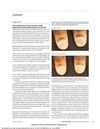
December 2015 in “JAMA Dermatology” Tofacitinib citrate improved nail dystrophy and pain in patients with alopecia universalis without causing side effects.
 January 2025 in “International Journal of Dermatology”
 In this case report, a 14-year-old male with alopecia areata subtotalis and nail involvement showed significant improvement after 9 months of treatment with oral tofacitinib, including complete hair regrowth and nail texture improvement, though further studies are needed to confirm these findings.
10 citations
,
March 1997 in “Pediatric Dermatology” This case report describes a patient with trichothiodystrophy presenting with autism, mental retardation, and seizures, characterized by distinct hair abnormalities under microscopy.
October 2020 in “Der Hautarzt” This case study demonstrated that off-label tofacitinib treatment led to full regrowth of scalp hair after 18 months in a patient with alopecia areata universalis, following unsuccessful therapies.
62 citations
,
December 1941 in “Experimental biology and medicine” In this study, phenylthiocarbamide intake was associated with hair graying in rats, while switching to tap water led some rats to regain their original fur color, suggesting dietary factors influence pigmentation.
November 2024 in “Journal of Investigative Dermatology” Tildrakizumab significantly improved psoriasis symptoms and well-being over 52 weeks.
 July 2022 in “International Journal of Trichology”
 This case report describes a young Indian boy with resistant alopecia areata who experienced nearly complete hair regrowth within 5 months of treatment with oral tofacitinib.
 4 citations
,
January 2001 in “Archives of Biochemistry and Biophysics”
4 citations
,
January 2001 in “Archives of Biochemistry and Biophysics” This study found that TPA induces apoptosis in pig renal epithelial cells by affecting cell cycle proteins, and activated ras can prevent this process.
 3 citations
,
March 2020 in “International Journal of Dermatology”
3 citations
,
March 2020 in “International Journal of Dermatology” This correspondence about the treatment of chronic alopecia areata with tildrakizumab reports no clinical results; the authors present an open-label pilot study setup.
 April 2016 in “Journal of The American Academy of Dermatology”
 The study found that Temporal Triangular Alopecia often starts in early childhood, while Folliculitis Decalvans is characterized by tufted hairs and redness around hair follicles.