 66 citations
,
July 2015 in “Organogenesis”
66 citations
,
July 2015 in “Organogenesis” This review summarizes recent findings on how Wnt signaling proteins play crucial roles in the cutaneous wound healing process but reports no new clinical results.
 8 citations
,
June 2022 in “Scientific Reports”
8 citations
,
June 2022 in “Scientific Reports” Using a transgenic pig model, this study demonstrated that LGR5 is a marker of hair follicle stem cells across different species, with important similarities and differences in gene expression and developmental processes.
 24 citations
,
February 2015 in “Experimental Cell Research”
24 citations
,
February 2015 in “Experimental Cell Research” This study found that overexpression of the transcription factor NFIC may enhance the proliferation and differentiation of stem cells from the apical papilla, suggesting its potential role in dentin/root regeneration.
 March 2026 in “Preprints.org”
 This study investigated the secretome of adipose mesenchymal stem cells and fibroblasts used in skin care products, finding 16 therapeutic pathways involving numerous signaling mechanisms, which may offer skin benefits through anti-inflammatory and regenerative effects.
 November 2023 in “Linköping University medical dissertations”
 This research presents a comprehensive workflow for producing EMA-compliant autologous keratinocyte-based therapies for wound healing and explores miRNA-mediated regulations in human keratinocytes and adipose-derived mesenchymal stem cells.
 218 citations
,
April 2008 in “Genes & Development”
218 citations
,
April 2008 in “Genes & Development” This research discusses how epithelial stem cells in the skin maintain normal homeostasis, contribute to wound repair, and highlights the importance of these processes, as defects can lead to skin diseases including cancers, but provides no new experimental results.
 150 citations
,
December 2012 in “EMBO Reports”
150 citations
,
December 2012 in “EMBO Reports” This review explores the mechanisms of adult stem cell self-renewal, using skin as a model, and reports no new results but raises important unanswered questions in the field.
 44 citations
,
April 2017 in “Genes & development”
44 citations
,
April 2017 in “Genes & development” This study identified hair shaft progenitors in the matrix that regulate hair growth and pigmentation by creating a niche dependent on stem cell factor, implicating KROX20+ cells in these processes.
 9 citations
,
March 2019 in “Scientific reports”
9 citations
,
March 2019 in “Scientific reports” This study found that transient non-lethal levels of endogenous ROS in cultured human hair follicles promoted entry into the growth phase by activating the hair follicle stem cell niche.
 4 citations
,
May 2021 in “Biomedicines”
4 citations
,
May 2021 in “Biomedicines” This review explores the potential role of caveolin-1 in cicatricial alopecia, particularly frontal fibrosing alopecia, and discusses possibilities for targeted therapies without providing new research results.
 4 citations
,
April 2019 in “Cell Stem Cell”
4 citations
,
April 2019 in “Cell Stem Cell” This study found that a specific macrophage subpopulation in the dermis helps maintain hair follicle stem cell quiescence through cytokine-mediated signaling.
4 citations
,
October 2021 in “bioRxiv (Cold Spring Harbor Laboratory)” This study found that epidermal stem cells in live mice exhibit coordinated intercellular Ca 2+ signaling governed by G2 cycling stem cells and mediated by Connexin43, essential for tissue-wide communication during regeneration.
 3 citations
,
November 2022 in “Frontiers in molecular biosciences”
3 citations
,
November 2022 in “Frontiers in molecular biosciences” This study suggests that in mice, plasmalogens may enhance hair growth by activating TRPC4 channels, which increases calcium influx and subsequently stimulates AMPK in hair follicles.
 30 citations
,
June 2014 in “Seminars in Immunology”
30 citations
,
June 2014 in “Seminars in Immunology” This review discusses recent advances in understanding the Eda pathway's role in developmental biology, and highlights ongoing trials and areas for further research, including Eda's potential involvement in cell processes and disease.
 14 citations
,
June 2017 in “Immunity”
14 citations
,
June 2017 in “Immunity” This study found that skin-resident Treg cells regulate hair follicle stem cell proliferation and differentiation through the Jag1-Notch signaling pathway, influencing hair regeneration.
 174 citations
,
November 2016 in “Cell stem cell”
174 citations
,
November 2016 in “Cell stem cell” This study found that squamous cell carcinomas from hair follicle stem cells are more prone to epithelial to mesenchymal transition and metastasis than those from interfollicular epidermis, due to distinct chromatin landscapes.
 132 citations
,
January 2017 in “International Journal of Molecular Sciences”
132 citations
,
January 2017 in “International Journal of Molecular Sciences” This review explores how adipose-derived stem cells contribute to skin homeostasis and highlights recent advances in their clinical applications in dermatology, but it reports no new clinical results.
7 citations
,
October 2024 in “Cells” The researchers reported that autophagy, a lysosome-dependent degradation mechanism, plays a significant role in the cellular remodeling of keratinocyte differentiation in the skin, affecting the properties of the differentiation products by altering cellular components during this process.
4 citations
,
November 2021 in “Molecular Medicine Reports” In this study on a mouse model of vitiligo, NB-UVB/ADSC combination therapy improved oxidative stress and calcium homeostasis, but the protective effect was reversed by inhibiting Nr2 signaling.
236 citations
,
April 2015 in “Cell” This study found that patterned hair plucking in mice triggers a collective regeneration response in nearby unplucked hair follicles via a quorum sensing mechanism involving immune signaling.
 67 citations
,
August 2013 in “International Journal of Cosmetic Science”
67 citations
,
August 2013 in “International Journal of Cosmetic Science” This review discusses the role of oxidative stress in hair greying and suggests that understanding melanocyte susceptibility at different follicular locations may help develop therapies for preventing and reversing the process; it reports no new experimental results.
 46 citations
,
May 2018 in “The journal of investigative dermatology/Journal of investigative dermatology”
46 citations
,
May 2018 in “The journal of investigative dermatology/Journal of investigative dermatology” This study found that the vitamin D receptor is essential for the self-renewal, migration, and differentiation of epidermal stem cells during skin wound healing in mice.
 38 citations
,
June 2017 in “The Journal of Dermatology”
38 citations
,
June 2017 in “The Journal of Dermatology” This review synthesizes recent findings on the hair follicle stem cell niche and its complex interactions, exploring potential pathways for developing new hair growth therapies; it reports no new clinical results.
 32 citations
,
May 2020 in “European Journal of Pharmacology”
32 citations
,
May 2020 in “European Journal of Pharmacology” This review discusses the potential of stem cell-based therapies, particularly involving stem cell-derived conditioned medium and exosomes, for hair regeneration in nonscarring alopecia, but it reports no new clinical outcomes.
4 citations
,
March 2024 in “Journal of Investigative Dermatology” SPRY1 deficiency in skin cells causes stem cells to move to the skin surface, leading to increased pigmentation.
1 citations
,
December 2025 in “Stem Cell Research & Therapy” This study found that hucMSC-EXOs delivered via intratympanic injection effectively target vestibular sensory tissues, significantly reducing gentamicin-induced balance issues and high-frequency hearing loss, with some measured outcomes surpassing those achieved with dexamethasone.
 April 2024 in “Pigment cell & melanoma research”
 This study explored the diversity of melanocyte stem cell subpopulations in the hair follicles of adult female mice and identified novel groups with distinct immune privilege regulation, suggesting a heterogeneous landscape that future research should consider.
 29 citations
,
June 2018 in “Scientific Reports”
29 citations
,
June 2018 in “Scientific Reports” In this study, Alox15 knockout mice exhibited disrupted skin integrity and increased inflammation, suggesting that Alox15-mediated resolvin D2 production is crucial for maintaining skin homeostasis by suppressing inflammation.
10 citations
,
July 2019 in “Advances in Wound Care” This study suggests that Flightless I may inhibit the activation of epidermal stem cells during wound repair by disrupting Wnt/β-catenin signaling, potentially delaying wound reepithelialization.
 128 citations
,
August 2015 in “Cell Stem Cell”
128 citations
,
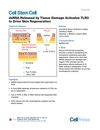
August 2015 in “Cell Stem Cell” The researchers reported that dsRNA from damaged skin activates TLR3, promoting hair follicle regeneration, while TLR3-deficient animals fail to initiate this process, suggesting potential therapeutic approaches for hair neogenesis.