30 citations
,
January 2009 in “The scientific world journal/TheScientificWorldjournal” This article reviews methods for dissolving hair proteins and describes how solvents and molecules with hydrophobic groups interact with hair; it presents no new research findings.
 24 citations
,
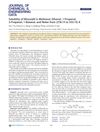
April 2011 in “Journal of Chemical & Engineering Data”
24 citations
,
April 2011 in “Journal of Chemical & Engineering Data” This study measured the solubility of minoxidil in various solvents, finding the highest solubility in methanol and lowest in water, with solubility correlating to temperature.
3 citations
,
December 2020 in “Pharmaceutical Sciences and Research” This study found that using 70% ethanol as a solvent for extracting unsoaked Leucaena leucocephala seeds produces a high extract yield while managing mimosine levels, indicating potential for nutraceutical use.
 September 2023 in “Journal of Fluid Mechanics”
 This study developed a model using homogenization-based framework to quantify solvent and solute flow across Janus membranes, aiming to better understand interface phenomena like osmosis and phoresis by examining micro- and macro-scale behaviors.
September 2025 in “OPAL (Open@LaTrobe) (La Trobe University)” In this study, researchers investigated the formation of spherical crystals of minoxidil in various alcoholic solvents, discovering new types like spherulite aggregates and a unique butterfly-shaped crystal, with the spherulite aggregates showing improved powder flow properties compared to other forms.
 123 citations
,
February 2002 in “Journal of The American Academy of Dermatology”
123 citations
,
February 2002 in “Journal of The American Academy of Dermatology” Minoxidil can cause skin allergy; use alternative solvents or treatments if allergic.
 16 citations
,
June 2019 in “Industrial Biotechnology”
16 citations
,
June 2019 in “Industrial Biotechnology” In this study, researchers found that the conventional solvent extraction method yielded the highest polyphenol content and antioxidant activity from Ascophyllum nodosum seaweed on Québec's North Shore.
 12 citations
,
November 2020 in “Pharmacognosy Journal”
12 citations
,
November 2020 in “Pharmacognosy Journal” This study found that 1-butyl-3-methylimidazolium tetrafluoroborate is the optimal ionic liquid solvent for extracting quercetin from Nothopanax scutellarium leaves.
6 citations
,
May 2022 in “Journal of Organometallic Chemistry” This study developed a catalytic system using indenyl-molybdenum(II)-bipyridine complexes and ionic liquid solvents to achieve a 95% yield of campholenic aldehyde from α-pinene oxide under mild conditions.
August 2013 in “日本医療薬学会年会講演要旨集” This study found that hair contains tightly bound lipids such as cholesterol sulfate, cholesterol, fatty alcohols, and free fatty acids, which are resistant to solvent extraction.
53 citations
,
June 1983 in “Journal of Investigative Dermatology” This study reports that human epidermal transglutaminase activity increases with treatment using organic solvents and chemicals without significant molecular weight changes, which may allow modulation of the enzyme in skin diseases.
January 2007 in “Chinese Journal of Analysis Laboratory” This study proposed a method to determine residual levels of dichloromethane and chloroform in finasteride using SPME-GC, reporting high linear correlation coefficients for both solvents.
 56 citations
,
January 1996 in “Journal of Forensic Sciences”
56 citations
,
January 1996 in “Journal of Forensic Sciences” This study found that rhodamine B penetrated human hair fibers more effectively from an aqueous solution compared to a methanol/ethanol solvent, with penetration depending on hair morphology.
 20 citations
,
October 2018 in “Physics and chemistry of liquids”
20 citations
,
October 2018 in “Physics and chemistry of liquids” This study found that minoxidil exhibits preferential solvation by water in both water-rich and ethanol-rich solvent mixtures.
 2 citations
,
November 2021 in “International Journal of Applied Pharmaceutics”
2 citations
,
November 2021 in “International Journal of Applied Pharmaceutics” This study found that a phytosome lotion made from Mangkokan leaf extract, using a green solvent and microwave-assisted extraction, demonstrated greater hair growth activity than 2% minoxidil, with the 30% phytosome lotion showing the highest efficacy in increasing hair length, weight, and diameter.
1 citations
,
January 2007 in “Heterocyclic Communications” This study reports a new method for selectively synthesizing finasteride Form-I in good yield using water as an ecofriendly solvent at room temperature.
July 2026 in “Journal of Investigative Dermatology” This study in mice found that using modified illite as a carrier for topical minoxidil enabled effective delivery without the solvent toxicity typically associated with minoxidil, while the illite also promoted hair growth through anti-inflammatory and pro-proliferative mechanisms.
December 2022 in “Ecological Chemistry and Engineering S” This study synthesized indole-acenaphthylene compounds using a magnetic nanocatalyst and explored their photoluminescence properties for detecting copper ions in a mixed solvent system, achieving a detection limit of 9.5 ∙ 10 –6 M.
 7 citations
,
August 2006 in “Biopolymers”
7 citations
,
August 2006 in “Biopolymers” This study demonstrated that human hair shafts can be anatomically separated to obtain intact micron and nano keratin filaments using solvents like performic acid and urea.
January 2013 in “วารสารเภสัชศาสตร์อีสาน (Isan Journal of Pharmaceutical Sciences, IJPS)” This study found that ethyl acetate extract from mangosteen pericarp exhibited the strongest antibacterial effect against Propionibacterium acnes compared to other extraction solvents.
 16 citations
,
March 2017 in “Journal of inclusion phenomena and macrocyclic chemistry”
16 citations
,
March 2017 in “Journal of inclusion phenomena and macrocyclic chemistry” This study found that using 2-hydroxypropyl-ß-cyclodextrin (HP-ß-CD) to encapsulate minoxidil can create a stable aqueous solution, potentially replacing the need for organic solvents in topical treatments for androgenic alopecia.
 14 citations
,
April 2018 in “ACS Biomaterials Science & Engineering”
14 citations
,
April 2018 in “ACS Biomaterials Science & Engineering” In this study, luteolin-loaded nanoemulsions were shown to promote hair growth similarly to a luteolin solution in organic solvents, offering enhanced stability for follicular delivery.
 11 citations
,
January 2006 in “Drug development and industrial pharmacy”
11 citations
,
January 2006 in “Drug development and industrial pharmacy” In this study, adding TPGS to a minoxidil formulation improved local retention and reduced systemic absorption in certain solvent mixes, particularly with a balance of alcohol and PEG 400.
 10 citations
,
May 1978 in “Acta Dermato Venereologica”
10 citations
,
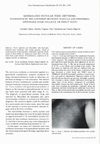
May 1978 in “Acta Dermato Venereologica” In this study, seven patients with generalized toxic erythema developed sterile pustules localized to hair follicles or sweat ducts, with most having a history of medication, solvent exposure, or infection.
 3 citations
,
October 2014 in “Pharmaceutical Development and Technology”
3 citations
,
October 2014 in “Pharmaceutical Development and Technology” This study found that an optimized microemulsion for minoxidil with high solubility, permeation flux, and skin deposition can be achieved with specific low and high levels of certain surfactants and co-solvents.
 December 2025 in “Pharmaceuticals”
 This study found that a natural illite-based carrier could deliver minoxidil topically with preserved efficacy, minimizing solvent toxicity, and showed hair-growth-promoting activity via anti-inflammatory and pro-proliferative mechanisms in mice.
November 2025 in “Molecules” This review examines recent advancements in green and emerging microextraction techniques, such as SPME and DLLME, for more sustainable hormone detection in biological samples, emphasizing environmentally friendly solvents and bioanalytical applications.
April 2025 in “The Journal of Agriculture and Development” In this study, researchers optimized the extraction conditions for polyphenols from the medicinal herb Eclipta prostrata, achieving the highest polyphenol content under specific conditions of temperature, solvent concentration, and time, and found the extract to have significant antioxidant activity.
 October 2023 in “Journal of Molecular Liquids”
 This study demonstrated that imidazole-based ionic liquids, particularly [Emim]DEP, effectively dissolved yak hair keratin, maintaining its structure better than other tested solvents, and also performed well on human hair and goat wool, with consistent performance even after five recycling cycles.
 April 2022 in “Molecules”
 This study identified two potent 5α-reductase inhibitors from Tectona grandis leaves, and suggests that ethanol is a preferable solvent for extracting these compounds, which are potential ingredients for hair loss treatments.