 124 citations
,
June 2020 in “Cell Stem Cell”
124 citations
,
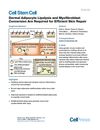
June 2020 in “Cell Stem Cell” This study found that in mice, dermal adipocytes initiate inflammation and aid repair after skin injury by releasing lipids, suggesting a role in managing inflammatory diseases and impaired wound healing.
 123 citations
,
May 2009 in “Journal of Neuroscience”
123 citations
,
May 2009 in “Journal of Neuroscience” In this study, researchers found that in late pregnancy, the neuroactive progesterone metabolite allopregnanolone inhibits HPA axis responses to immune challenges via an opioid-mediated mechanism.
 122 citations
,
May 2010 in “Plant Physiology”
122 citations
,
May 2010 in “Plant Physiology” This study found that expressing certain PIN proteins in Arabidopsis root hairs inhibited growth by decreasing auxin levels, while PIN5 slightly stimulated growth, demonstrating differential effects on auxin transport.
 122 citations
,
November 1998 in “Archives of Dermatology”
122 citations
,
November 1998 in “Archives of Dermatology” This study found that aromatherapy involving essential oils significantly improved symptoms of alopecia areata compared to carrier oils alone in a randomized controlled trial.
 121 citations
,
May 2009 in “Journal of Ethnopharmacology”
121 citations
,
May 2009 in “Journal of Ethnopharmacology” This study found that the methanol extract of Eclipta alba showed dose-dependent hair growth promoting activity in pigmented C57/BL6 mice by influencing the transition from the telogen to anagen phase.
 118 citations
,
May 2015 in “European journal of pharmaceutics and biopharmaceutics”
118 citations
,
May 2015 in “European journal of pharmaceutics and biopharmaceutics” This study found that the pH-sensitive hydrogel HECHA13, containing isoliquiritigenin, effectively inhibited the growth of Propionibacterium acnes and showed promise for transdermal delivery in acne treatment.
 118 citations
,
July 2005 in “Journal of Ethnopharmacology”
118 citations
,
July 2005 in “Journal of Ethnopharmacology” In this study, the aqueous extract of Eclipta alba and its hydrolyzed fraction showed nootropic activity and reduced stress-induced alterations in rats.
 117 citations
,
March 2017 in “Nature Communications”
117 citations
,
March 2017 in “Nature Communications” This study shows that macrophage-induced TNF signaling can activate hair follicle stem cells and promote new hair follicle formation after wounding by regulating AKT/β-catenin pathways.
 112 citations
,
November 2023 in “Nano-Micro Letters”
112 citations
,
November 2023 in “Nano-Micro Letters” This review discusses the developments over the past five years in nanozyme-based theranostics for tumor therapy, including their classification, design, and synergistic strategies. It also outlines the challenges and prospects of using nanozymes to enhance selectivity, biosafety, repeatability, and stability in therapeutic applications.
 111 citations
,
August 2002 in “Journal of Medicinal Chemistry”
111 citations
,
August 2002 in “Journal of Medicinal Chemistry” This study reports that 2-(1-Adamantyl)-4H-thiochromen-4-on-6-O-sulfamate is the most potent steroid sulfatase inhibitor identified so far, exhibiting 170-fold higher activity than the lead compound estrone sulfamate.
 109 citations
,
March 2011 in “Journal of controlled release”
109 citations
,
March 2011 in “Journal of controlled release” This study found that econazole nitrate delivered via MPEG-dihexPLA micelles significantly increased skin deposition compared to Pevaryl® cream, potentially enhancing drug bioavailability and clinical efficacy.
 108 citations
,
December 2003 in “Lasers in surgery and medicine”
108 citations
,
December 2003 in “Lasers in surgery and medicine” This study found that combining near-infrared laser phototherapy with indocyanine green application may improve acne vulgaris by reducing active lesions and inflammation without side effects.
 106 citations
,
April 2010 in “ACS Nano”
106 citations
,
April 2010 in “ACS Nano” This study found that about 80% of known fullerene-binding proteins rank in the top 10% of scorers for C60 docking sites, confirming the accuracy of the predictive model used.
 105 citations
,
January 2010 in “Mediators of Inflammation”
105 citations
,
January 2010 in “Mediators of Inflammation” This article reviews the role of skin surface lipid in mediating environmental stressors and discusses potential therapeutic interventions, reporting no new experimental findings.
 104 citations
,
March 1987 in “Journal of The American Academy of Dermatology”
104 citations
,
March 1987 in “Journal of The American Academy of Dermatology” Minoxidil helps hair growth in 63.6% of alopecia patients, with 27.3% having excellent results.
 103 citations
,
June 2018 in “International Journal of Molecular Sciences”
103 citations
,
June 2018 in “International Journal of Molecular Sciences” This review discusses the applications and research on fibroblast growth factors, including their use in wound healing, diabetes, and cancer, but it reports no new clinical results.
 102 citations
,
July 2007 in “Genes & Development”
102 citations
,
July 2007 in “Genes & Development” This study found that maternal PPARγ is essential for preventing the production of inflammatory lipids in mouse milk, which can otherwise cause inflammation, alopecia, and growth retardation in nursing pups.
 101 citations
,
July 2021 in “Nature Communications”
101 citations
,
July 2021 in “Nature Communications” This study reported that 4D-printed, aliphatic polycarbonate-based scaffolds supported adipose tissue engineering by allowing adipocyte infiltration and neovascularization in vivo, indicating potential for effective adipose tissue repair.
 101 citations
,
October 2016 in “Nanomedicine: Nanotechnology, Biology and Medicine”
101 citations
,
October 2016 in “Nanomedicine: Nanotechnology, Biology and Medicine” This review reports on the dual aspect of fullerene in skincare, highlighting its beneficial antioxidant properties as well as potential toxicity and skin cell reactions, while identifying areas for future research.
 101 citations
,
October 2013 in “Journal of The Saudi Pharmaceutical Society”
101 citations
,
October 2013 in “Journal of The Saudi Pharmaceutical Society” This study found that the nanostructured lipid carrier gel containing minoxidil showed good consistency and a prolonged drug release in vitro, suggesting potential for treating alopecia.
 100 citations
,
July 2004 in “The Journal of Sexual Medicine”
100 citations
,
July 2004 in “The Journal of Sexual Medicine” This article reviews how various hormones may affect female sexual function and provides recommendations for diagnosing and treating endocrinologic sexual difficulties, but it reports no new clinical results.
 99 citations
,
July 2017 in “Clinical Reviews in Allergy & Immunology”
99 citations
,
July 2017 in “Clinical Reviews in Allergy & Immunology” This review noted that alopecia areata is an autoimmune disease impacting hair follicles and offered insights into its complex pathogenesis involving immune responses, while highlighting ongoing research into new treatments such as Janus kinase inhibitors and other immunomodulatory drugs.
 96 citations
,
September 2017 in “Analytica Chimica Acta”
96 citations
,
September 2017 in “Analytica Chimica Acta” This review discusses the growing use of scalp hair for elemental analysis in various fields and highlights advancements in analysis techniques, including the future potential of laser ablation ICP-MS, but reports no new clinical results.
 94 citations
,
September 2014 in “Therapeutic Delivery”
94 citations
,
September 2014 in “Therapeutic Delivery” This review describes recent advances in using nanoparticles for drug delivery to hair follicles, with potential applications in treating skin diseases such as alopecia and acne, but reports no new findings.
 90 citations
,
May 1972 in “Clinical Pharmacology & Therapeutics”
90 citations
,
May 1972 in “Clinical Pharmacology & Therapeutics” Minoxidil quickly leaves blood, turns into urine metabolites, and has lasting blood pressure-lowering effects.
 88 citations
,
August 2019 in “Nature communications”
88 citations
,
August 2019 in “Nature communications” In this study, researchers identified a specific T cell receptor associated with carbamazepine-induced severe cutaneous adverse reactions, demonstrating its potential for therapeutic development in patients with the HLA-B*15:02 genotype.
 88 citations
,
February 2008 in “Journal of Medicinal Chemistry”
88 citations
,
February 2008 in “Journal of Medicinal Chemistry” Scientists made the first metal-based compounds from a nonsteroidal antiandrogen drug, which showed potential in fighting both hormone-dependent and independent prostate cancer cells.
 86 citations
,
March 2018 in “ACS Biomaterials Science & Engineering”
86 citations
,
March 2018 in “ACS Biomaterials Science & Engineering” This study found that MDP hydrogel significantly accelerated wound healing and improved tissue formation in diabetic mice compared to a standard clinical hydrogel and control buffer.
 86 citations
,
July 1990 in “British Journal of Pharmacology”
86 citations
,
July 1990 in “British Journal of Pharmacology” Diazoxide, minoxidil sulphate, and cromakalim relax rat blood vessels by opening K+ channels, with some differences in their actions.
 85 citations
,
July 2025 in “Nature Communications”
85 citations
,
July 2025 in “Nature Communications” This review examines the evolving field of nanozymes, highlighting their unique properties and biocatalytic capabilities that challenge traditional concepts of biocatalysis, with implications for sustainable applications and potential roles in physiological processes and disease pathogenesis.