 November 2023 in “Journal of medical and health studies”
 In this study, combining low-level laser therapy with microneedling showed statistically significant improvement in hair growth for three adult patients with androgenetic alopecia over three months, suggesting it may be a promising management approach.
April 2023 in “Asian Medical Journal and Alternative Medicine” This study found that applying 2% topical minoxidil resulted in a greater nail growth rate compared to 5% minoxidil and placebo over eight weeks, with no observed side effects, suggesting 2% is an effective concentration for accelerating nail growth.
 September 2022 in “Journal of pharmaceutical sciences”
 This study found that adding hydroxypropyl cellulose to minoxidil formulations significantly increased scalp retention and penetration compared to other formulations, potentially leading to reduced application frequency and improved efficacy.
 April 2018 in “Journal of Investigative Dermatology”
 This study identified the osteopontin-derived peptide, FOL-005, as a potential inhibitor of unwanted human hair growth by promoting catagen development without reducing stem cell numbers or showing toxicity.
January 2024 in “Pakistan Journal of Medical & Health Sciences” This study conducted in Pakistan found that innovative hair transplantation techniques, incorporating body hair and strategic extraction angles, significantly improved graft survival and patient satisfaction compared to traditional methods in men with poor donor site density.
October 2019 in “DOAJ (DOAJ: Directory of Open Access Journals)” This review focuses on the clinical presentation and management challenges of menopausal acne and reports no new experimental findings.
November 2022 in “Al-Azhar International Medical Journal (Print)” This study observed that combining 5% topical spironolactone with 5% topical minoxidil in a single dose could enhance treatment efficacy for androgenetic alopecia in both men and women, with significant hair growth improvements noted in group C after three months.
January 2022 in “Wiadomości lekarskie (Warsaw Poland)” This study found that Methylsulfonylmethane significantly reduced hair loss and enhanced hair growth and follicle number in male mice, attributed to its antioxidant and anti-inflammatory properties.
 July 2021 in “Medical journal, Armed Forces India”
 This study reported that using platelet-rich plasma as an intraoperative holding solution significantly improved hair density and follicular growth in hair restoration surgery for androgenetic alopecia.
January 2019 in “Indian Journal of Dermatology, Venereology and Leprology” 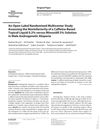 21 citations
,
January 2017 in “Skin Pharmacology and Physiology”
21 citations
,
January 2017 in “Skin Pharmacology and Physiology” In this noninferiority study, researchers found that a 0.2% caffeine-based topical liquid was not less effective than 5% minoxidil solution in improving hair growth in men with androgenetic alopecia over six months.
 10 citations
,
May 2007 in “PubMed”
10 citations
,
May 2007 in “PubMed” This study found that 1% topical minoxidil significantly increased hair count and improved hair growth perception among Japanese women with androgenetic alopecia compared to placebo.
5 citations
,
October 2020 in “Agronomy” This study provides evidence that root hairs significantly enhance phosphorus uptake in barley when phosphorus availability is limited in the root zone.
 4 citations
,
December 2007 in “Dermatologic Surgery”
4 citations
,
December 2007 in “Dermatologic Surgery” This study found that using 3% hydrogen peroxide for surgical wound care during hair restoration did not significantly affect the survival rate of hair grafts compared to normal saline.
3 citations
,
May 2024 in “International Journal of Women’s Dermatology” This article discusses the connection between product use, contact dermatitis, and frontal fibrosing alopecia and reports no new findings; the authors emphasize the need for more research to improve patient outcomes.
 2 citations
,
August 2020 in “International Journal of Cosmetic Science”
2 citations
,
August 2020 in “International Journal of Cosmetic Science” This study suggests that Lindera strychnifolia root extract may help restore a healthy microbial balance on the scalp in men with androgenetic alopecia after 83 days of treatment.
 2 citations
,
November 2009 in “Korean journal of chemical engineering”
2 citations
,
November 2009 in “Korean journal of chemical engineering” This study found that the nonionic surfactant Brij 78 stabilized cationic minoxidil microparticles against aggregation, maintaining their substantivity in the presence of excess anionic surfactant.
 1 citations
,
August 2018 in “Journal of The American Academy of Dermatology”
1 citations
,
August 2018 in “Journal of The American Academy of Dermatology” Combination of minoxidil and finasteride is more effective in increasing hair diameter than minoxidil alone for female-pattern hair loss.
September 2025 in “Journal of the American Academy of Dermatology” 
This study observed that both intradermotherapy with 5% minoxidil and topical minoxidil application resulted in perceived improvements in hair density and thickness among patients with androgenetic alopecia, with no significant difference between the two groups.
 May 2023 in “International Journal of Trichology”
 In this study, 70% of female androgenetic alopecia patients who did not respond to standard minoxidil experienced clinical improvement after switching to a propylene glycol-free, witch hazel-based 5% minoxidil sulfate solution, with the treatment also being well-tolerated.
P-3074 effectively blocks scalp DHT better than oral finasteride.
 February 2013 in “Journal of The American Academy of Dermatology”
 Hair loss is a common but often unreported side effect of cancer treatments, especially for breast and prostate cancers.
 September 2007 in “Dermatologic Surgery”
 This study found that using 3% hydrogen peroxide for surgical wound care during hair restoration surgery did not significantly impact the survival rate of hair grafts compared to normal saline.
 September 2024 in “Journal of the American Academy of Dermatology”
 This study found that phenoxyethanol is the most common contact allergen in over-the-counter hair loss products, but its role in the development or exacerbation of frontal fibrosing alopecia remains unclear.

This review explores the extraction, characterization, and skin cosmetic effects of phenolic compounds and pigments from marine macroalgae, highlighting their documented benefits for skin health, such as whitening, moisturizing, photoprotection, and anti-aging effects, without adverse health impacts.
December 2017 in “Journal of Pigmentary Disorders” This report presents the first documented case of a 23-year-old male with both androgenetic alopecia and alopecia areata, showing clinical improvement with topical treatment and counseling.
 April 2020 in “Dermatology and therapy” 11 citations
,
April 2017 in “Journal of research in pharmacy practice”
April 2020 in “Dermatology and therapy” 11 citations
,
April 2017 in “Journal of research in pharmacy practice” This study found that the combination of zinc sulfate and calcium pantothenate improved hair density and participant satisfaction in women with hair loss, suggesting its potential as an initial treatment option.
 2 citations
,
October 2020 in “The Journal of clinical and aesthetic dermatology”
2 citations
,
October 2020 in “The Journal of clinical and aesthetic dermatology” In this randomized controlled study, the researchers found that an herbal extract combination showed similar efficacy to 3% minoxidil solution in treating androgenetic alopecia over 24 weeks, with no significant safety concerns, suggesting it might be a viable alternative treatment.