January 2011 in “Padua Research Archive (University of Padua)” This study suggests that human skin locally synthesizes active sex steroid hormones, impacting inflammation, cell behavior, and wound healing, with potential implications for therapies in aging and impaired wound recovery.
 137 citations
,
April 2015 in “Nature Reviews Molecular Cell Biology”
137 citations
,
April 2015 in “Nature Reviews Molecular Cell Biology” This review discusses the distinct roles and surprising developmental flexibility of multiple somatic stem cell types in tissue maintenance and repair, reporting no new results but highlighting emerging questions about their regulation and origins.
January 2015 in “CU Scholar (University of Colorado Boulder)” This research found that Foxc1 is critical for maintaining quiescence in activated hair follicle stem cells and that the cancer cell-of-origin influences tumor heterogeneity in mouse skin squamous cell carcinoma.
June 2026 in “Journal of Investigative Dermatology” Retinoic acids temporarily change skin stem cells to a slower cycle and more differentiated state.
 96 citations
,
July 2014 in “Cold Spring Harbor Perspectives in Medicine”
96 citations
,
July 2014 in “Cold Spring Harbor Perspectives in Medicine” This review discusses various stem cell compartments in adult murine and human epidermis, examining their expressed markers and characterization assays, and reports no new experimental results.
 363 citations
,
March 2017 in “Nature Communications”
363 citations
,
March 2017 in “Nature Communications” This study found that, in mouse tail epidermis, stem cells rapidly activate and regenerate new progenitors to repair wounds, with mechanisms affecting their proliferation, differentiation, and migration.
 February 2025 in “bioRxiv (Cold Spring Harbor Laboratory)”
 This study proposes a model suggesting that the ratio of keratin 15 to keratin 14 in epidermal keratinocytes promotes a progenitor state and opposes differentiation, based on insights from both cell culture and transgenic mouse models.
September 2025 in “Journal of Zhejiang University (Medical Sciences)” This review highlights how peripheral nerves play key roles in skin wound healing by modulating immune responses, regulating stem cell functions, and promoting vascularization, suggesting potential avenues for therapeutic strategies targeting neuroregulation.
21 citations
,
December 2017 in “bioRxiv (Cold Spring Harbor Laboratory)” This study found that fibroblast behavior switching between proliferation and ECM deposition is vital for dermal architecture, where cell migration is primarily important for tissue repair during wound healing.
 139 citations
,
August 2018 in “Development”
139 citations
,
August 2018 in “Development” This review discusses the dynamic, niche-driven regulation of stem cell states in tissue homeostasis and regeneration, focusing on epithelial stem cells in the mammalian skin, intestine, and lung, without providing new experimental results.
 September 2022 in “bioRxiv (Cold Spring Harbor Laboratory)”
 In this study, researchers using live mice observed that oncogenic Kras mutation disrupts hair follicle architecture by sustaining ERK signal activation, which affects stem cell behavior and tissue integrity.
 31 citations
,
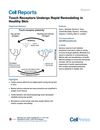
November 2016 in “Cell Reports”
31 citations
,
November 2016 in “Cell Reports” This study reveals that somatosensory neurons in mouse skin exhibit structural plasticity during hair-follicle regeneration, which may temporarily impair the reliability of encoding gentle touch.
 16 citations
,
September 2018 in “Scientific reports”
16 citations
,
September 2018 in “Scientific reports” This study demonstrates that keratinocyte cell lines derived from cultured hair follicles can fully differentiate in organotypic skin models, offering a minimally invasive alternative to obtaining keratinocytes for research.
 10 citations
,
June 2016 in “Wound Repair and Regeneration”
10 citations
,
June 2016 in “Wound Repair and Regeneration” This review explores the regenerative potential of hair follicles and their role in complete skin regeneration, emphasizing the influence of mechanical factors and niche signaling pathways on hair growth and loss.
 September 2025 in “Cosmoderma”
 This study highlights how the COVID-19 pandemic has exacerbated stress-related dermatological issues like acne and hair loss by affecting skin and hair cycles through stress hormones, emphasizing the need for comprehensive psychoneuroendocrine-informed approaches to diagnosis and treatment.
 129 citations
,
May 2015 in “Cell Stem Cell”
129 citations
,
May 2015 in “Cell Stem Cell” This review discusses recent findings on the plasticity and regulation of epithelial stem cells and reports no new experimental results.
2 citations
,
September 2023 in “International journal of molecular sciences” This review summarizes the roles of matricellular proteins in skin stem cell niches, highlighting their contribution to stem cell fate, self-renewal, and potential implications for wound healing and aging.
14 citations
,
January 2019 in “Advances in experimental medicine and biology” This chapter reviews the properties and applications of epidermal stem cells in skin tissue engineering and transplantation but reports no new experimental results.
 293 citations
,
November 2011 in “Nature”
293 citations
,
November 2011 in “Nature” This study found that the circadian clock regulates the activation state of murine epidermal stem cells, affecting tissue homeostasis and susceptibility to tumorigenesis when disrupted.
30 citations
,
January 2005 in “Elsevier eBooks” Vitamin D affects skin and hair by influencing cell behavior and melanin production.
15 citations
,
December 2020 in “International journal of molecular sciences” This review explores how epidermal stem cells contribute to the development and maintenance of various skin structures, and highlights specific markers and proteins associated with these cells, but reports no new clinical results.
10 citations
,
April 2008 This article explores the potential of chitin nanofibrils as a bioactive polymer for skin applications by examining their hydrophilic properties and effects on cell behavior, but presents no new experimental results.
 5 citations
,
September 2015 in “PubMed”
5 citations
,
September 2015 in “PubMed” This article provides an overview of the biological process of skin wound healing, detailing the roles of keratinocytes, dermal cells, and trichogenesis without presenting new experimental results.
1 citations
,
May 2023 in “bioRxiv (Cold Spring Harbor Laboratory)” In this study, researchers developed a custom-designed 3D-printed microscope stage insert for inverted confocal microscopes, enhancing the accessibility of long-term intravital imaging of live cell dynamics in live transgenic mice, particularly in the skin.
 January 2025 in “PLoS ONE”
 This study identified the transcription factor Elf5 as a novel regulator of keratinocyte proliferation and differentiation in skin, with expression elevated in stem/progenitor cell populations, suggesting its potential role in determining cell fate during skin and hair development.
4 citations
,
March 2024 in “Journal of Investigative Dermatology” SPRY1 deficiency in skin cells causes stem cells to move to the skin surface, leading to increased pigmentation.
 3 citations
,
January 1988 in “PubMed”
3 citations
,
January 1988 in “PubMed” This study found that scalp basal cell carcinomas do not appear to behave more aggressively than other types, despite suggestions in the literature.
 19 citations
,
July 1993 in “The journal of investigative dermatology/Journal of investigative dermatology”
19 citations
,
July 1993 in “The journal of investigative dermatology/Journal of investigative dermatology” The researchers reported that hair follicle germinative epidermal cells can form complex structures when associating with papilla cells in culture, unlike other types of epidermal cells.
 July 2019 in “Acta Scientiae Veterinariae”
 This case report describes a Canadian Husky dog with sertolioma that exhibited dermatological symptoms and aggressive behavior, both of which improved significantly after surgery.
79 citations
,
August 1998 in “The Journal of Cell Biology” In a transgenic mouse model, this study found that overexpression of keratin 16 in skin keratinocytes led to hyperkeratosis and increased EGF receptor signaling, altering skin cell behavior and structure.