 15 citations
,
January 2019 in “Experimental Dermatology”
15 citations
,
January 2019 in “Experimental Dermatology” In this study, full-thickness wounding on Lanyu pigs led to scar formation and disrupted cell markers, while partial-thickness wounding allowed limited regeneration of rete ridges and papillary dermis.
April 2016 in “Journal of Investigative Dermatology” Mutations in the TSPEAR gene cause a new form of ectodermal dysplasia affecting hair and tooth development.
1 citations
,
November 2023 in “Pathogens” This study detected sarcoptic mange in five free-ranging raccoon dogs in Schleswig-Holstein, Germany, with four showing severe skin lesions and potential secondary bacterial infections, suggesting they may act as vectors in disease spread.
 January 2023 in “Vìsnik problem bìologìï ì medicini”
 Androgenic alopecia causes hair follicle degradation and skin restructuring, but some hair elements remain.
 12 citations
,
November 1987 in “Pediatric dermatology”
12 citations
,
November 1987 in “Pediatric dermatology” This report identified longitudinal grooves in the hair shafts of four children, diagnosing them with uncombable-hair syndrome.
 December 2025 in “Russian Journal of Skin and Venereal Diseases”
 In this study, researchers found that patients with non-scar alopecia exhibited thinner hair sacs and root sheaths compared to a control group, with significant thinning observed in cases of alopecia areata.
 10 citations
,
May 2012 in “Journal of Plastic Reconstructive and Aesthetic Surgery”
10 citations
,
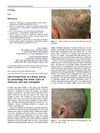
May 2012 in “Journal of Plastic Reconstructive and Aesthetic Surgery” This article discusses various methods for minimizing and repairing strip scars from follicular unit hair transplants but reports no new clinical results.
September 2014 in “Journal of the American Academy of Dermatology” This case report describes a 9-year-old girl diagnosed with loose anagen hair syndrome, which may spontaneously improve or be aided by minoxidil therapy for faster resolution.
 3 citations
,
April 2016 in “International Journal of Dermatology”
3 citations
,
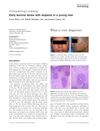
April 2016 in “International Journal of Dermatology” This article presents a clinicopathologic challenge involving early leonine facies with alopecia in a young man and reports no new clinical results.
In this study, researchers created a mouse model using CRISPR/Cas9 technology to investigate hypotrichosis simplex and woolly hair, finding that Krt71-knockout mice exhibited curly hair and developed complete hair shedding without immune deficiencies, mimicking conditions seen in humans and potentially aiding future hair disorder research.
2 citations
,
September 2002 in “Pediatric Dermatology” No abstract is available for the article discussing alopecia and red, scaly skin in a newborn, and it reports no new findings.
 3 citations
,
April 2015 in “Cleveland Clinic Journal of Medicine”
3 citations
,
April 2015 in “Cleveland Clinic Journal of Medicine” This case report describes a 22-year-old woman with systemic lupus erythematosus who developed scurvy due to low serum ascorbic acid, despite a diet of white meat and processed foods.
April 2024 in “Journal of Pakistan Association of Dermatologists” In this study of male patients with non-curly hair, the researchers observed a significant occurrence of folliculitis nuchae linked to close haircuts and shaving, with treatment effectiveness varying by disease phase and best results seen in early stages.
 January 2016 in “Journal of The American Academy of Dermatology”
 This case report describes a 59-year-old woman diagnosed with frontal fibrosing alopecia, presenting with scarring alopecia and perifollicular erythematous papules.
 January 2022 in “Дерматологія та венерологія”
 This paper presents two cases of frontal fibrosing alopecia in postmenopausal women, noting challenges in monitoring due to the invasive nature of the diagnostic process.
June 2018 in “Journal of the American Veterinary Medical Association” Three related Persian cats have a rare, likely hereditary skin condition causing hair loss and poor coat quality, with limited treatment options.
February 2023 in “Journal of the European Academy of Dermatology and Venereology” 67 citations
,
September 2017 in “Cell Reports” Caloric restriction improves skin and fur structure but can cause muscle loss and movement issues.
 13 citations
,
January 2022 in “Stem cell reviews and reports”
13 citations
,
January 2022 in “Stem cell reviews and reports” This study found that using cultured mesenchymal stem cells from mouse whisker hair follicle outer root sheath in wound healing reduced inflammation, accelerated closure, and resulted in less hypertrophic scarring in mice.
 25 citations
,
October 1996 in “Dermatologic Clinics”
25 citations
,
October 1996 in “Dermatologic Clinics” This article discusses loose anagen syndrome, highlighting its characteristics, diagnostic methods, and spontaneous improvement over time, but provides no new clinical results.
January 2023 in “SKIN The Journal of Cutaneous Medicine” 8 citations
,
June 2020 in “The journal of investigative dermatology/Journal of investigative dermatology” This study provides definitive evidence that a homozygous mutation in the DSC3 gene causes skin fragility and hypotrichosis in humans.
30 citations
,
August 2004 in “British Journal of Plastic Surgery” This case study reports that a patient with extensive scalp scarring achieved an excellent cosmetic result when transplanted chest hair grew from an average of 4 cm at transplant to 15 cm after 18 months.
 47 citations
,
November 2012 in “Wound repair and regeneration”
47 citations
,
November 2012 in “Wound repair and regeneration” This study found that grafting split-thickness human skin onto nude mice produces scars that mimic hypertrophic scar characteristics in humans, offering a useful model for studying scar formation and treatments.
 41 citations
,
January 2014 in “Annals of Dermatology”
41 citations
,
January 2014 in “Annals of Dermatology” This study found that dermoscopy showed distinctive patterns for different types of alopecia, supporting its clinical usefulness for diagnosing diseases with small round or oval hairless patches on the scalp.
2 citations
,
July 2013 in “PubMed” This case report details a 17-year-old female with anorexia nervosa who presented with a large, irregular area of pubic hair loss exhibiting various hair and skin abnormalities.
 January 2024 in “Advanced Healthcare Materials”
 In a mouse model of androgenetic alopecia, this study developed a treatment combining a copper-curcumin nanoparticle oleogel with traditional Gua Sha therapy, which augmented hair regeneration more effectively than minoxidil by improving the follicular microenvironment and regulation of inflammatory responses.
 3 citations
,
February 2014 in “Atlas of the Oral and Maxillofacial Surgery Clinics”
3 citations
,
February 2014 in “Atlas of the Oral and Maxillofacial Surgery Clinics” This article discusses short scar facelift techniques for facial rejuvenation without reporting new clinical results, highlighting their appeal due to reduced morbidity, shorter scars, and less downtime.
 August 2020 in “Egyptian Veterinary Medical Society of Parasitology Journal (EVMSPJ)”
 In this study, 10.5% of sheep examined in Ismailia, Egypt, were infested with Sarcoptes scabiei, showing specific molecular and skin alterations.
Low vitamin C caused bleeding and corkscrew hair, resolved with vitamin C treatment.