 6 citations
,
March 1996 in “The American Journal of Cosmetic Surgery”
6 citations
,
March 1996 in “The American Journal of Cosmetic Surgery” This article discusses a strip donor harvesting technique for hair transplantation and reports no clinical results; the author highlights the importance of anatomical knowledge for successful scar excision.
99 citations
,
January 2002 in “Plastic & Reconstructive Surgery” In this study, fetal rat wounds at gestational age 16 days healed without scar formation and resembled normal skin architecture, unlike those at 18 days which resulted in scarring and lack of hair follicles.
 February 2025 in “Buletin Veteriner Udayana”
 In this case report, the 14-day treatment with ivermectin, sulfur baths, antihistamines, and supplements resulted in significant recovery in a cat with scabies and sporotrichosis, except for persistent alopecia on the ear pinna. The authors recommend maintaining a clean environment to prevent reinfection.
 6 citations
,
January 2016 in “JAMA Dermatology”
6 citations
,
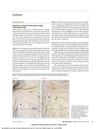
January 2016 in “JAMA Dermatology” This article discusses the presence of dirty dots as a normal trichoscopic finding in children, noting they are not observed in adults or other age groups, and reports no new results.
 3 citations
,
December 2013 in “Journal of Dermatology”
3 citations
,
December 2013 in “Journal of Dermatology” This study found that scanning electron microscopy can identify four specific hair morphology patterns in alopecia areata patients, offering a less invasive diagnostic option compared to punch biopsy.
 January 2024 in “Jurnal Ilmu Kesehatan Hewan”
 In this study, a two-month-old dog diagnosed with scabiosis and toxocariosis showed significant clinical improvement after being treated with sarolaner and pyrantel, evidenced by resolved skin lesions, hair regrowth, and a return to normal abdominal size and oral mucosa color after 30 days.
4 citations
,
January 2020 in “Indian dermatology online journal” This report describes two scalp lichen simplex chronicus cases with hair loss and intense itching, noting unique dermoscopic and histopathological features.
 9 citations
,
May 2005 in “Annales de dermatologie et de vénéréologie”
9 citations
,
May 2005 in “Annales de dermatologie et de vénéréologie” In this study, three patients with erosive pustulosis of the scalp showed significant improvement when treated with oral zinc gluconate and topical steroids.
 17 citations
,
September 2012 in “Dermatologic Clinics”
17 citations
,
September 2012 in “Dermatologic Clinics” This review discusses histologic findings in alopecia and emphasizes the importance of understanding normal follicular anatomy and cycles in transverse sections, without reporting new results.
 85 citations
,
February 1989 in “Journal of The American Academy of Dermatology”
85 citations
,
February 1989 in “Journal of The American Academy of Dermatology” This case report describes a newly identified condition called loose anagen hair of childhood, characterized by easily pluckable hair in two young boys, with variable duration and no scalp inflammation or scarring.
April 1980 in “Archives of Dermatology” This case study reported normal hair structure under polarized light microscopy in a 70-year-old man with zinc deficiency, contrasting with previous findings in acrodermatitis enteropathica.
 44 citations
,
April 2012 in “American Journal of Clinical Dermatology”
44 citations
,
April 2012 in “American Journal of Clinical Dermatology” Scarring alopecias are complex hair loss disorders that require early treatment to prevent permanent hair loss.
20 citations
,
July 2005 in “Experimental dermatology” This study found that the fuzzy mutation in mice is linked to both structural hair defects and accelerated hair follicle cycling, influencing the regulation of hair cycle phases such as catagen and anagen.
9 citations
,
April 1985 in “Archives of Dermatology” This case report describes a 7-year-old boy with Netherton's syndrome, highlighting the identification of the tricorrhexis invaginata hair defect using a photographically illustrated scalp biopsy, which had not been visually documented before.
July 2020 in “Experimental Dermatology” This discussion of age-related changes in female scalp hair follicles reports no new results, highlighting the structural transformations that may contribute to thinning hair in women as they age.
 July 2023 in “Jurnal Ilmu Kesehatan Hewan”
 In this case report, a 2-month-old dog with scabies showed improvement in skin condition and reduced mite presence 24 days after treatment with simparica, sulfur-based soap, and various topical and oral therapies.
 6 citations
,
February 2016 in “American Journal of Dermatopathology”
6 citations
,
February 2016 in “American Journal of Dermatopathology” This case study reports on an 11-year-old boy with woolly hair nevus, featuring twisted hair shafts and an abnormal hair cuticle, alongside epidermal nevi on his face and back.
January 2026 in “JEADV Clinical Practice” This study examines the depiction of a soldier with an atypical hairstyle resembling alopecia in an Isenmann painting, possibly reflecting medical conditions like tinea capitis or alopecia areata to emphasize the soldier's moral degradation, though artists historically mixed medical conditions for stylistic purposes.
December 2020 in “Pathology” This case report describes how a misleading presentation of a rash initially resembling vasculitis was ultimately diagnosed as scurvy through histological examination, revealing the importance of dietary history and histopathology in differential diagnosis.
 18 citations
,
August 2018 in “The FASEB journal”
18 citations
,
August 2018 in “The FASEB journal” This study found that Hoxc13-/- rabbits exhibit complete hair loss on the head and dorsum, providing a potential model for understanding human ECTD-9 and related dermatological conditions.
 March 2026 in “bioRxiv (Cold Spring Harbor Laboratory)”
 In this study, researchers discovered a honeycomb-like structure in the skin of spiny mice that facilitates tissue shedding and regeneration, attributed to a uniquely arranged collagen VI and influenced by spiny hair development.
 February 2023 in “Cosmoderma”
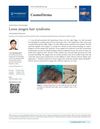
 Loose anagen hair syndrome causes easily shed hair but usually improves with time.
1 citations
,
January 2024 in “Pediatric Dermatology” In this case study, a 12-year-old boy with a restricted diet exhibited symptoms of scurvy, including leg weakness and bruising, which improved following treatment with vitamin C and B12 supplements, highlighting the impact of severe vitamin deficiencies on health.
 8 citations
,
January 2013 in “BioMed Research International”
8 citations
,
January 2013 in “BioMed Research International” This study observed that both Factor XIIIa+ dermal dendrocytes and microvasculature size decreased with scalp aging and that alopecia changes resembled stress-induced premature senescence.
2 citations
,
December 2024 in “JPRAS Open” In this study, patients experienced scarless regenerative healing of scalp donor wounds, and the researchers highlighted that proper wound dressing can prevent alopecia and scarring in infected wounds, suggesting the potential of scalp skin grafts for optimal healing.
 9 citations
,
June 2014 in “British Journal of Dermatology”
9 citations
,
June 2014 in “British Journal of Dermatology” The study found that balding scalps have more thin hairs and larger oil glands, which might contribute to skin conditions related to hair loss.
 1 citations
,
June 2022 in “PubMed”
1 citations
,
June 2022 in “PubMed” This article reviews the evaluation and management of scarring and nonscarring alopecias, emphasizing the importance of early treatment to prevent permanent hair loss in scarring forms, but reports no new clinical results.
August 1993 in “Journal of Dermatological Science”  June 2004 in “Dermatologic Surgery”
 This article presents techniques that help hair restoration surgeons achieve aesthetically pleasing single donor scars after multiple surgeries, enhancing the viability of the single-scar technique.
 15 citations
,
January 2019 in “Experimental Dermatology”
15 citations
,
January 2019 in “Experimental Dermatology” In this study, full-thickness wounding on Lanyu pigs led to scar formation and disrupted cell markers, while partial-thickness wounding allowed limited regeneration of rete ridges and papillary dermis.