 32 citations
,
November 2011 in “International Journal of Dermatology”
32 citations
,
November 2011 in “International Journal of Dermatology” This article reviews central centrifugal cicatricial alopecia, focusing on its multifactorial etiology and challenges in clinical diagnosis, and calls for more research and better treatment options.
 1 citations
,
April 2022 in “The Journal of Family Practice”
1 citations
,
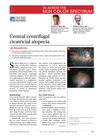
April 2022 in “The Journal of Family Practice” This report describes early and late stages of central centrifugal cicatricial alopecia in two Black women, highlighting progression from a small to a large central patch of hair loss.
May 2025 in “International Journal of Women’s Dermatology” This study found that patients with central centrifugal cicatricial alopecia were less likely to report treatment improvement and more commonly associated with certain hairstyling practices compared to those with other scarring alopecias.
March 2026 in “Journal of Investigative Dermatology” This study identified CCCA in 10 children of African descent, highlighting the occurrence of this scarring alopecia in patients under 18 and the importance of early diagnosis for better outcomes.

Men with CCCA often face delayed diagnosis and severe hair loss, highlighting the need for earlier recognition and treatment.
 2 citations
,
September 2022 in “Annals of Medicine and Surgery”
2 citations
,
September 2022 in “Annals of Medicine and Surgery” The researchers reported a rare case of invasive cutaneous squamous cell carcinoma of the scalp extending into bone and dura mater, successfully treated with surgery and skin flap repair, without metastasis observed at three months.
 October 2023 in “The American Journal of Gastroenterology”
 This case report describes chronic iron deficiency anemia in a patient with Cronkhite-Canada syndrome, highlighting the need for more data to guide treatment and cancer surveillance due to its rarity and mortality risk.
12 citations
,
October 2001 in “British Journal of Ophthalmology” This paper suggests intralesional cidofovir as a potentially effective treatment for SCC with no systemic toxicity observed, but surgical excision remains the standard for its curative outcomes and thorough evaluation.
 75 citations
,
March 2009 in “Journal of The American Academy of Dermatology”
75 citations
,
March 2009 in “Journal of The American Academy of Dermatology” This review discusses the evolution and ongoing debate about the causes of central centrifugal cicatricial alopecia in African American women, without presenting new clinical findings.
6 citations
,
June 2012 in “PloS one” This study identified a novel SCF mRNA splice variant in white merino sheep skin, which may play a role in hair follicle melanogenesis.
March 2026 in “Journal of Investigative Dermatology” Genetic factors, especially PADI3 gene variants, contribute to CCCA in women of African descent.
October 2023 in “Cancers” In this retrospective study, patients with cutaneous squamous cell carcinoma located in highly sun-exposed areas had a higher risk of local recurrence compared to those with tumors in less sun-exposed areas, though metastasis rates did not differ between the groups.

In preclinical studies, topical CUR61414 reduced Hh signaling and shrank BCCs in mice, but this study found no clinical efficacy in human superficial or nodular BCCs.
 August 2013 in “Gastroenterology”
 This case report highlights a 60-year-old patient's diagnosis with Cronkhite-Canada syndrome, characterized by gastrointestinal polyps, diarrhea, weight loss, brittle nails, alopecia, and skin changes, which showed improvement with treatment.
 21 citations
,
October 1980 in “Gastroenterology”
21 citations
,
October 1980 in “Gastroenterology” This report is the first to associate Cronkhite-Canada syndrome with multiple myeloma, describing regenerative pseudopolyps in a 58-year-old woman rather than true adenomatous polyps.
 15 citations
,
November 2012 in “International Journal of Dermatology”
15 citations
,
November 2012 in “International Journal of Dermatology” This case series observed a potential familial link in central centrifugal cicatricial alopecia (CCCA), suggesting a genetic predisposition that may be worsened by hair grooming practices.
2 citations
,
May 2020 in “Journal of the American Academy of Dermatology” Hair shaft changes may be linked to CCCA, but their role is unclear.
19 citations
,
January 2015 in “Skin appendage disorders” This study identified a new variety of central centrifugal cicatricial alopecia that includes patchy hair loss on the lateral and posterior scalp in African-American women, which could be misdiagnosed as traction alopecia without dermatoscopy and pathology.
1 citations
,
January 2022 in “Clinical Cases in Dermatology” This review discusses central centrifugal cicatricial alopecia, emphasizing its clinical features, potential contributing factors, and treatment options, but does not report new clinical findings.
September 2017 in “The journal of investigative dermatology. Symposium proceedings/The Journal of investigative dermatology symposium proceedings” This case report suggests that in African-American patients, the histology of Central Centrifugal Cicatricial Alopecia may resemble lichen planopilaris, indicating a potential diagnostic challenge.
6 citations
,
October 2001 in “British Journal of Ophthalmology” This article discusses the potential of intralesional cidofovir for treating SCC without systemic toxicity, noting that surgical excision remains the best treatment option; it reports no new clinical results.
2 citations
,
August 2022 in “Viruses” This study found that cutaneous squamous cell carcinomas in mice infected with murine papillomavirus preferentially arise from Lgr5+ progenitor cells, while squamous cell dysplasia does not.
 5 citations
,
September 2017 in “Medicine”
5 citations
,
September 2017 in “Medicine” In this case report, a patient with Cronkhite-Canada Syndrome developed colon cancer and liver metastasis despite hormone therapy, highlighting the need for regular monitoring and early detection strategies.
11 citations
,
January 2022 in “Experimental Dermatology” This study suggests that patients with severe, extensive central centrifugal cicatricial alopecia may exhibit a distinct gene expression pattern in the lesional scalp, highlighting potential targets for future research on disease severity and therapies.
 1 citations
,
October 2019 in “Journal of Craniofacial Surgery”
1 citations
,
October 2019 in “Journal of Craniofacial Surgery” In this study, 3D planned resection and reconstruction for skull defects after resection of cSCC with bony invasion led to accurate procedures, though patient-specific factors should guide treatment decisions.
9 citations
,
October 2020 in “Journal of the American Academy of Dermatology” Patients with central centrifugal cicatricial alopecia may have a higher risk of breast and colorectal cancer.
 December 2022 in “Gastroenterology”
 This report describes a case of Cronkhite-Canada syndrome diagnosed in a 54-year-old man with symptoms including gastrointestinal polyps, alopecia, skin hyperpigmentation, and severe diarrhea, who experienced significant symptom improvement with azathioprine.
 64 citations
,
June 2014 in “Journal of The American Academy of Dermatology”
64 citations
,
June 2014 in “Journal of The American Academy of Dermatology” This study found that a peripilar white gray halo around hair emergence is a highly specific and sensitive dermatoscopic feature for diagnosing central centrifugal cicatricial alopecia in African American patients with mild central thinning.
September 2024 in “Journal of the American Academy of Dermatology” In this study, DataDerm revealed that from 2016 to 2022, a majority of patients diagnosed with keratinocyte carcinoma were male, predominantly white, and commonly between 56-75 years old, with most living in urban areas and having a history of non-melanoma skin cancer.
 January 2026 in “Dermatology Online Journal”
 This case report highlights that CCCA can present with multifocal patchy hair loss in younger men of African descent, suggesting the need for careful evaluation when diagnosing atypical alopecia patterns.